Discover

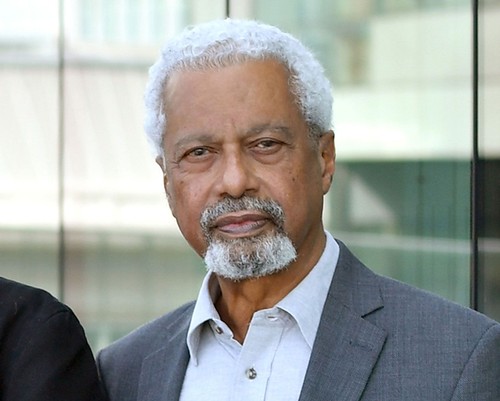
Abdulrazak Gurnah

Personal Information

Born December 20, 1948 (77 years old)
Zanzibar City, Tanzania
Also known as: عبد الرزاق سالم قرنح
16 books
4.0 (8)
180 readers

Description

Abdulrazak Gurnah FRSL (born 20 December 1948) is a Tanzanian-born British novelist and academic. He was born in the Sultanate of Zanzibar and moved to the United Kingdom in the 1960s as a refugee during the Zanzibar Revolution. His novels include Paradise (1994), which was shortlisted for both the Booker and the Whitbread Prize; Desertion (2005); and By the Sea (2001), which was longlisted for the Booker and shortlisted for the Los Angeles Times Book Prize. Gurnah was awarded the 2021 Nobel Prize in Literature "for his uncompromising and compassionate penetration of the effects of colonialism and the fates of the refugee in the gulf between cultures and continents". He is Emeritus Professor of English and Postcolonial Literatures at the University of Kent. [source](

Books

Newest First

The last gift

4.5 (2)
23

"Abbas has never told anyone about his past--before he was a sailor on the high seas, before he met his wife Maryam outside a Boots in Exeter, before they settled into a quiet life in Norwich with their children, Jamal and Hanna. Now, at the age of sixty-three, he suffers a collapse that renders him bedbound and unable to speak about things he thought he would one day have to."--

Pilgrims way

0.0 (0)
4

Published as "Pilgrim's Way" in the US, but originally titled "Memory Hold the Door" when first published in the UK, is a memoir written by John Buchan, 1875-1940, who died prior to publication. Buchan lived an extremely varied and accomplished life, born in Scotland and starting out as the son of a Presbyterian minister. Educated in local schools in the Scottish borders, he first enrolled at the University of Glasgow and then came down to Oxford University. Too poor to eat in hall, he was able, during his two years at Oxford, to earn substantial income through his published writings. Buchan was trained as a barrister but went to South Africa as a part of the post-Boer War British effort to establish a new government. He subsequently became a partner in a publishing house, produced more than fifty novels, biographies and histories, served in World War One as Director of Information and produced a very fine history of the War. He served in Parliament as representative of the Scottish Universities, became the Crown's representative to the Church of Scotland, and, in 1935, was appointed Governor-General of Canada. He was ennobled as Baron Tweedsmuir of Elsfield. John Buchan's fame rests primarily on his novels of adventure, the most famous being "The Thirty-Nine Steps". This memoir is filled with the man's love of life and humanity. It is a delightful read and a fascinating history of the period of turmoil in Britain during the first four decades of the 20th century.

Paradise

0.0 (0)
1

Born in East Africa, Yusuf has few qualms about the journey he is to make. It never occurs to him to ask why he is accompanying Uncle Aziz or why the trip has been organised so suddenly, and he does not think to ask when he will be returning. But the truth is that his 'uncle' is a rich and powerful merchant and Yusuf has been pawned to him to pay his father's debts. Paradise is a rich tapestry of myth, dreams and Biblical and Koranic tradition, the story of a young boy's coming of age against the backdrop of an Africa increasingly corrupted by colonialism and violence.

Theft

0.0 (0)
1

Members of three Tanzanian generations — traditional, transitional, modern — work through old problems at the start of the 21st century.

Admiring Silence

0.0 (0)
6

A man escapes from his native Zanzibar to England. His furtive departure makes it unlikely that he will ever return, but he and his family agree a bright future lies ahead. He meets an English woman and they build a life together. She is writing a thesis on narrative theory; he becomes a teacher in a cramped London school. His release is to weave stories, often fictional, for her and her comfortably suburban parents. These are romantic and reassuring tales of postcolonial Africa, of the scented terrace where he would sit and listen to his mother's lyrical voice. But for all these stories of warmth and hospitality, the man has not heard from his family since his departure, nor has he written to tell them of his new life. And then the barriers come down and he is able, finally, to return for a visit. . He finds a different country, more ramshackle than he had ever imagined or remembered, a country that allows him to see his life with a new clarity. Out of this confrontation he comes to understand the transformations that have befallen him.

Gravel Heart

0.0 (0)
14

Salim has always known that his father does not want him. Living with his parents and his adored Uncle Amir in a house full of secrets, he is a bookish child, a dreamer haunted by night terrors. It is the 1970s and Zanzibar is changing. Tourists arrive, the island's white sands obscuring the memory of recent conflict--the longed-for independence from British colonialism swiftly followed by bloody revolution. When his father moves out, retreating into disheveled introspection, Salim is confused and ashamed. His mother does not discuss the change, nor does she explain her absences with a strange man; silence is layered on silence. When glamorous Uncle Amir, now a senior diplomat, offers Salim an escape, the lonely teenager travels to London for college. But nothing has prepared him for the biting cold and seething crowds of this hostile city. Struggling to find a foothold, and to understand the darkness at the heart of his family, he must face devastating truths about those closest to him--and about love, sex, and power. Evoking the immigrant experience with unsentimental precision and profound understanding, Gravel Heart is a powerfully affecting story of isolation, identity, belonging, and betrayal, and Abdulrazak Gurnah's most astonishing achievement.

Contemporary African Short Stories

4.0 (1)
14

A collection of 20 stories written between 1980-1991 which deal with themes relevant to various regions of Africa.

Afterlives

3.0 (1)
34

"Erudite, ambitious Ilyas was stolen from his parents by the schutztruppe askari, the Germans' colonial troops; after years at war, he returns to his village to find his parents gone, and his sister Afiya given away. Hamza was not stolen, but was sold; he has come of age in the schutztruppe, at the right hand of an officer whose zeal and control have ensured his protection but marked him for life. He does not have words for how the war ended for him, in a haze of blood. Returning to the village of his childhood, all Hamza wants is work, however humble, and security - and the beautiful Afiya. The century is young, and the blaze of empire burns hot on the east coast of Africa. The Germans and the British and the French and the Belgians and whoever else have may have drawn their maps and signed their treaties, but the embers of revolt are not yet extinguished, and the colonialists' hunger for complete dominion is far from sated. As these interlinked friends and lovers come and go, live and work and fall in love, the shadow of war lengthens and darkens, ready to snatch them up and carry them away. Raw yet rich, sweeping yet intimate, sprawling yet acutely realised, Afterlives is an epic novel about family, love, friendship, displacement empire and war; about the ways that violence defines and undoes us, and the lives that history chooses to forget."--Provided by publisher

The Cambridge Companion to Salman Rushdie

0.0 (0)
4

Rushdie is a major contemporary writer, who engages with some of the vital issues of our times: migrancy, postcolonialism, religious authoritarianism. This Companion offers a comprehensive introduction to his entire oeuvre. Part I provides thematic readings of Rushdie and his work, with chapters on how Bollywood films are intertextual with the fiction, the place of family and gender in the work, the influence of English writing and reflections on the fatwa. Part II discusses Rushdie's importance for postcolonial writing and provides detailed interpretations of his fiction. In one volume, this book provides a stimulating introduction to the author and his work in a range of expert essays and readings. With its detailed chronology of Rushdie's life and a comprehensive bibliography of further reading, this volume will be invaluable to undergraduates studying Rushdie and to the general reader interested in his work.
