Discover

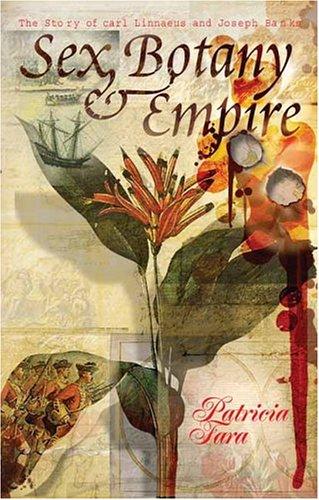
Sex, Botany and Empire

Minsik readers
0.0
0 ratings
Other platforms
0.0
0 ratings
192
PAGES
~3h 12min
READING TIME
English
LANGUAGE
Published 2003 Icon 7 views
ISBN
1840465735, 9781840465730
Editions
Hardcover
Paperback
7 views
Minsik want to read: 0
Minsik reading: 0
Minsik read: 0
Open Library want to read: 0
Open Library reading: 0
Open Library read: 0

About Author

Patricia Fara

atricia Fara is a historian of science at the University of Cambridge. She is a graduate of the University of Oxford and did her PhD at the University of London. She is a former Fellow of Darwin College and is currently a Fellow of Clare College where she is Senior Tutor and Tutor for graduate students. Fara is also a research associate and lecturer in the Department of History and Philosophy of Science. Fara is author of numerous popular books on the history of science and has been a guest on BBC Radio 4's science and history discussion series, In Our Time. She began her academic career as a physicist but returned to graduate studies as a mature student to specialise in History and Philosophy of Science, completing her PhD thesis at Imperial College, London in 1993. Her areas of particular academic interest include the role of portraiture and art in the history of science, science in the 18th century England during the Enlightenment and the role of women in science. She has written and co-authored a number of books for children on science. Fara is also a reviewer of books on history of science.(Source: Goodreads)

First sentence

Harriet Blosset was rich, beautiful, and delighted to be watching an opera with her fiance, a wealthy young Lincolnshire landowner called Joseph Banks...

Description

"Enlightenment botany was replete with sexual symbolism - to the extent that many botanical textbooks were widely considered pornographic. Carl Linnaeus's controversial new system for classifying plants based on their sexual characteristics, as well as his use of language resonating with erotic allusions, provoked intense public debate over the morality of botanical study. And the renowned Tahitian exploits of Joseph Banks - whose trousers were reportedly stolen while he was inside the tent of Queen Oberea of Tahiti - reinforced scandalous associations with the field. Yet Linnaeus and Banks became powerful political and scientific figures who were able to promote botanical exploration alongside the exploitation of territories, peoples, and natural resources. Sex, Botany, and Empire explores the entwined destinies of these two men and how their influence served both science and imperialism."--BOOK JACKET.

Detailed Ratings

0.0Emotional Impact
No ratings yet
0.0Intellectual Depth
No ratings yet
0.0Writing Quality
No ratings yet
0.0Rereadability
No ratings yet
0.0Pacing
No ratings yet
0.0Readability
No ratings yet
0.0Plot Complexity
No ratings yet
0.0Humor
No ratings yet