Discover

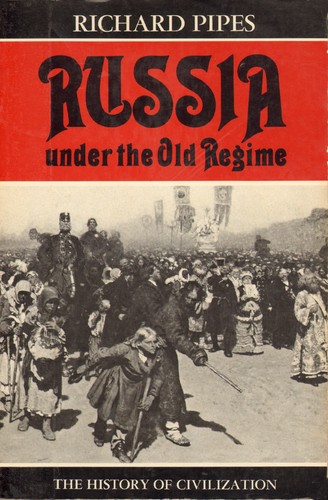
Russia under the old regime

Minsik readers
0.0
0 ratings
Other platforms
0.0
0 ratings
360
PAGES
~6h
READING TIME
English
LANGUAGE
Published 1974 Simon Schuster Trade 4 views
ISBN
0684148269, 9780684148267
Editions
Hardcover
4 views
Minsik want to read: 0
Minsik reading: 0
Minsik read: 0
Open Library want to read: 0
Open Library reading: 0
Open Library read: 0

About Author

Richard Pipes

Richard Edgar Pipes (July 11, 1923 – May 17, 2018) was a Polish American academic who specialized in Russian history, particularly with respect to the Soviet Union, who espoused a strong anti-communist point of view throughout his career. In 1976 he headed Team B, a team of analysts organized by the Central Intelligence Agency who analyzed the strategic capacities and goals of the Soviet military and political leadership. Pipes was the father of American historian and expert on American foreign policy and the Middle East, Daniel Pipes. Pipes was born to a Jewish family in Cieszyn, Poland, which fled the country as refugees after it was invaded by Nazi Germany. Settling in the United States in 1940, he became a naturalized citizen in 1943 while serving in the United States Army Air Corps. From 1958 to 1996, Pipes worked at Harvard University. Source: [Richard Pipes]( on Wikipedia.

Description

The theme of this book is the poliltical system of Russia. It traces the growth of the Russian state from its beginnings in the ninth century to the end of the nineteenth, and the parallel development of the principal social orders: peasantry, nobility, middle class and clergy. The question which it poses is why in Russia -- unlike the rest of Europe to which Russia belongs by virtue of her location, race and religion -- society has proven unable to impose on political authority any kind of effective restraints. After suggesting some answers to this problem, I go on to show how in Russia the opposition to absolutism tended to assume the form of a struggle for ideals rather than for class interests, and how the imperial government, challenged in this manner, responded by devising administrative practices that clearly anticipate those of the modern police state. --

Detailed Ratings

0.0Emotional Impact
No ratings yet
0.0Intellectual Depth
No ratings yet
0.0Writing Quality
No ratings yet
0.0Rereadability
No ratings yet
0.0Pacing
No ratings yet
0.0Readability
No ratings yet
0.0Plot Complexity
No ratings yet
0.0Humor
No ratings yet