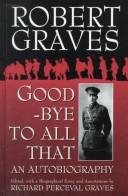
Good-Bye to All That
Description
"The objects of this autobiography, written at the age of thirty-three, are simple enough: an opportunity for a formal good-bye to you and to you and to you and to me and to all that; forgetfulness, because once all this has been settled in my mind and written down and published it need never be thought about again; money.". Thus begins Robert Graves's classic 1929 autobiography with its searing account of life in the trenches of the First World War; and yet this opening passage, together with much significant material, has been unavailable since 1957, when a middle-aged Graves totally revised his text, robbing it of the painfully raw edge that had helped to make it an international bestseller. By 1957 major changes in his private life had taken place. Graves was no longer living with the American poet Laura Riding, under whose influence and in whose honor the original had been written. By cutting out all references to Riding, by deleting passages which revealed the mental strains under which he had labored, and by meticulously editing the entire text, Graves destroyed most of what had made it so powerful but also removed it from the only context in which it could be fully understood. We are pleased to offer the original 1929 edition on the occasion of Graves's 100th anniversary, edited and annotated by Robert Graves's nephew and biographer, whose lucid introduction greatly enhances its value.