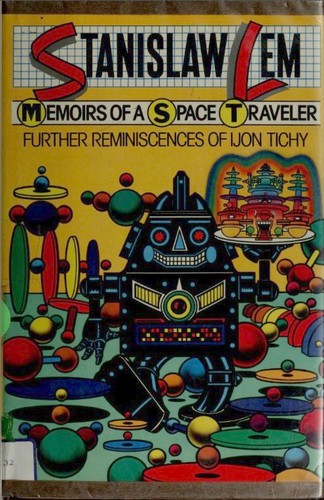
Dzienniki gwiazdowe
More from A Continuum book
The proper book of sexual folklore
Quetzalcoatl
Kongres futurologiczny
Brecht chronicle
Niezwyciężony
Dzienniki gwiazdowe
The female hero in folklore and legend
From Marx to Hegel
The illustrated book of Christmas folklore
The betrayal of the West
Jargon de l'authenticité
The Cyberiad
Wege in der Gefahr
An illustrated encyclopedia of mysticism and the mystery religions
The consciousness industry
Cartas à Guiné-Bissau
Lexicon of Black English
Pedagogia do oprimido
Philosophie der neuen Musik
Brecht, a biography
Die Stimmen von Marrakesch
Introduction to the Sociology of Music
Gute Mensch und sein Gott
Liberating feminism
The book of Christmas folklore
Communalism: from its origins to the twentieth century
Gewissen der Worte
The devastation of the Indies
Ohrenzeuge
The Memphis murders, by Gerald Meyer
Zur Kritik der instrumentellen Vernunft
Die gerettete Zunge
Don Q
Uncollected Wodehouse
Neighborhood
Dark soliloquy
Dawn & decline
The swoop! And other stories
The illustrated book of baseball folklore
Zone Null
American poetry in the twentieth century
Where do I go from here with my life?
Tales from eternity
Minsik readers
0.0
0 ratings
Other platforms
4.0
12 ratings
275
PAGES~4h 35min
READING TIMEEnglish
LANGUAGE1
READERS
First sentence
The expedition I want to write about now was, in its consequences and scale, the greatest of my life...
Description
The adventures and encounters of Ijon Tichy, tourist of the universe. Tichy reveals that "out there" is not so different from "down here," since people are people everywhere. When not traveling in space, he is a magnet for eccentric unrecognized inventors of spenetic genius, whose spooky experiments are revealed to him with megalomaniacal pride.
Detailed Ratings
0.0Emotional Impact
No ratings yet
0.0Intellectual Depth
No ratings yet
0.0Writing Quality
No ratings yet
0.0Rereadability
No ratings yet
0.0Pacing
No ratings yet
0.0Readability
No ratings yet
0.0Plot Complexity
No ratings yet
0.0Humor
No ratings yet