Discover

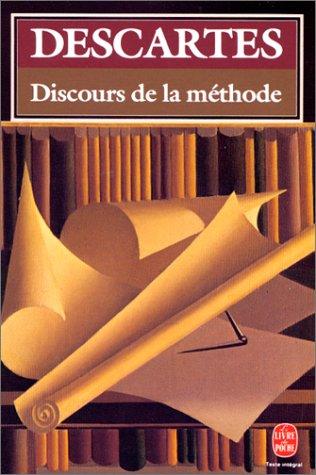
Discours de la methode

Minsik readers
0.0
0 ratings
Other platforms
4.2
15 ratings
331
PAGES
~5h 31min
READING TIME
Latin
LANGUAGE
1
READERS
Apud L. Elzevirium 2 views
2 views
Minsik want to read: 0
Minsik reading: 0
Minsik read: 0
Open Library want to read: 1
Open Library reading: 0
Open Library read: 0

About Author

René Descartes

René Descartes, also known as Renatus Cartesius, was a French philosopher, mathematician, physicist, and writer who spent most of his adult life in the Dutch Republic. He has been dubbed the "Father of Modern Philosophy", and much of subsequent Western philosophy is a response to his writings, which continue to be studied closely to this day. In particular, his Meditations on First Philosophy continues to be a standard text at most university philosophy departments. Descartes' influence in mathematics is also apparent; the Cartesian coordinate system—allowing geometric shapes to be expressed in algebraic equations—was named after him. He is credited as the father of analytical geometry. Descartes was also one of the key figures in the Scientific Revolution. Descartes frequently sets his views apart from those of his predecessors. In the opening section of the Passions of the Soul, a treatise on the Early Modern version of what are now commonly called emotions, Descartes goes so far as to assert that he will write on this topic "as if no one had written on these matters before". Many elements of his philosophy have precedents in late Aristotelianism, the revived Stoicism of the 16th century, or in earlier philosophers like St. Augustine. In his natural philosophy, he differs from the Schools on two major points: First, he rejects the analysis of corporeal substance into matter and form; second, he rejects any appeal to ends—divine or natural—in explaining natural phenomena. In his theology, he insists on the absolute freedom of God’s act of creation.

Description

By an almost universal agreement among philosophers and historians, Rene' Descartes is considered the originator of modern philosophy, or at least the first important philosopher of our times. If we add to this the common belief that philosophy points the way for developments in all other fields, it will be evident that to Descartes is ascribed an importance comparable to that of the beginnings of intellectual culture in Greece or of the origin and spread of Christianity in the Mediterranean regions, and surpassing all other events in history. The study of Descartes can start in no more appropriate way than by inquiring into his reputation, and deciding in what sense and to what extent it is justified. Discourse on Method was originally published in 1637.

Detailed Ratings

0.0Emotional Impact
No ratings yet
0.0Intellectual Depth
No ratings yet
0.0Writing Quality
No ratings yet
0.0Rereadability
No ratings yet
0.0Pacing
No ratings yet
0.0Readability
No ratings yet
0.0Plot Complexity
No ratings yet
0.0Humor
No ratings yet