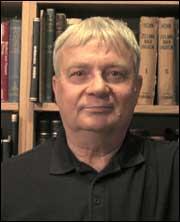
Willem M. Floor
Description
Dutch historian, writer, and Iranologist
Books
The Hispano-Portuguese empire and its contacts with Safavid Persia, the Kingdom of Hormuz and Yarubid Oman from 1489 to 1720
Safavid Government Institutions
"The Safavid empire was one of the major political and social formations in the early modern world, but has attracted relatively little attention from historians, although this is changing. As a result, the study of Safavid institutions has long been characterized by an over reliance on Minorsky's excellent translation of the Tadhkirat al-Moluk (published in 1943) in the same way that scholars have overused Savory's translation of Iskander Beg Monshi's History of Shah Abbas the Great and his articles on Safavid government. Floor's work offers a fresh look at the subject matter, while it is the first detailed account of the state and army institutions and offices of the Safavid empire (1502-1736). It opens many new vistas and will stimulate many new avenues in the study of the Safavids in particular and the other regional Moslem empires of the 16-17[superscript th] centuries. The analysis is careful, solid and exhaustive, and is based on a tremendous amount of work. The book offers a thorough analysis and examination of virtually all the available sources of information (Persian chronicles and archival documents; European traveler accounts, memoirs, and archival sources). The Dutch material is of particular importance and their integration with the more familiar information is unique. In addition to scholars of Iran, Central Asia and the Middle East, it would also be of interest to those working in the field of comparative institutions in history, sociology and political science."--BOOK JACKET.
The Niger Household Energy Project: Promoting Rural Fuelwood Markets and Village Management of Natural Woodlands (World Bank Technical Papers)
The first Dutch-Persian commercial conflict
"In this study the authors examine Safavid economic and diplomatic relations with the West and discuss the forces that created and shaped commercial relationship between the Safavid state and the Netherlands. The analyses are based upon a series of unpublished and very important documents concerning the first Dutch-Persian commercial conflict leading to the attack on the island of Qeshm in 1645 and the beginning of Dutch trade with Basra. Despite extensive communication between the Safavid officials and the Dutch, as we can see from the many Dutch translations of Persian letters and decrees, only thirty five Persian documents have survived, of which only five are originals. The authors challenge the conventional wisdom that the Safavid economy was subservient to the exploitative practices of European Companies, and demonstrate that the relationship between Dutch traders and the Safavid court was at best one of privileged guests where the Shah and his court tolerated the Dutch to make a profit."--BOOK JACKET.