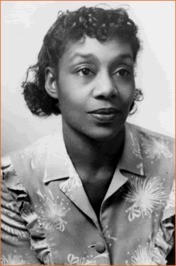
West, Dorothy
Personal Information
Description
Dorothy West was a novelist and short story writer who was part of the Harlem Renaissance. She is best known for her novel The Living Is Easy, about the life of an upper-class black family. West's principal contribution to the Harlem Renaissance was to publish the magazine Challenge, which she founded in 1934 with $40. She also published the magazines successor, New Challenge. These magazines were among the first to publish literature featuring realistic portrayals of African Americans. Among the works published were Richard Wright's groundbreaking essay "Blueprint for Negro Writing," together with writings by Margaret Walker and Ralph Ellison. After both magazines folded because of insufficient financing, West worked for the Works Progress Administration's Federal Writers' Project until the mid-1940s. During this time she wrote a number of short stories for the New York Daily News. She then moved to Oak Bluffs on Martha's Vineyard, where she wrote her first novel, The Living Is Easy. Published in 1948, her novel was well received critically but did not sell many copies. In the four decades after, West worked as a journalist, primarily writing for a small newspaper on Martha's Vineyard. In 1982 a feminist press brought The Living Is Easy back into print, giving new attention to West and her role in the Harlem Renaissance. As a result of this attention, at age 85 West finally finished a second novel, titled The Wedding. Published in 1995, the novel was a best-seller and resulted in the publication of a collection of West's short stories and reminiscences called The Richer, the Poorer. Oprah Winfrey turned the novel into a two-part television miniseries, The Wedding (TV miniseries).
Books
The richer, the poorer
The stories contained here are as American as jazz, and as wise and multifaceted as their writer. Dorothy West's metier is the unique crucible in which America places its black middle class, but her themes are universal: the daily misunderstandings between young and old, men and women, rich and poor that can lead to tragedy; and the ways in which bonds of family and community can bring us together, and tear us asunder. Dorothy West's autobiographical essays explore the poles of her remarkable life - from growing up black and middle-class in Boston to her near-mythic trip to Moscow in 1933 with Langston Hughes and other Harlem Renaissance writers to life on her beloved Martha's Vineyard. They cohere into a beautiful and poignant memoir of a singular American life, a memoir that communicates with her short stories in a host of fertile ways. Taken as a whole, The Richer, The Poorer is a triumphant celebration of the life and work of one of America's genuine treasures.