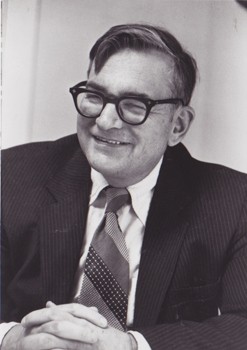
Warren H. Carroll
Personal Information
Description
Warren Hasty Carroll received his Ph.D. in history from Columbia University. After his conversion to the Catholic Church in 1968, he dedicated his life to spreading the Catholic view of history through teaching and writing. He founded Christendom College in 1977 and served as its president until 1985. He was chairman of the History Department from 1977 until 2002. From 1975 until his death in 2011, he worked on a six-volume history of Christendom: The Founding of Christendom (1985), The Building of Christendom (1987), The Glory of Christendom (1993), The Cleaving of Christendom (2000), The Revolution against Christendom (2005), and The Crisis of Christendom (2013). Dr. Carroll was also the author of numerous other articles and books, including: Our Lady of Guadalupe and the Conquest of Darkness; The Guillotine and the Cross; Isabel of Spain: The Catholic Queen; The Last Crusade; and The Rise and Fall of the Communist Revolution. Taken from the back cover of The Crisis of Christendom.
Books
The Rise and Fall of the Communist Revolution
The Rise and Fall of the Communist Revolution is the first comprehensive history of international communism to be published after the collapse of the Soviet Union. After surveying the early development of communism from the French Revolution through Karl Marx to the Russian terrorists and the appearance of Lenin, it presents the whole mighty drama of the establishment of Communist rule over one-third of the world, from the Bolshevik Revolution of 1917 to its almost miraculous defeat in Russia in 1991. For these 74 years communism in power presented the greatest external threat to the freedom of the West. Though this is the history of an ideological movement in action, the author firmly believes that men, not ideologies or economics, make history. Therefore the narrative concentrates on its actors — on the heroism, compromise, or cowardice with which men and nations faced this ultimate challenge. Lenin, Stalin, Mao, and Ho Chi Minh are here; so are Winston Churchill, Harry Truman, Dwight Eisenhower, Ronald Reagan, and less well known heroes of the struggle deserving everlasting honor: Karl Gustaf Mannerheim of Finland, José Moscardó of Spain, Ahmad Shah Masud of Afghanistan, Lech Walesa of Poland. A well-documented narrative with the power of a great novel, this is a landmark historical work, a panoramic presentation of the central theme of the political history of the twentieth century.
The building of Christendom
The second of a projected six volumes of Dr. Warren H. Carroll’s fully documented history of Christendom carries the story of the building of a Christian civilization in Europe from the conversion of Roman Emperor Constantine in the fourth century to the end of the First Crusade. Christ and His Church remain at the center of the story and the key to judging the significance and character of the events described. However, this is more than a history of the Church; it is a political and religious history of Christendom as shaped by the Church — by lay men and women as well as Popes, bishops, priests, monks, and nuns — during eight dramatic centuries when Rome fell, Muslims and barbarians attacked Christian Europe, and a new civilization was born. Here is the story of the great heresies that seemed to carry all before them, yet always failed to gain their final goal of capturing the Papacy; of St. Patrick’s mission to Ireland and its glorious fruits; of a lone hero’s last stand against an empire stretching from France to China which began the 770 year war for the reconquest of Spain; of how the Popes became judges of kings and the First Crusade swept on to victory against all odds; of how the Church bridged the abyss of the Dark Ages and laid the foundations of a new Christian order like nothing the world has seen before or since. All Christian countries are covered, with the history of the Popes as the connecting thread.
The Last Crusade
"Crusade" means a war for the sake of the Cross, a war to protect Christian people from persecution and death on account of their faith in Jesus Christ. Everyone has head of the crusades of the Middle Ages. But few know of the crusade in our own time, which living men still remember, fought for this same purpose only sixty years ago in Spain. In just six months of the year 1936, fifteen bishops and more than six thousands priests, seminarians, monks, and nuns were martyred in Spain by enemies of Christianity. It was the greatest clerical bloodletting in so short a span of time since the persecutions of the Church by ancient Roman emperors. Already Pope John Paul II has beatified some two hundred of these martyrs. Tens of thousands of churches, chapels, and shrines in Spain were pillaged or destroyed. In response, faithful Spanish Catholics proclaimed a crusade. Against all odds the crusaders triumphed, and the Church and the Faith in Spain were saved. This is the story of that crusade, now honored in no other book in print in the English language. Most people who know of the Spanish Civil War do not understand why it was fought or how it was really won. This book will tell you. There is no story like it in the history of the twentieth century.
The Cleaving Of Christendom
The fourth of a projected six volumes of Dr. Warren H. Carroll's fully documented history of Christendom is primarily concerned with the split in Christendom created by the Protestant revolt of Martin Luther and his followers, and consequently is entitled The Cleaving of Christendom. It covers in detail the years between the emergence of Luther as a major figure and the beginning of the personal reign of Louis XIV in France in 1661, with separate discussions of the missionary efforts and accomplishments of the Church in America and the Orient during these years. It explores in depth how the great divisions of Christendom came about. As did earlier volumes of this sweeping series, The Cleaving of Christendom reflects an unabashedly Christian and Catholic view of history, centering on the Popes and their leadership of the Church as the common theme and connecting thread in the history of every Christian country—all of which are covered at least in significant part. Dr. Carroll holds that God and individual men and women, not impersonal social and economic "forces," make history. The characters and actions of these history-makers, both good and evil, are vividly depicted as essential elements in the triumphs and tragedies of the following of Christ by the people of Christian Europe for over a hundred years (1517-1661). Both a gripping, dramatic narrative and an indispensable work of reference for Christian History, this volume and the entire series of which it is a part belong in the library of every serious Catholic who desires to understand the work that Christ has done in the world through His Church and His faithful people.
The Founding Of Christendom
This is the first of a projected six volumes by Dr. Warren H. Carroll on the history of Christendom. It is the fundamental affirmation of Christianity that God entered history as Jesus Christ. Yet history today is almost never written from this Incarnational perspective. The purpose of Dr. Warren H. Carroll's fully documented history of Christendom is to present history from this Christ-centered viewpoint. The first of six volumes, it is essentially the most important because it deals with the life of Christ and the founding of His Church, anticipated by events among both Israelites and Gentiles. This Christian framework shapes a general review of history up to the conversion of the Roman Emperor Constantine. The exciting events and dashing leaders of the Near East, Classical Greece, and Republican and Imperial Rome are all described and analyzed from Dr. Carroll's unabashedly Christian and Catholic perspective. "Any good history," declares Dr. Carroll, "should be a good story. Man's past is full of events more dramatic than any ever put on stage. The most dramatic of these events pertain directly to the supreme drama which is the action of Christ in the world, in preparing for His coming, in coming and in living in His Church. There is no law of nature or of scholarship which says that a scholarly and reliable history must be dull, and no reason at all why it should be." Both a gripping, dramatic narrative and an indispensable work of reference for Christian history, this volume, and the entire series of which it is a part, belong in the library of every serious Catholic who desires to understand the work that Christ has done in the world through His Church and His faithful people.
Rise & Fall Of Communist Revolution
A revision of the author's earlier work titled "70 Years of the Communist Revolution"
The Glory Of Christendom
The third of a projected six volumes of Dr. Warren H. Carroll's fully documented history of Christendom presents the glory of the High Middle Ages: the flowering of Christian civilization which produced saints and heroes, Popes, kings and queens, philosophers and architects whose achievements glow like beacons across the centuries. This was the age of a united and triumphant Christendom — the age of St. Bernard of Clairveaux, St. Francis of Assisi, St. Dominic, and St. Catherine of Siena; of St. Thomas Aquinas and the Gothic cathedrals; of the crusading kings Richard the Lion Hearted and St. Louis IX. Dr. Carroll maintains that the age of the glory of Christendom extends into early modem times as well, encompassing the Christian scholarship and art of the Renaissance — with Michelangelo, Raphael, and Leonardo da Vinci — and the Age of Discovery launched by Portugal’s Prince Henry the Navigator and that it climaxed in the reign of Queen Isabel of Spain with the epochal voyage of Christopher Columbus to America. As did earlier volumes in this sweeping series, The Glory of Christendom reflects an unabashedly Christian and Catholic view of history, centering on the Popes and their leadership of the Church as the common theme and connecting thread in the history of every Christian country — all of which are covered at least in significant part. Dr. Carroll holds that God and individual men and women, not impersonal social and economic “forces,” make history. The characters and actions of these history-makers, both good and evil, are vividly depicted as essential elements in the triumphs and tragedies of the following of Christ by the people of Christian Europe for over four hundred years (1100-1517). Both a gripping, dramatic narrative and an indispensable work of reference for Christian History, this volume and the entire series of which it is a part belong in the library of every serious Catholic who desires to understand the work that Christ has done in the world through His Church and His faithful people.
The Guillotine and the Cross
The Guillotine and the Cross follows in the tradition of Warren Caroll's two other popular historical works, 1917: Red Banners, White Mantle and Our Lady of Guadalupe and the Conquest of Darkness. In Guillotine, Carroll reveals the titanic struggle between good and evil which marked the Reign of Terror in the French Revolution. During the Terror, over 40,000 Frenchmen were executed just for holding fast to the Catholic Faith and objecting to the worst excesses of the Committee of Public Safety. The blood lust of the years 1792-1794 staggers the imagination even in the retelling, and the campaign against the Church was as diabolical as it was cruel. Carroll captures the brutality of the period, but not for its own sake. Rather, underneath the brutality he traces the action of grace in the heroism of the Church, the saintliness of her martyrs, and the dramatic conversion of Danton, which led him to a death-battle with the very mechanisms of terror he had done so much to create. Echoing down the centuries in modern man's totalitarian attempts to stamp out God, the French Revolution's impact on our own time is undeniable—and The Guillotine and the Cross is a very timely book.
The Revolution Against Christendom
Chronicles developments in Christianity and the Catholic church, the papacy and its place in world history from 1661 to 1815, focusing in particular on the church in France from the French revolution through the rule of Napoleon.
The Crisis of Christendom
This is the sixth and final volume by Dr. Warren H. Carroll on the history of Christendom. It is concerned with the “crises” of the modern era, the turning points in the diseases which plagued humanity during these two centuries. The book discusses in detail Nazi and Japanese militarism and its crisis in World War II, the damage caused by the inhuman system of Communism and its fall in 1989, and the origins and consequences of the denial of the dignity of the human person in the modern culture of death. Carroll shows the power of evil in the twentieth century, but focuses also on the great popes, in particular Pope John Paul II, and the great apparitions of the Marian Century. He ends with a call to hope and action. In the words of Anne Carroll, “It would be Dr. Carroll’s wish that each reader of this volume would work to build the culture of life in whatever sphere he can, standing with and for the See of Peter and the Holy Catholic Church.” As did earlier volumes in this sweeping series, The Crisis of Christendom reflects an unabashedly Christian and Catholic view of history, taking as one of its major themes the centrality of the Papacy to the destiny of the West. Dr. Carroll holds that God and individual men and women, not impersonal social and economic “forces,” make history. The characters and actions of these history-makers, both good and evil, are vividly depicted as essential elements in the triumphs and tragedies of Christian civilization in Europe and the New World for two centuries (1815—2010). Both a gripping, dramatic narrative and an indispensable work of reference for Christian history, this volume, and the entire series of which it is a part, belong in the library of every serious Catholic who desires to understand the work that Christ has done in the world through His Church and His faithful people.