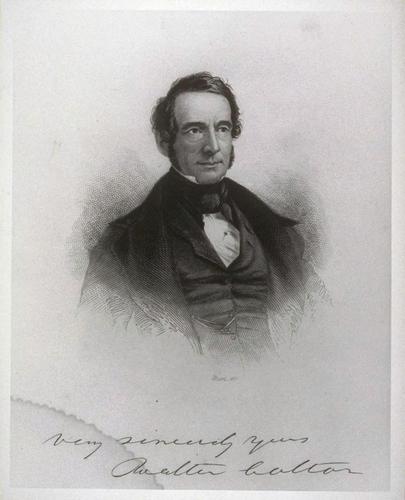
Walter Colton
Personal Information
Description
There is no description yet, we will add it soon.
Books
The land of gold
Hinton Rowan Helper (1829-1909) of North Carolina became one of the South's most controversial figures in the 1850s for his criticisms of slavery in The land of gold and his better known book, The impending crisis. Indeed, he found it prudent to move to New York before the Civil War, and he received diplomatic appointments in Latin America from the Lincoln administration. The land of gold (1855) draws on Helper's three years residence in California and leads him to the conclusion, "California is the poorest State in the Union." Aside from gold, he can see nothing to recommend the state economically, and his book damns the state's populace in terms of morals and intelligence. He spends three chapters dismissing San Francisco (although he later has good words for the Vigilance Committee), is disgusted by the Digger Indians at Bodega, finds fault with Sacramento, and reflects on prospecting on Yuba River and at Columbia. Some good words are reserved for Stockton, but on the whole, Helper writes to discourage emigrants from retracing his course round the Horn.
Deck and port, or, Incidents of a cruise in the United States frigate Congress to California
Three years in California [1846-1849]
Walter Colton (1797-1851) of Vermont had a career as clergyman and journalist before sailing to California as naval chaplain of the Congress. In July 1846, Commodore Stockton named him alcalde of Monterey, a post to which he was elected a few months later. He remained in California until 1849, using his time to found the state's first newspaper and building its first schoolhouse. Three years in California (1850) contains Colton's memoirs of that period, including descriptions of the U.S. military occupation of California, social life and customs of Monterey, discovery of gold and firsthand impressions of the Sonora mining camp in the Southern Mines, visits to Stockton and San Jos,̌ John Charles Frm̌ont, the Constitutional Convention of 1849, and California missions.