Discover

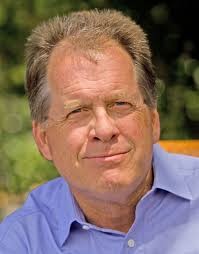
Timothy Ferris

Personal Information

Born August 29, 1944 (81 years old)
Miami, United States
14 books
3.9 (7)
88 readers

Description

Timothy Ferris is a science writer and the best-selling author books, including Coming of Age in the Milky Way (1988), for which he was awarded the American Institute of Physics Prize and was nominated for the Pulitzer Prize. He also wrote The Whole Shebang: A State-of-the-Universe(s) Report (1997), a popular science book on the study of the universe. - Wikipedia

Books

Newest First

Seeing in the dark

0.0 (0)
1

Step into the light of God's truth and grace. If you or someone you love suffers from depression, here's the help you've been looking for! Written by a medical doctor and a pastor who have been personally impacted by depression, this book confronts the myths that have developed around the disease and offers strategies for every area of life -- physical, psychological, and sprititual -- that it touches. Do you feel alone or helpless? Overcome by darkness? Let the experiences of fellow sufferers and the expert advice presented here fill you with renewed hope for healing. - Back cover.

Whole Shebang a State of the Universes R

0.0 (0)
0

Timothy Ferris begins The Whole Shebang with a succinct account of how we have come to know what we know about the universe. Then he explains the meaning behind the exciting new developments that have put cosmology in the headlines - including the discovery of planets orbiting stars other than our sun, glimpses through the Hubble Space Telescope of how the universe looked when it was only a fraction of its present age, and the detection of structure in relic radiation from the big bang that may hint at the mechanisms of genesis. Ferris provides a lucid, nontechnical overview of current research and a forecast of where cosmological theory is likely to go in the twenty-first century. A master analogist, he presents accessible explanations of relativity and quantum physics, "inflationary" models indicating that the universe is much larger than had been thought, and "string" theories that portray all matter as made of space. The centerpiece of The Whole Shebang is a visionary account of near-future science, in which light is shed on the possibility that our universe is one among many universes, each with different physical laws and differing prospects for the emergence of life.

Coming of age in the Milky Way

4.0 (3)
17

Traces the evolution of humanity's need to understand space and time from late-prehistoric musings to the "supersymmetry" theories of space-time advanced as the second millennium comes to a close.

Murmurs of Earth

5.0 (1)
32

Preface: On August 20th and September 5th, 1977, two extraordinary spacecraft called Voyager were launched to the stars. After what promises to be a detailed and thoroughly dramatic exploration of the outer solar system from Jupiter to Uranus between 1979 and 1986, these space vehicles will slowly leave the solar systems - emissaries of the Earth to the realm of the stars. Affixed to each Voyager craft is a gold-coated copper phonograph record as a message to possible extra-terrestrial civilizations that might encounter the spacecraft in some distant space and time. Each record contains 118 photographs of our planet, ourselves and our civilization; almost 90 minutes of the world's greatest music; and evolutionary audio essay on "The Sounds of Earth"; and greetings in almost sixty human languages (and one whale language), including salutations from the President of the United States and the Secretary General of the United Nations. This book is an account, written by those chiefly responsible for the contents of the Voyager Record, of why we did it, how we selected the repertoire, and precisely what the record contains.

Spaceshots

0.0 (0)
0

80 photographs on a variety of extraterrestrial subjects give access to the world of space exploration and adventure.

The red limit

3.0 (1)
8

For centuries, it was assumed that our universe was static. In the late 1920s, astronomers defeated this assumption with a startling new discovery. From Earth, the light of distant galaxies appeared to be red, meaning that those galaxies were receding from us. This led to the revolutionary realization that the universe is expanding. The Red Limit is the tale of this discovery, its ramifications, and the passionately competitive astronomers who charted the past, present, and future of the cosmos.

The future of spacetime

4.0 (1)
9

"Our minds tell us that some things in the universe must be true. The new physics tells us that they are not, and in the process it blurs the line between science and science fiction. Here are six essays by those who walk that line, moving ever further out in discovering the patterns of nature, aimed at readers who share their fascination with the deepest mysteries of the universe."--BOOK JACKET.

The big idea

0.0 (0)
2

"From the Pythagorean theorem to DNA's double helix, from the discovery of microscopic life-forms to the theory of relativity--the big ideas of science and technology shape an era's worldview. Open this book, grasp the newest ideas from thought leaders of today, then spring off from them to move back through the past, one big idea at a time. Meet the people who gave birth to these ideas--and those who fought against them. Meet the MIT electrical engineer currently developing a way to turn on the lights cordlessly, then move back through Nikola Tesla's visionary concept of the wireless transfer of energy, Thomas Edison's groundbreaking work in developing a nationwide electrical grid, Ben Franklin's experiments to capture electricity, all the way back to ancient Greece, where Thales of Miletus described static electricity as a property of naturally occurring amber. Ingeniously organized and eminently browsable, this richly visual volume is divided into six big sections--medicine, transportation, communication, biology, chemistry, and the environment. Words and images that work together to explain such fascinating and elusive subjects as cloud computing, sunshields to cool the Earth, and self-driving cars. What did it take to get to these futuristic realities? Then, turn the page and follow a reverse-chronological illustrated time line of science and technology. This remarkable illustrated history tells the story of every Big Idea in our history, seen through the lens of where science is taking us today - and tomorrow. With an irresistibly cutting-edge look and original illustrations created by award-winning Ashby Design, paired with the reliable authority and comprehensiveness that National Geographic's world history books always offer, this is a one-of-a-kind trip to the future and back through all time all in one"--
