
AUSTRIA AUTHOR · FICTION · GENERAL
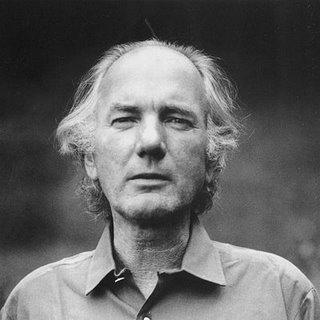
Thomas Bernhard
Also known as: Niclaas Thomas Bernhard
Nicolaas Thomas Bernhard (German: [ˈtoːmas ˈbɛʁnhaʁt]; 9 February 1931 – 12 February 1989) was an Austrian novelist, playwright, poet and polemicist who is considered one of the most important German-language authors of the postwar era. He explored themes of death, isolation, obsession and illness in controversial literature that was pessimistic about the human condition and highly critical of post-war Austrian and European culture. He developed a distinctive prose style often featuring multiple perspectives on characters and events, idiosyncratic vocabulary and punctuation, and long monologues by protagonists on the verge of insanity. Born in the Netherlands to his unwed Austrian mother, for much of his childhood he lived with his maternal grandparents in Austria and in boarding homes in Austria and Nazi Germany. He was closest to his grandfather, the novelist Johannes Freumbichler, who introduced him to literature and philosophy.
After our parents' suicide, we were shut up for two and a half months in the tower, the landmark of our suburb of Amras, accessible only by traversing the large apple orchard, years ago still a property of our father's, which leads up in a southerly direction to the primary rocks.
— from Three novellas
Most acclaimed

Memoirs
Pierre Trudeau was prime minister of Canada from 1968 to 1979 and from 1980 to 1984. This is his story, told in his own words. As if he were sitting across the table from you, Pierre Trudeau reminisces about his life in an informal, direct way. He starts with his memories of his family, especially his mother and father, to whom the book is dedicated. There are memorable events from childhood here, such as a visit to complain to the principal on his second day at school. Later there is a lunchroom encounter with a high school bully and then, at the age of fifteen, real tragedy. After an extensive education at the Universite de Montreal, Harvard, the London School of Economics, and the Ecole libre des sciences politiques in Paris (where postwar shortages meant that he had "to undergo an appendectomy in a hospital that was short of anaesthetics"), Trudeau set off with a backpack to travel around the world. He tells how he went through one war zone after another, encountering armed bandits and narrowly missing pirates, and being arrested in wartime Jordan as a Jewish spy (where a truckload of hostile Arab soldiers made it clear that "there was nothing to stop them from killing me and dumping my corpse into the ravine that bordered the highway"). These adventures and further travels through India and war-torn China left him with a deep belief in the rights of the individual and the vital role of government in protecting these rights. From the day he decided to go to Ottawa as a Liberal member of Parliament in 1965, Trudeau was clearly on a fast track. After becoming minister of justice in 1967 he ran for the leadership and became prime minister in 1968. He talks about his use of "the Liberal machine" and all the electoral fights that followed over the years, providing interesting insights into these contests. As a leader whose time in office ran from the fall of Charles de Gaulle to the rise of Mikhail Gorbachev, Pierre Trudeau was able to exert his influence to break down the Cold War mentality. He enjoyed good personal rapport with such different leaders as Chou Enlai, Gerald Ford, Fidel Castro, Jimmy Carter, Francois Mitterrand, and Helmut Schmidt. His relations with Richard Nixon and Margaret Thatcher were less warm, and he was less impressed by Ronald Reagan's intellect than by the wisdom of the Queen. Whether they loved him or hated him, Canadians knew that in Pierre Trudeau's time, the government stood up for Canada. He stood up to the domestic terrorism of the FLQ - and he makes no apologies here for his tough response to the October Crisis in 1970 - just as he stood up to the provincial premiers (including Rene Levesque) who he believed were blocking Canada's attempt to gain its own constitution ten years later. Although most of this book deals with the years between 1968 and 1984, Trudeau also talks about his life today. He brings you up to date on his travels with his sons ("the boys") and also deals with his opinions - at variance with those of Henry Kissinger - on trends in the modern world. A fascinating view from a major world statesman.