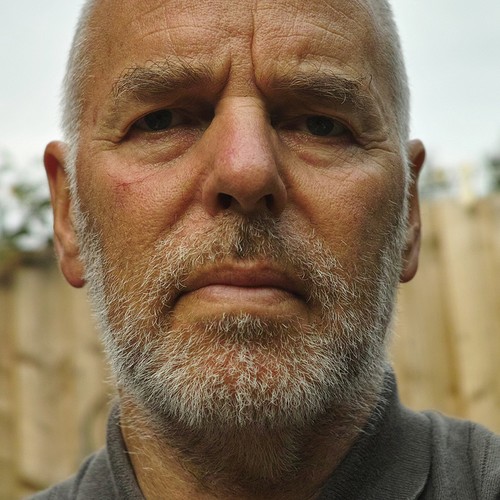
Stefan Szczelkun
Personal Information
Description
The life of a serial artist bookmaker Whilst having my year out from my architecture course in 1969 I came across The Scratch Orchestra and although not a musician I joined with glee and experienced the power of collective improvisation. This did result in a publication, but much later. By 1971 I was back at college in Portsmouth attempting to finish my course whilst living the high life of a provincial hippy. Architecture did not seem to be located in human needs… So I decided to take John Cages’ advice and ‘start from scratch’. Before architecture came shelter so I started collecting stuff on basic forms of shelter making. That turned into collecting scrapbooks of material on our basic life supports - shelter, food and energy. It was a revelation to me because I felt that I was reclaiming knowledge from its European Humanist edifice. I had the good luck to take my collection into Unicorn Bookshop in Brighton at an opportune time. The poet proprietor of Unicorn, Bill Butler, could see the potential for a British version of The Whole Earth Catalogue. The first completely hand-drawn ‘Survival Scrapbook 1 Shelter’ came out early in 1972. ‘Survival Scrapbook 2 Food’ came out later that year and ‘Energy’ in 1974. They sold well and the rights were sold to Schocken in NY. I was sent on a 37 radio and TV talk show tour of America and they sold thousands of them. The next thing I got into was a concept of ’Total Ability’ where the idea of ‘going back to first principles’, which my school physics teacher used to bang on about, was applied to human functioning. It started when I came across a page-long description of standing in a classic book on Yoga. What if I collected things like that on all our human abilities… creating a sort of self-knowledge through doing. Anyway that project was bought by a big publisher called Wildwood House. But then they went bust and as the Seventies progressed the bottom fell out of the hippie alternative market as things got less visionary. So ‘Sense -Think - Act’ got put on the shelf until Gordon Joly turned up and offered to publish it as a Wiki on his own backyard server. From there it was finally made into a self-published paperback book. But to return back to the Eighties… By then I felt a need to explore who I was. And I still hankered after the peer collectivity I’d experienced in the Scratch Orchestra. First of all I decided that I should follow my inner mojo and be an artist rather than a half-hearted professional. Help for my confused state of being came in the form of a class conscious form of co-counselling. Through this I came to realise I was still as working class as my family in spite of my pretensions to be an author and artist! I joined a newly formed Brixton Artists Collective which got hold of some railway arches and started running radical and inclusive exhibitions. It was a breath of fresh air compared with the stuffy art world. The next thing was I realised was that I was a Polish artist. In spite of losing the language and being second generation I was still an immigrant with attitude. Two practical actions came out of this almost simultaneously. The first was meeting some Polish artists in Lincolnshire, through the mail art network, and realising I could do with being part of a Polish artists group. Then I met Kasia Januszko living in my street in Kennington and with her help the project took practical shape. The group, called ‘Bigos: artists of Polish origin’ ran from 1986 to 1997 with touring shows in the UK and Poland. Some of the catalogues are listed below and can now be downloaded as PDFs or ebooks. The second point of action was meeting with Graham Harwood and forming a collective publishing imprint called ‘Working Press books by and about working class artists’. At the time artists were all seen as middle-class and there was meant to be no such thing as working-class culture. Almost by definition the working class were considered to be ‘without refinements such as Culture’. Anyway, to cut a long story short, I wrote three books with Working Press between 1986 and 1993. First was a scrapbook of documentation of my collaborative art practice - ‘Collaborations’. Next came ‘Class Myth and Culture’, which was short auto-ethnography style essays intermixed with my artwork. Finally I wrote ‘Conspiracy of Good Taste’ which was my thesis about how working-class culture had been shafted and almost obliterated by certain upper middle-class operators in the late C19th and first half of the C20th century. These three books and a few pamphlets are listed below. The books were all offset printed paperbacks and sold enough to cover costs in average editions of 1000. At the same time, with the idea that all artists were workers, I had a go at organising book artists. Well, I got paid by the Arts Council to research what artists were making books and what the issues were. This turned out spectacularly successful as it led to Tanya Pexioto putting together an Artist-book Yearbook in the following years - something that continues to this day with the efforts of Sarah Bodman in Bristol, and a yearly artists book fair. Then I tried to enter the new digital world and started making documentary videos and publishing them on DVD. I joined another artists collective, The Exploding Cinema. I had realised that all the collectives I had been part of were not in the art history books. So I decided to use the doctoral research format to try to change that with regard to Exploding Cinema. My thesis was published as a website but not as a book! At the same time the DVDs didn’t sell well at all and at that time online video was still a bit weedy. Then the materiality of books began to call me back. With help of Mute magazine I published a project I’d been doing online which followed up the chapter on the repression of working class music in the Conspiracy of Good Taste. This new project determined to distill the potency of the political aspects of music that became diluted and weakened in the mass media. This was a book of 23 playlists by 23 selectors called 'Agit Disco'. All the playlists and had been issued as home-made CDRs. Very recently the rights were bought by a publisher in Japan who brought out a deluxe expanded edition in Japanese. After the Agit Disco book I wanted to revisit my fantastic experience of collective improvisation in the days of The Scratch Orchestra. I gradually got a group of younger performers together and, along with old Scratch members, we started working on a John Cage opus called ’Song Books’ before going back to explore a Scratch Orchestra collection of short verbal scores called ‘Nature Study Notes’. After several years, four public performances and an appearance at Documenta 14 in Athens, I published the documentation of the group’s work process in a print-on-demand book entitled - ‘Improvisation Rites’. Finally, wanting to get back to my own art practice I published two hardback editions of my own recent photography projects. I was fortunate in getting these distributed by Central Books. Following this I made a visual essay 'SiLENCE!', a third book of photographs, of a UK plotlands 'Plotlands of Shepperton' and a paperback version of my thesis on the first ten years of Exploding Cinema collective. ‘Chalet Fields of the Gower’ is a project coming out of the chapter on housing in the Conspiracy of Good Taste. Seventy colour photographs are accompanied by an interview with a local Swansea architect. ‘Compostion’ documents my own food waste in a dramatic series of 17 photographs that pick up on the metaphor of decomposition and mix it with references to a history of European still life paintings. 'SILENCE! the great silencing of British working class culture' a zine style auto-ethnographical polemic. Available as a PDF from Payhip. Plotlands of Shepperton Photobook with an innovative caption narrative. 38 full page colour photographs. Exploding Cinema 1991 - 1999 my doctoral thesis semi-transmogrified into a paperback with 47 illustrations. October 2021 Dementia Painting 88 pp 216 x 216mm. Full colour illustration of paintings by Joan Colnbrook. Hdbk ISBN 9781870736947 £20 $ 25 Pbk ISBN 9781870736923 £9.95 $16 - 2023 Argues that my mum was released from the constraints of art conventions by her dementia. Accompanied by three video pieces on my mum, culture, dementia. [Currently also working with video.]
Books
UK Artists' Books
This is a report on the state of artists book publishing in the UK funded by the Arts Council of England. It includes conderation of a wide range of issues pertaining to artists books. It led to an Artists Book Yearbook edited by Tanya Pexioto and later an electronic newsletter by Sarah Bodman at Bristol University which is still going. Arguably the report heralded a renaissance of artists book activity in the UK that has continued to the present.
Glamour
Kennington Park
This is a pamphlet that presents a hidden history of Kennington Park with an emphasis on a working class viewpoint. Original edition was A5 16pp self-cover. There was no indication in the park in the early Nineties of its illustrious history before it was enclosed. This pamphlet argued the class nature of this enclosure and it was brought out to celebrate the 150th anniversary of the Chartist monster rally of 10th April 1848. At the time it circulated locally sold through newsagents. Later it was reprinted in an illustrated 2nd edition by radical imprint Present Tense.
Recent Workshops on Social Class Awareness in North London Schools
An A5 12pp self cover pamphlet with contributions by Stefan Szczelkun and Tracy Davidson. This was given to teachers at our awareness raising workshops in North London. It was intended to promote these workshops.Includes two graphic posters by Stefan Szczelkun. Free download. Postscript from the author 2019 Thoughts on the Class Awareness workshops 1993 > Thinking back this booklet does signal > the time when the limit on the > radical intentions of Equal > Opportunities was reached - at least > within institutional settings. Class > awareness would be a real challenge to > capitalism as class inequality is > intrinsic to its operation. I don’t > think there can be a capitalism > without class separation. > > From here on, a reformist version of > Equal Opps was gradually accepted as > the norm. The producers of the ‘pink > pound’ could assert their right to be > treated fairly, the long march of > women could be accommodated within > capitalism (as long as it was mainly > middle class women who were the > beneficiaries) and race awareness had > so many marketable benefits to all > (even with the recent backdrop of a > global fragmentation of Imperial > colonialisms) it could be grudgingly > supported as long as it had > aspirational goals. Even the struggle > of disabled people for access and > inclusive schooling would be given a > hesitant green (or was it amber?!) > light. > > EO in Britain was a sort of progress > and was a turn away from right-wing > forms of capitalism, and it did put a > dent into the invisability of > oppression. It also gave some insight > into the mechanisms of oppression in > general; like the way negative > self-images promoted by oppression > could be internalised and thoroughly > believed by the victims. And to a > lesser extent, a knowledge of how the > oppressor roles diminished us as > humans. But class liberation was > unthinkable by the powers that BE and > those who campaigned for it were > successfully isolated. > > Doing the few workshops we did I could > feel the fear rise in the audience of > teachers as we asked them to benignly > consider their own experience of > class. They might have accepted a > workshop based in facts and figures > (Only recently brilliantly summarised > by Diane Reay in her powerful book > ‘Miseducation’. see my review on > Goodreads) but to be challenged to be > open to learning about class > oppression, to learn about the way the > prejudice might be embedded in > their-self, felt potentially > explosive. This was not about a > literary knowledge but about > challenging embodied understanding. It > is tempting for me to think it was > mainly the older middle class teachers > who looked utterly distraught at the > simple questions we asked, but this > may have been my bias, and more recent > adopters of middle class manners might > have felt their emotional comfort or > stability equally under threat. > Anyway, for whatever reason, we were > not asked to do more workshops after > the first set! > > I had started ‘Working Press: books by > and about working class artists’ with > Graham Harwood in 1986. Our books did > seep into the school system though a > red mole I knew in the ILEA, along > with earlier stuff from the > ‘Federation of Worker Writers’ and > books by the few luminaries who had > insight into class oppression like Ken > Worpole. In 1987 the brilliant young > historian Hilda Kean had assembled and > written a major ‘discussion’ document > for the ILEA called ‘English > Teaching and Class’ (see the Open > Library for a contents list). It was > these widespread efforts that led to > us being asked to do the workshops for > teachers in North London .
CONSTELLATION BIGOS
This is the catalogue of the eleventh show by Bigos: artists of Polish origin. Bigos was an open group of Anglo-Polish artists which had their first major exhibition in Brixton Art Gallery in August 1986. The group was open to any artist with a Polish heritage. Adverts in Artists Newsletter and Jewish Chronicle to attract artists outside our immediate London circle got a good response and the group grew from 12 to over 30 with more women than men. From then on the group itself became more important than the initial concept of a prestigious exhibition. Each artist self-selected work for the Brixton exhibition, which was then hung by Andrjez Borkowski, helped by Kasia Januszko and Krystyna Borkowska. This inclusive and self curating mode continued through our future exhibitions. We went on to tour Poland in 1989 and had a further eight shows around England. Arts Council funding was awarded for a made-to-measure touring show. Work was to be selected or made to be site specific to each venue. The made-to-measure shows were hosted by the Watermans Art Centre at Brentford (1990); Cartwright Hall in Bradford (1991); The Huddersfield City Art Gallery (1992); and the Polish Cultural Institute in Portland Place, London (1997). These shows were accompanied by performances and workshops. The self-selection mode was difficult to maintain. It seems to contradict the prevailing ethos of curatorship. Groups do not self-select they submit to the objective eye of the professional curator. However the self-selection process has its own power in being able to represent an identity group on their own terms without mediation. Collective work went on in meetings in which we not only talked and ate Polish culture but also did creative work together. The work of immigrant artists is a crucial part of the considerations of cultural assimilation, which are so necessary to all immigrant peoples. It is hard to see where else much of this thinking could happen. In spite of our high profile exhibitions it was difficult to engage a critical discourse that was capable of supporting and validating this work. Paper records are collected in the Tate Archive, London.
Chalet Fields of the Gower
70 Colour photographs, plus an interview with architect Owen Short. 70 pages, small paperback This focuses on two chalet fields on the Gower Peninsula. These are collections of originally simple and cheap wooden structures that were put up around the 1930s. These simple basic shelters have evolved over the years to become desirable houses. This is partly due to the outstanding natural beauty of the Gower but it is also because of way that the houses have been extended and improved with the close involvement of the occupants. Many of whom have rebuild the dwellings with their own hands. This type of housing is a common phenomena all over the UK, generally known as plotland developments. It could have been an alternative to the mortgage system which encouraged brick built houses with high levels of debt. This is the first photographic study of UK plotland housing to be published as a book! There is a group on Flickr that shows the extent of this type of housing.
Survival Scrapbook 1
First of a three-book series. This book deals with Shelter, the others with Food and Energy. Describes the basics of shelter from the elements. Covers clothing, caves, tents, yurts, geodesic domes, log cabins, stone structures and more. The UK edition was printed in 9 colours to colour code the different sections. This was unfortunately dropped in the rationalised US edition. In addition the book is unpaginated and each category of shelter has a unique symbol in the bottom right corner of the page. The UK edition is now rare due to the perfect binding which was meant to be removed and the pre drilled pages put into a ring binder and reorganised and added to. The idea being to challenge the idea of fixed taxonomies and the authority of the book. An only recently uploaded justification of why and how I did this work from 1972 is not up on IO
Compostion
17 large Premium colour photographs plus an Afterword. Landscape hardback. These dramatic photographs of my kitchen compost taken with a Sigma DP2 compete with classic art still lives. They made a big impact when I first put them on Flickr and then I had a further enthusiastic and insightful response when I asked for people to feedback on the e-proof. These previews are on the book page. "The beautiful arrangements of rooting vegetable matter in Compostion entice and repel simultaneously. They are like the lovely matter of the commodity. It is as though each scene or frame has been arranged with a painterly eye for detail, for colour, for form, producing a still-life after Dutch painting of the seventeenth century that reminds the viewer of transience, death and putrefaction, of the corpse one will become; or the austere paintings of Cotàn, his ‘bodegónes’ representing the everyday through arrangements of vegetables in a shallow and precisely defined space. There is a similar light and a similar high drama in Szczelkun’s photographs, a quiet constraint that then rebounds on reflection." Sharon Kivland
Agit Disco
23 playlists selected by stars of the London underground and beyond. People were invited to contribute a CD length playlist of songs that had effected them politically in their lives. Actual CDRs were made and exchanged in the process of accumulating the material. These homemade CDs provide illustrations to each playlist. The idea was that the political nature of music is diluted by the commercial outlets and mass media selectors and has been for about a century or more. Our task is to extract this political music and to make it audible. The true nature of working class music is that it is much more political than is apparent to most regular consumers. We need to become much more active and articulate as selectors and not accept what is served up to us by the mass media. There is/was a mirror on Youtube by Caroline Heron.
6 Printmakers of Polish Origin
A catalogue for a 'Bigos: artists of Polish origin' print show at St Pauls Contemporary Gallery in Leeds. 21st May - 18th June 1988. Put together by Bigos artist Simon Lewandowski. The other artists were Margaret Bialokoz Smith, Krystyna Borkowska, Kasia Januszko, Karen Strang and Stefan Szczelkun, all of whom have two pages to describe their work. There is text and image a contribution from Piotr Szyhalski a printmaker and photographer from Kalisz nr Poznan. A show in Worcester City Art Gallery the previous year has 3 page report.
SILENCE! the great silencing of British working class culture
: “At a moment when working class culture seems to have been overtaken by issues of national identity, this book comes as a timely reminder of where the roots of most of the UK’s population lie. It is brought to life by Stefan Szczelkun’s own recollections of his post-war upbringing and insightful observations on the significance of music, singing, amateur film and other popular forms as cultural expression of this much vilified though predominant social class. Creatively presented as a collage of ideas, references and images, this book is as much visual artefact as rigorous research, and makes for an intriguing and engaging reading experience.” Lorraine Leeson “This is a joyous, exuberant book about working class oppression. This may seem like a contradiction in terms but read the rich variety within its covers, and discover how important it is to sing out against the silencing of working class culture.” Diane Reay
Class myths and culture
This is a compilation of essays, text works and artwork documentation from an Anglo Polish working class artist that was running a project 'Working Press: books by and about working class artists' in the Eighties with Graham Harwood. This was his second book in a trilogy about art and class. The cover was designed by Clifford Harper.
AGIT DISCO (Japanese edition)
This is a translation of the British book Agit Disco published by Mute Books in 2012. This was 23 playlists of political music by 23 selectors. The Japanese translation is by Koya Suzuki. To this is added 10 new annotated playlists by Japanese selectors. The whole thing is bound in a beautifully designed wraparound dust cover with matching orange ribbon.
Survival Scrapbook 2
This is the second of Stefan Szczelkun's Survival Scrapbook trilogy about basic life supports. Published first in the UK in late 1972 by Unicorn Bookshop in Brighton (Bill Butler) it was then published by Schocken Books NY in 1974 in a slightly smaller format. covers all forms of small scale food production including the collection of wild plants (UK). Part of a widespread underground or counter cultural movement at the time. The UK edition was printed in three colours to colour code different sections. This was unfortunately dropped in the rationalised US edition. The UK edition is rare now due to the perfect binding which was meant to be removed and the pre drilled pages put into a ring binder and reorganised and added to. The idea being to challenge the idea of fixed taxonomies and the authority of the book. This entry shows the cover of the Unicorn edition designed by Clifford Harper who also has drawings reproduced in 'Shelter' and 'Food'. Recently updated to IA a scan of an unpublished justification of the Survival Scrapbooks.
Survival Scrapbook - Energy
This is the third of Stefan Szczelkun Survival Scrapbook trilogy about basic life supports. The title should be SS3 Energy. Published first in the UK in 1974 by Unicorn Bookshop in Brighton (Bill Butler) it was then published by Schocken Books NY in a slightly smaller format. covers all forms of alternative energy, including psychic! Part of a widespread underground or counter cultural movement at the time under an umbrella of alternative or radical technologies. Confusingly this was called SS5 in the British edition as Bill Butler brought out two other Scrapbooks.. the cover of the Unicorn edition of energy is shown. It shows a maze design by Greg Bright
Exploding Cinema 1991 - 1999
A history of the first seven to nine years, of Exploding Cinema, but also a critical evaluation of an open artists collective as a form that, it is argued, is of fundamentally more value as a cultural force than the establishment's art institutions. How do we render these oppositional formations as ‘knowledge’? How do we argue for the importance of their, sometimes anarchic, vitality to an alienated world? I attempt answers to these questions and others.
POSTART 1 mailart documentation 1985
Documentation of a mail art project made in 1985. I had been exploring mailer for over a year and this project included some great artists. Mail art led to me discovering a network of people many of whom I still work with today. Cross related to Bigos artists of Polish origin, Three pages at the back of the booklet detail my activity in the previous few years. This catalogue of works was sent to all the contributors and also distributed as an artists bookwork. Contributors included: Alexander Josef Hirka Pete Horobin DATA CELL Ruud Janssen A. Monty Cantsin Robin Crozier Jurgen Kierspel Ryosuke Cohen Jamoula McLean Birger Jesch Jan Chwatczyk Shiela Holtz Creative Thing Jurgen Schoberl Steffen Jacob, Giovanni Strada Teresa Gierzynska Andrzej Dudek Durer Mark Pawson Carlo Pittore Rod Summers V.E.C. Diagonale Piotr Rypson Lois Way Jurgen O. Obrich Mark S. Bloch
Improvisation Rites
Printed on 104 gsm white paper w/Gloss Lam cover. 35 colour photographs. Collective explorations in the field of improvised and experimental music in London. Review by Julian Cowley in The Wire 410 "Fascinating exploration of the aims and intentions of The Scratch Orchestra, collected and compiled here by one-time Slippery Merchant, Stefan Szczelkun. Traced thru’ e-mails, magazine reviews and radio programmes, all the way from Cornelius Cardew’s initial concept, circa 1969 ~ through to a series of contemporary revivals circa 2011-2017 ~ featuring a mix of original Scratch members and new blood, and a sold-out performance at Café Oto, and beyond. An intimate overview of the collaborative process and how the original ideas and ideals have weathered forty years on. Keeping true to the spirit of the rites in Cardew’s “Nature Study Notes” ~ and how various channels and “powers-that-be” still attempt to homogenise free thinking, or repackage it as commercial product. Or, to quote the late George Melly: “Revolt into Style”. And how to resist that. Through Stefan’s notes and observations a picture emerges of a strong communal spirit, a sense of adventure, defiant in the face of assorted music moguls, oligarchs and newspaper proprietors who would keep us all subservient in our quiet little cages. Stefan Szczelkun is a firm believer in people, and The Scratch Orchestra’s dictum that anyone could participate, creating a freer dynamic between performers and audiences ~ all this comes across very clearly. I would advise anyone with an interest in English experimental music (and how this can question and challenge pre-determined rules) to investigate this wonderful book." Michael Kemp 2018 Includes photo and/or text contributions (not including quoted 'rites' or 'songs') from the following people: Ali Warner, Portia Winters, John Tilbury, Jane Alden, Ben Harper, Carolyn, Phil England, Michael Parsons, Bron Jones, Hugh Shrapnel, George Chambers, Penny Homer, Geraldine McEwan, Emmanuelle Waeckerle, Matt Scott, Robert Barry, Carol Finer, Martin Dixon, Deirdre McGale, Stathis Mamalakis, John Hails, Charles Hutchins, Petri Hurinainen, Richard Duckworth, Robbie Lockwood, Howard Slater, Alexandra Dami, Achilleas Karagiannidis,
The Conspiracy of Good Taste
The Conspiracy of Good Taste: William Morris, Cecil Sharp and Clough Williams-Ellis and the repression of working class culture in the C20th. This new edition is Perfect Bound on white paper w/Matte Lam cover. New cover design by Mason Terrill. 176pp 15 b/w illustrations, 10 colour photographs. 2nd Deluxe edition. “The Conspiracy of Good Taste is a passionate analysis of the way working class culture has been appropriated and sanitised by middle class mediators of taste.” Richard Turner The Conspiracy of Good Taste is available to download free from Payhip: This was the final book in Szczelkun's trilogy on art and class with the Working Press collaborative imprint. Two more recent books by me are developments of chapters in this book. 'Agit Disco' and 'Chalet Fields of the Gower'.