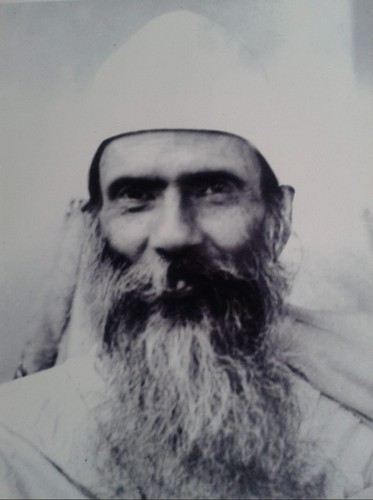
Sri Anirvan
Personal Information
Description
Sri Anirvan was born on July 8, 1896 in the town of Mymensingh, then a part of British India and now in Bangladesh. His birth name was Narendrachandra Dhar. He was the son of Rajchandra Dhar, a doctor, and Sushila Devi. He was a spiritually and intellectually inclined child, who by age 11 had memorized the Astadhyayi of Pāṇini and the Bhagavad Gita. He was named Baroda Brahmachari after going through the sacred thread ceremony. He also won a state scholarship as a teen and completed university IA and BA degrees at the University of Dhaka and an MA from the Sanskrit College of the University of Calcutta. At 16, he joined the Assam Bangiya Saraswata Math (the ashram), located in the village of Kokilamukh near Jorhat in Assam. He was a disciple of the ashram's founder, Paramahansa Srimat Swami Nigamananda Saraswati Dev, who initiated him into sannyas. Anirvan's new monastic name was Nirvanananda Saraswati. He taught at the ashram school and edited its monthly magazine Aryyadarpan. Some time after 1930, Nirvanananda changed his name to Anirvan and ceased to wear the ochre swami's robes. He travelled widely in North India, eventually returning to Assam and establishing an ashram in Kamakhya near Guwahati. However, he continued to travel. In the 1940s, he lived in Lohaghat and Almora. Madame Lizelle Reymond documented some of this period in My Life with a Brahmin Family (1958) and To Live Within (1971). During this time, Sri Anirvan translated Sri Aurobindo's The Life Divine into Bengali (as Divya Jeevan Prasanga); this book, his first, was published in two volumes between 1948 and 1951. In 1953, Sri Anirvan moved to Shillong in Assam.His reputation as a Vedic scholar grew; and he wrote both in Bengali (chiefly) and in English (he was also fluent in French) on various aspects of Hindu philosophy (particularly Samkhya, the Upanishads, the Gita and Vedanta) and the parallels between Rigvedic, Puranic, Tantric and Buddhist thought. His magnum opus, Veda Mimamsa, was published in three volumes in 1961, 1965 and 1970. This work won him the Rabindra award. Sri Anirvan made his final move, to Kolkata, in 1965. He died on May 31, 1978, after a six-year illness.
Books
La Vie dans la vie
This book available in French, Spanish, Italian, German languages.
To Live Within
"One of the finest examples of a spiritual autobiography. To Live Within is pioneering in revealing the Western woman's spiritual quest in Asia. Its simple elegance is a joy to read" Sw. Chetanananda "To Live Within will serve to deepen our questions about the nature of spiritual work - not only in the traditions of India, but in the heart of all life" Jacob Needleman
Letters from a Baul
The sections "Thoughts on Samkhya", "Rambling Thoughts", etc. to be found in Reymond's "To Live Within" were given a separate book-form in 1983 and published by the Sri Aurobindo Pathmandir, Calcutta as "Letters from a Baul: Life Within Life". In the preface to this volume, Mdm. Reymond says that before he passed away, Anirvanji (that is the usual Bengali mode of addressing Sri Anirvan) carefullly made additions and alterations to the text to express his thoughts better. Another piece which may appear very useful for understanding Anirvanji's thought is his introduction to Reymond's book "Shakti: A Spiritual Experience". There he nicely deals with the concept of Void (Akasa) dealt with in the Upanisads.