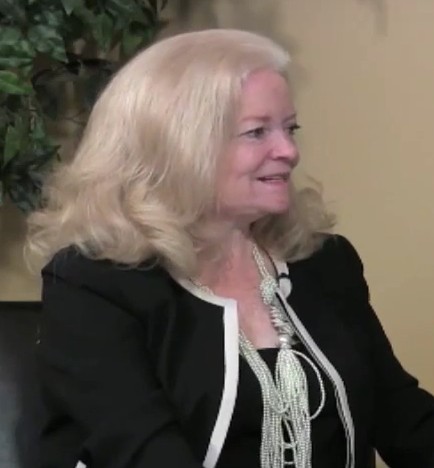
Sharon L. Lechter
Personal Information
Description
Sharon L. Lechter (born January 12, 1954) is an American accountant, author, and businesswoman. She is the co-author of Rich Dad Poor Dad, and the founder and CEO of Pay Your Family First, a financial education organization. In January 2008, Lechter was appointed to the President's Advisory Council on Financial Literacy to serve a two-year term.
Books
Rich Dad, Poor Dad for Teens
This special just-for-teens edition builds a foundation of self-confidence from which readers can realize their dreams of financial security in an increasingly challenging and unreliable job market. Teen-friendly advice, examples, sidebars and straight talk will supplement all of Rich Dad's core advice: Work to learn, not to earn. Don't say "I can't afford it" - instead, say "How can I afford it? " And don't work for money - make money work for you! No matter how confident or "good in school" readers consider themselves to be, this makes financial intelligence available to all young people with its streamlined structure, clean design, and accessible voice.
Rich Dad's Retire Young, Retire Rich
This book is about how we started with nothing and retired financially free in less than ten years. Find out how you can do the same. If you do not plan on working hard all of your life...this book is for you. Why not Retire Young and Retire Rich?
Rich Dad, Poor Dad
April of 2022 marks a 25-year milestone for the personal finance classic Rich Dad Poor Dad that still ranks as the #1 Personal Finance book of all time. And although 25 years have passed since Rich Dad Poor Dad was first published, readers will find that very little in the book itself has changed — and for good reason. While so much in our world is changing a high speed, the lessons about money and the principles of Rich Dad Poor Dad haven’t changed. Today, as money continues to play a key role in our daily lives, the messages in Robert Kiyosaki’s international bestseller are more timely and more important than ever. Milestones While there is a milestone to commemorate — and a new section in the book on Why Milestones Are Important — preserving the integrity of the original content is testimony to the fact that this book has truly stood the test of time. The sidebars throughout the book (that were updated for the 20-year anniversary edition) have been updated again, but the core principles that parents and grandparents — those who embraced Robert’s story and messages 25 years ago — are sharing them with new generations who have found that its timeless wisdom and no-nonsense lessons can be applied to anyone’s life and their vision for a future that includes taking control of their finances. People of all cultures and countries celebrate milestones. We use them to measure time, mark progress, reflect on the lessons we’ve learned, and celebrate accomplishments… and they give meaning to our life’s journey. They are a way that we integrate past, present, and future… looking back at where we started, where we are today… and the promise of all that the future can hold.
Rich Dad, Poor Dad 2 (Rich Dad)
This page provides lists of best-selling books and book series to date and in any language. "Best-selling" refers to the estimated number of copies sold of each book, rather than the number of books printed or currently owned. Comics and textbooks are not included in this list. The books are listed according to the highest sales estimate as reported in reliable, independent sources. According to Guinness World Records, the Bible is the best-selling book of all time with an estimated 6 billion copies sold and distributed as of 1995.
Rich dad's guide to investing
'Rich Dad's Guide to Investing' follows the New York Times bestsellers 'Rich Dad, Poor Dad' and 'Rich Dad's CASHFLOW Quadrant'. Most of us know that the best investments never make it to market. This book discusses what the rich invest in that the poor and middle class do not. What follows is an insider's look into the world of investing, how the rich find the best investments, and how you can too. Robert Kiyosaki and Sharon Lechter show . . .7 Rich Dad's basic rules of investing 7 How to reduce your investment risk 7 Rich Dad's 10 Investor Controls 7 How to convert your earned income into passive and portfolio income 7 How you can be the ultimate investor!
Rich Dad's Who Took My Money?
Reveals how to actually speed up and maximize the return on investments to achieve total financial independence.
El juego del dinero : por qué los inversionistas lentos pierden y el dinero rápido gana! / Who Took My Money?
Think and grow rich for women
"Women are the future of American business. According to a recent Nielsen report, women will control two-thirds of American consumer wealth in less than a decade. And yet almost all business and success literature is still written for men-dispensing advice that doesn't take into account women's unique strengths or address the demands of family life on mothers. This powerful new book-from the award-winning author of Think and Grow Rich: Three Feet from Gold and coauthor of the multimillion-selling Rich Dad, Poor Dad-combines Hill's classic Thirteen Steps to Success with case studies of noteworthy women (including Sandra Day O'Connor, Angela Merkel, Mary Kay founder Mary Kay Ash, and IBM CEO Ginni Rometty), outlining a master plan for success for all women"-- "Re-imagining the classic wealth-building, self-help masterwork THINK AND GROW RICH as a guide for modern women, this new book--officially authorized by the Napoleon Hill Foundation--analyzes the lives of outstanding women from the past and today, and uses their stories to support Hill's Thirteen Steps for Riches"--
Rich Dad's Rich Kid, Smart Kid
An introduction to the financial world specifically written for children that emphasizing how the way to wealth is through cash flowing assets.
Rich Dad's Guide to Becoming Rich...Without Cutting Up Your Credit Cards
Who wants to be a millionaire? #1 bestselling authors Robert Kiyosaki and Sharon Lechter know that the answer is: everyone. In their bestselling books Rich Dad, Poor Dad, Cashflow Quadrant, and Rich Dad's Guide to Investing, they outlined what anyone can do to become rich. Now, in their first eBook, Kiyosaki and Lechter distill the wisdom of their Rich Dad books into a motivational guide to making money.As a young man, Kiyosaki had two mentors: his father, a highly educated professional who could not manage his money, and his friend's father, a man with less formal education but serious business acumen. Kiyosaki shows how the lessons he learned from his "rich dad"--some unconventional and unexpected--are the foundations of success. With Rich Dad's Guide to Becoming Rich . . . Without Cutting up Your Credit Cards, Kiyosaki and Lechter explain why simply being cheap is not the answer to financial problems--it only makes you a cheap person. Instead, they show how building assets is the key to a prosperous future.
Three feet from gold
A century ago, Napoleon Hill began researching and writing his classic, Think and Grow Rich— which sold more than 100 million copies worldwide. On this 100th anniversary comes a fresh and modern look at the core theme of Hill’s master work. Three Feet from Gold takes the principle of never giving up from the revolutionary best seller and presents it in a new and modern fable. A young writer sets out to interview business leaders and other influential figures of today about the importance of persistence in attaining your goals—including Dave Liniger, chairman and co-founder of Re/Max; John St. Augustine, producer of “Oprah and Friends” Radio Programming; Debbi Fields, founder of Mrs. Fields Cookies; boxing champ Evander Holyfield; Symphony Orchestra conductor Jahja Ling; the Nobel nominated founders of Childhelp.org, Yvonne Fedderson and Sara O’Meara; and NASCAR President Mike Helton. Through these inspirational real-life stories, Three Feet from Gold offers advice about having passion for what you do, finding your own personal Success Formula, choosing good counsel, and above all: never giving up.
Rich Dad's Cashflow Quadrant
Outlines a strategy for attaining wealth by looking for business opportunities and investing wisely, rather than seeking security through employment.
