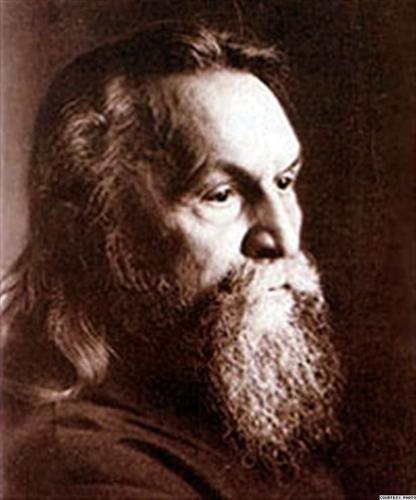
Sergeĭ Nikolaevich Bulgakov
Personal Information
Description
There is no description yet, we will add it soon.
Books
The Lamb of God
What is our participation in the divine humanity? In explaining this important doctrine, Sergius Bulgakov begins by surveying the field of Christology with special reference to the divine humanity. He considers the role of the Divine Sophia, examines the foundations of the Incarnation, explores the nature of Christ's divine consciousness, and ponders Christ's ministries while on earth. A profound discussion of Christ's kenosis as a model for humanity rounds out this comprehensive and valuable study.
The Orthodox Church and Social teaching in modern Russian Orthodox theology
Unfading light
"With its scholarly discussions of myth, German idealist philosophy, negative theology, and mysticism, shot through with reflections on personal religious experiences, Unfading Light documents what a life in Orthodoxy came to mean for Sergius Bulgakov on the tumultuous eve of the 1917 October Revolution. Written in the final decade of the Russian Silver Age, the book is a typical product of that era of experimentation in all fields of culture and life. Bulgakov referred to the book as miscellanies, a patchwork of chapters articulating in symphonic form the ideas and personal experiences that he and his entire generation struggled to comprehend. Readers may be reminded of St. Augustine's Confessions and City of God as they follow Bulgakov through the challenges and opportunities presented to Orthodoxy by modernity." -- Publisher's description.
Philosophy of economy
"The writings of Sergei Bulgakov (1871-1944), like those of other major social thinkers of Russia's Silver Age, were obliterated from public consciousness under Soviet rule. Discovered again after eighty years of silence, Bulgakov's work speaks with remarkable directness of the postmodern listener. This translation of Philosophy of Economy brings to English-language speakers for the first time a major work of social theory written by a critical figure in the Russian tradition of liberal thought.". "What is unique about Bulgakov, Catherine Evtuhov explains in her introduction to this book, is that he bridges two worlds. His social thought is firmly based in the Western tradition, yet some of his ideas reflect a specifically Russian way of thinking about society. Though arguing strenuously in favor of political and social liberty, Bulgakov repudiates the individualistic basis of Western liberalism in favor of a conception of human dignity that is compatible with collectivity. His economic theory stresses the spiritual content of life in the world and imagines national life as a kind of giant household Bulgakov's work, with its singularly postmodern balance between Western and non-Western, offers fascinating implications for those in the process of reevaluating ideologies in post-Soviet Russia and in America as well."--BOOK JACKET.
The burning bush
"In The Burning Bush, Glazov conducts a profoundly original inquiry into Vladimir Solovyov's attitude toward Judaism. Solovyov (1853-1900) was one of the most remarkable figures of the 19th century: He was the most important Russian speculative thinker of that century, publishing major works on theoretical philosophy, the philosophy of religion, and ethics; he also produced sensitive literary criticism and incisive essays on current political, social, and ecclesiastical questions. The eminent theologian Hans Urs von Balthasar designated Solovyov as the greatest artist of conceptual order and organization--after Thomas Aquinas--in the entire history of thought, a thinker who borrows from all systems after purging them of their negations. Solovyov was also the first major Russian thinker to enter into ecumenical dialogue with Jewish scholars and theologians, and Glazov's main concern is (1) to translate as completely as possible all of Solovyov's writings on Judaism and to annotate these texts by identifying persons, places, and citations, especially in the Biblical and rabbinic literature; and (2) to synthesize the information gleaned from these writings with key recollections of Solovyov's attitudes toward Jews and Judaism by his immediate family, friends, and early biographers. Glazov collects, translates, and comments on all the relevant primary texts: writings, letters, pamphlets, protests, political documents, and prayers which relate to Solovyov's work on Jewish matters:--
Jacob's Ladder
Religious Poetry of Vladimir Solovyov
Icons
In addition to being objects of sacred devotion, the Icons of the Orthodox world have long been admired even by those for whom they have no particular religious significance. The craftsmanship and expressive power of these holy images are capable of inspiring awe centuries after their creation. They are also objects of archeological interest--the evolution in the techniques and style of icon painting reveal the changes and crises that Orthodoxy has undergone. Kurt Weitzmann, Manolis Chatzidakis, and Svetozar Radojc̆ić have striven to provide a well-rounded commentary on the icons here presented; their writing points out the intrinsic merit of each work and also discusses its place in the historical development of this art form. Although the book deals with only three geographic locations--Sinai, Greece, and Yugoslavia--the breadth of knowledge of the authors is such that the text is anything but a fragmentary record. In spite of the limitations of present archeological data, these men have done a marvelous job in presenting this subject with depth and clarity. -- Inside jacket flap.
The Friend of the Bridegroom
"The Friend of the Bridegroom offers a compelling theological interpretation of John the Baptist as seen through the eyes of Eastern Orthodoxy. Written by Sergius Bulgakov, the greatest Russian theologian of modern times, this book sheds new light on the mission and meaning of John the Baptist, commonly referred to in Orthodoxy as the "Forerunner of the Lord." Bulgakov traces the Baptist's life from beginning to end - his birth, his preaching of repentance, his baptism of the Lord, his agony, his death, and his veneration in the context of Eastern Orthodoxy. In addition to its use of the Gospel narratives, Bulgakov's profound portrait of the Baptist is colored by sacred tradition as it is embodied in patristic literature, in liturgy, and in iconography."--BOOK JACKET.
