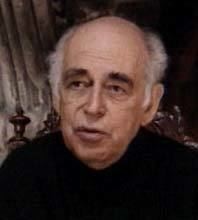
Roland Huntford
Personal Information
Description
Roland Huntford (born 1927) is an author, principally of biographies of Polar explorers. He lives in Cambridge, and was formerly Scandinavian correspondent of The Observer, also acting as their winter sports correspondent. He was the 1986–1987 Alistair Horne Fellow at St Antony's College. He has written biographies of Robert Falcon Scott, Ernest Shackleton and Nobel Peace Prize winner Fridtjof Nansen; these biographies have been the subject of controversy. Huntford's controversial The Last Place on Earth (originally titled Scott and Amundsen) had a tremendous impact on public interest in Polar matters. Huntford put forth the point of view that Roald Amundsen's success in reaching the South Pole was abetted by much superior planning, whereas errors by Scott (notably including the reliance on man-hauling instead of sled dogs) ultimately resulted in the death of Scott and his companions. Huntford's other books include Sea of Darkness, The Sayings of Henrik Ibsen and Two Planks and a Passion: The dramatic history of skiing. His polemical The New Totalitarians is a critique of socialism in Sweden, written from the point of view of western political culture. His main thesis was that the Swedish social democratic party, like the "new totalitarians" in Aldous Huxley’s Brave New World, relied less upon the violence and intimidation of the old totalitarians than upon sly persuasion and soft manipulation in order to achieve its goals.
Books
Two planks and a passion
"Roland Huntford's history of the ski begins 20,000 years ago in the last ice age on the icy tundra of an unformed earth. Man is a travelling animal, and on these icy slopes siding began as a means of survival." "This is the story of how siding evolved into a modern recreation from a prehistoric struggle for survival, Huntford puts the history of skiing into its social and political contexts, illustrating its spread across the globe and importance in all facets of life. It is the first comprehensive history of skiing to make use of original Old Norse and Russian sources, as well as using ancient Greek, Roman, Chinese and Arabic works. Huntford draws on his vast knowledge of Scandinavian history and politics as well as his unique insight into polar exploration to produce the definitive history of the ski."--Jacket.
The Shackleton Voyages
A pictorial anthology of the extraordinary polar explorer and Edwardian hero, Ernest Shackleton.
Nansen
Behind the great polar explorers of the early twentieth century - Amundsen, Shackleton, Scott in the South and Peary in the North - looms the spirit of Fridtjof Nansen (1861-1930), the mentor of them all. He was the father of modern polar exploration, the last act of territorial discovery before the leap into space began. Nansen was a prime illustration of Carlyle's dictum that 'the history of the world is but the biography of great men'. He was not merely a pioneer in the wildly diverse fields of oceanography and skiing, but one of the founders of neurology. A restless, unquiet Faustian spirit, Nansen was a Renaissance Man born out of his time into the new Norway of Ibsen and Grieg. He was an artist and historian, a diplomat who had dealings with Lenin, Trotsky and Stalin, and played a part in the Versailles Peace Conference, where he helped the Americans in their efforts to contain the Bolsheviks. He also undertook famine relief in Russia. Finally, working for the League of Nations as both High Commissioner for Refugees and High Commissioner for the Repatriation of Prisoners of War, he became the first of the modern media-conscious international civil servants.
Scott and Amundsen
Examines the differences in the two men's approaches to the discovery of the South Pole. A eulogy of Roald Amundsen and a debunking of R.F. scott. Well researched, but unduly biased.
Shackleton
He is a biographer's dream: Ernest Shackleton was ruthless and ambitious, an unabashed adventurer, an inspired leader, a glorious failure. Also, for much of his life, he was beset by financial and romantic entanglements. Huntford, author of Scott and Amundsen (basis of the recent PBS series The Last Place on Earth), has written a superb account of heroic adventure, of ineptitude and disappointment. Shackleton left a career in the merchant marine to join Robert Scott's expedition on the Discovery (1900); sent home for reasons of health after the first season, he determined to try for the South Pole on his own. The bitter rivalry with Scott had begun. Shackleton's charm and powers of persuasion enabled him to raise money for his 19071909 expedition that came within 100 miles of the Pole. Back home, he was a national hero with financial troubles (he always sought instant fortune). Again, he found backers and planned the "last great journey" across the Antarctic continent. This produced epic adventure: the loss of Endurance in the ice and the long, open-boat journey to safety and rescue. It is one of the greatest survival stories of all time, and Huntford gives it full treatment. Readers interested in polar exploration will find this book hard to put down.
Race for the south pole
In 1910 Robert Falcon Scott and Roald Amundsen set sail for Antarctica, each from his own starting point, and the epic race for the South Pole was on. December 2011 marks the centenary of the conclusion to the last great race of terrestrial discovery. For the first time Scott's unedited diaries run alongside those of both Amundsen and Olav Bjaaland, never before translated into English. Cutting through the welter of controversy to the events at the heart of the story, Huntford weaves the narrative from the protagonists' accounts of their own fate. What emerges is a whole new understanding of what really happened on the ice and the definitive account of the Race for the South Pole. --from publisher description
The last place on earth.
At the beginning of the twentieth century, the South Pole was the most coveted prize in the fiercely nationalistic modern age of exploration. In the brilliant dual biography, the award-winning writer Roland Huntford re-examines every detail of the great race to the South Pole between Britain's Robert Scott and Norway's Roald Amundsen. Scott, who dies along with four of his men only eleven miles from his next cache of supplies, became Britain's beloved failure, while Amundsen, who not only beat Scott to the Pole but returned alive, was largely forgotten. This account of their race is a gripping, highly readable history that captures the driving ambitions of the era and the complex, often deeply flawed men who were charged with carrying them out. THE LAST PLACE ON EARTH is the first of Huntford's masterly trilogy of polar biographies. It is also the only work on the subject in the English language based on the original Norwegian sources.
The new totalitarians / by Roland Huntford
A portrait of the Social Democratic government of Sweden.