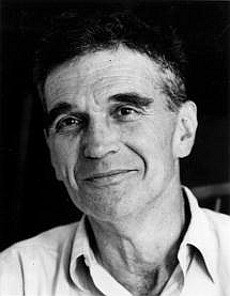
Robert Coles
Personal Information
Description
Robert Coles is an American author, child psychiatrist, and professor emeritus at Harvard University.
Books
Bruce Springsteen's America
Offers a portrait of Bruce Springsteen and the influence of his music on both the lives of ordinary Americans and on the American literary tradition, examining the meaning of his lyrics within a social, cultural, and philosophical context.
The Erik Erikson Reader
"Erik H. Erikson is recognized as one of the world's leading figures in the field of psychoanalysis and human development. His ideas and writings about the stages of development, the sources of identity, and the interdependence of individual growth and historical change completely revolutionized our understanding of the nature and course of psychological growth." "With writings from Erikson's entire career, including major work from Childhood and Society, Insight and Responsibility, Young Man Luther, and Gandhi's Truth, this reader charts the influence of Erikson's thinking in the areas of child psychology, development through the lifespan, leadership, and moral growth."--Jacket.
The Story of Ruby Bridges
For months six-year-old Ruby Bridges must confront the hostility of white parents when she becomes the first African American girl to integrate Frantz Elementary School in New Orleans in 1960.
The secular mind
Does the business of daily living distance us from life's mysteries? Do most Americans value spiritual thinking more as a hobby than as an all-encompassing approach to life? Will the concept of the soul be defunct after the next few generations? Child psychiatrist and best-selling author Robert Coles offers a profound meditation on how secular culture has settled into the hearts and minds of Americans. This book is a sweeping essay on the shift from religious control over Western society to the scientific dominance of the mind. Interwoven into the story is Coles's personal quest for understanding how the sense of the sacred has stood firm in the lives of individuals - both the famous and everyday people whom he has known - even as they have struggled with doubt.
Old and on their own
The goal of the popular middle-aged quest for longevity and physical well-being is, of course, getting there. Here, Coles listens to what it's like to have arrived, to have been lucky enough to make it. With surprising wit and candor, these people share their thoughts, memories, aspirations, and worries. They tell us what it means to be old. These stories span a century of American life. Nellie, born in 1897, now almost blind, describes how she follows the sun's course by watching the changing shadows in her house each passing day. George, ninety-nine and an enthusiastic conversationalist, looks forward to his hundredth birthday when he'll see his photograph on the Today show with Willard Scott. Anne, who took up ballroom dancing at eighty-three to help combat her grief over her husband's death, now finds fulfillment in the pure joy it gives her. Callie and Charles, both ninety, talk about the trials and rewards of their seventy-year marriage and their lives as "oldsters" today.
The moral intelligence of children
Robert Coles, one of America's leading authorities on young people, explores in this book a question crucial for many people today: How can you raise a child to be a good person whose moral character and strong values will steer and sustain him through life? This book distinguishes how moral intelligence is different from - but as important to success as - other kinds of human development, as significant as emotional or psychological growth, as IQ or intellectual development. Coles shows how children can be taught to become "smart" in this inner spiritual realm - to learn empathy, respect for themselves and others, and how to live the Golden Rule - through witnessing the conduct and caring of others and through moral conversations. Coles then embarks on an exploration of how values are born and shaped moment by moment, over what he calls "the moral archaeology of childhood." In infancy, Coles explains, there is a moral life that precedes language, and he considers the character of an infant, discussing such topics as Anna Freud's Yes and No, "the spoiled child," and how to stop a baby from becoming a bully. The elementary school years are the Age of Conscience, when a child's character is built and consolidated - or fails to be - and Coles explores such problems as the schoolgirl caught cheating and the smart boy who distracts others so as to detract from their success. Combining anecdotes with instruction, Coles goes on to discuss what to do during the teenage years - how to cope with alcohol, drugs, sex, and other moral dilemmas.
The youngest parents
Prominent child psychiatrist and Pulitzer Prize-winning author Robert Coles asks us to shed our preconceptions and listen to the compelling voices of young women and men who are soon to become parents, though barely out of childhood themselves. These teenage parents are black, white, and Hispanic; city dwellers and residents of small towns; rich and poor. From conversations with them, Dr. Coles weaves a subtle yet dramatic narrative that reveals the aspirations and apprehensions of these "youngest parents," whose prospects aren't very promising and whose assumptions aren't always ones that he, or we, share. Dr. Coles's text is accompanied by photographic essays by two outstanding American photographers. Jocelyn Lee, professor of photography at the Maine College of Art, lived alongside young mothers in Maine, Massachusetts, New York, Nova Scotia, and Texas, exploring their daily lives. John Moses, a pediatrician and photographer, worked for several years with teenage parents in North Carolina, and his pictures show the pride and tenderness they've found in family life.
The call of service
Sheds light on the individual urge toward idealistic action--what inspires and sustains it, how it is expressed, and why it is necessary.
A Robert Coles Omnibus
Essays, 1987-1992 -- That red wheelbarrow -- Times of surrender.
Their eyes meeting the world
This book distills the author's insights into the ways children from all over the world disclose their deepest convictions, feelings and dreams with crayon, paint, and pencil.
The call of stories
American child psychiatrist, Robert Coles, tells of the nourishing moral insights that come from books and reading throughout life.
