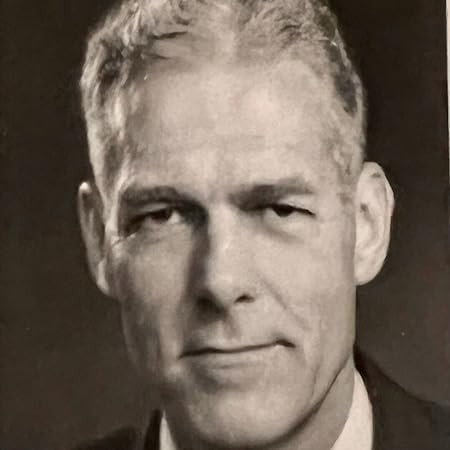
Richard Powell
Description
Richard Powell was born in Philadelphia, Pennsylvania. He graduated from Princeton University then worked at the Philadelphia Evening Public Ledger newspaper. After ten years, he joined the advertising agency N. W. Ayer & Son. He began to write fiction in the 1940s. His first novel, Don't Catch Me, was published in 1943. During World War II he served in the U.S. Army as Gen. MacArthur's news agent. After the war, he returned to N.W. Ayer, where he rose to vice president of information services in 1952. His novel The Philadelphian, published in 1957, was a huge success, spending more than six months on the bestseller list, and in 1958, he left advertising to write full-time. He wrote 18 novels in all over the course of his career.
Books
The Philadelphian
Tony Laurence's great-grandmother was an ambitious Irish lass who came to Philadelphia as a servant girl. She began the family's upward social climb. Tony's grandmother and mother painfully continued the climb. Tony is a nice boy from the right side of the tracks who lacks money. He can make it to the top of the Philadelphia heap if he chooses the right profession, acquires ten million dollars, and marries a delightful girl with the right bloodlines. And, of course, if he avoids scandal.
A shot in the dark.
Johnny Edwards is a war-weary young man from a rich family. He spends his time fishing, golfing, and chasing girls until Tony Mendoza asks for help. Johnny dithers for a day, but he owes his life to Tony, who is now mixed up with an illegal immigration ring. The delay cost Tony's life. Johnny decides to join the Border Patrol and find the killer.
The Soldier
"In a far corner of space, on the very borders between humanity's Polity worlds and the kingdom of the vicious crab-like prador, is an immediate threat to all sentient life: an accretion disc, a solar system designed by the long-dead Jain race and swarming with living technology powerful enough to destroy entire civilizations. Neither the Polity nor the prador want the other in full control of the disc, so they've placed an impartial third party in charge of the weapons platform guarding the technology from escaping into the galaxy: Orlandine, a part-human, part-AI haiman. She's assisted by Dragon, a mysterious, spaceship-sized alien entity who has long been suspicious of Jain technology and who suspects the disc is a trap lying in wait."--Book jacket.
Tickets to the Devil
This is a novel for readers who love bridge. It is a novel for readers who hate bridge. It is a a novel for readers who don't know the difference between a finesse and a five-card major and couldn't care less. You don't have to know bridge to be fascinated by the people in this book, who have gathered at a major tournament to prove that they can beat each other's brains out. They play big-time duplicate for many reasons. To some, it is a business. To others it is a drug, or a way of acting out fantasies, or a legal substitute for mayhem and manslaughter, or a reason for staying alive. Richard Powell, author of The Philadelphian; Pioneer, Go Home!; I Take This Land; Don Quixote, U.S.A.; and other novels, began playing tournament duplicate for still another reason. He found that it provided a unique laboratory for the study of human nature. Here is the result of his lab work: human nature as it comes boiling out of the Springs Nationals of the American Contract Bridge League.