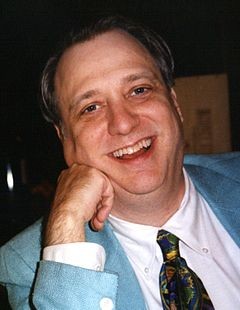
Richard Gott
Personal Information
Description
John Richard Gott III (born in Louisville, Kentucky) is a professor of astrophysical sciences at Princeton University. He is known for developing and advocating two cosmological theories: Time travel and the Doomsday argument. He received the President's Award for Distinguished Teaching in acknowledgment of his work on the National Westinghouse/Intel Science Talent Search high school student science competition. He is an active promoter of the public awareness of science at the popular level, and Princeton students have voted him the school's outstanding professor several times. - Wikipedia
Books
Hugo Chávez
Describes the political career and ambitions of Hugo Chávez, elected president of Venezuela in 1998 and responsible for far-reaching changes in the economic and political structures of the country.
Cuba
Britain's empire
"Contrary to nationalist legend and schoolboy history lessons, the British Empire was not a great civilizing power bringing light to the darker corners of the earth. Richard Gott's magisterial work recounts the empire's misdeeds from the beginning of the eighteenth century to the Indian Mutiny, spanning the red-patched imperial globe from Ireland to Australia, telling a story of almost continuous colonialist violence. Recounting events from the perspective of the colonized, Gott unearths the all-but-forgotten stories excluded from mainstream British histories"--Provided by publisher.
Land without evil
All too often, travel writers plunge into seemingly obscure parts of the globe with little knowledge of where they are, whom they are among, or what has happened there in the past. In this trend-breaking anti-travel book, Richard Gott describes his own journey through the heart of South America, across the swampland that forms the watershed between the River Plate and the River Amazon. But the story of his expedition takes second place to a brilliant resurrection of the historical events in the area over five hundred years, of the people who have lived there and the visitors who have made the same journey. The land crossed by the Upper Paraguay river once formed the contested frontier in South America between Spanish and Portuguese territory. The Portuguese sent expeditions through it in attempts to reach the Spanish silver mines of the Andes, and the Jesuits (supported by the monarch in Madrid) established strategic hamlets - the famous Indian missions - to stabilize the frontier. But this was not the beginning or end of conflict in the area. Earlier, the Guarani-speaking Indian nations of Paraguay had made violent contact across the swamp with the Quechua - speakers of the Inca empire; later, after the departure of the Spaniards, the nineteenth century witnessed a prolonged period of purposeful extermination of the local peoples. Since the Spanish conquest, the area has seen an endless procession of newcomers pursuing unsuitable and utopian programmes of economic and social development that have inevitably ended in disaster for the local population. Intermingling accounts of his own travels over many years with those of Jesuit priests, Spanish conquistadores and Portuguese Mamelukes, together with those of other visitors such as Alcides D'Orbigny, Theodore Roosevelt, and Claude Levi-Strauss, Richard Gott weaves a complex web of narrative that brings to life the almost unknown frontier land of Brazil, Bolivia and Paraguay. Both gripping and polemical, Land Without Evil is a significant contribution to our knowledge of South America.