Discover

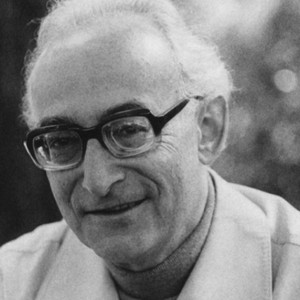
Reinhard Bendix

Personal Information

Born February 25, 1916
Died February 28, 1991 (75 years old)
Berlin, Germany
Also known as: R. Bendix, Richard Bendix
14 books
0.0 (0)
28 readers

Description

German-American sociologist

Books

Newest First

Unsettledaffinities

0.0 (0)
1

Unsettled Affinities was Reinhard Bendix's final work. It has a unique place in his writings, as it continues the themes contained in the two volumes of Embattled Reason and extends them in his consideration of the idea of community. For Bendix, our affinities are personally, socially, and politically unsettled and unsettling. From birth, each person goes through a life-cycle, buffeted by circumstance and uneasily suspended between the risks of individual opportunity and the need for psychological support from others. All of us stand at the intersection of many social groups formed by the family, social clubs, occupation, or given by the ethnic and national affiliation into which we are born. Bendix perceived these psychological and social groups as a source of strength as well as the source of the particularist drives that ultimately aim to serve universalist aspirations. It is in this series of paradoxes that political tasks arise: how to deal with the scarcity of goods and the inequality of life changes. Unsettled Affinities explores the ethical paradoxes of personal affiliation, social universalism, and political unity in Western civilization. The work is divided into three parts: an initial, personal reflection on the author's emigration from Hitler's Germany; an extended examination of the social definitions of community in Western civilization; and a consideration of politics, civil society, and the legitimation of power. In the social and political sections, special attention is given to Germany. The consideration of Germany in the post-Communist world was not completed. Using notes, letters, and lectures, John Bendix, the author's son, has provided an epilogue that gives indications of the direction Reinhard Bendix's thought was heading, and Rudolf von Thadden has contributed an appropriate final thought in his "Endangered Affiliations."

From Berlin to Berkeley

0.0 (0)
0

From Berlin to Berkeley is an intellectual portrait of one of America's leading social scientists, Reinhard Bendix, and his father, Ludwig Bendix. It is a story of cultural identity and assimilation, of survivors from a course of events that destroyed millions of lives. Reinhard Bendix offers a profound and moving account of his father's life as a lawyer and critic of the German judicial system, his break with Judaism and identification with German culture, and his emigration to Palestine during Hitler's regime. Bendix then examines the relationship with his father and details his youth in Germany, his emigration to America, and his early career as a scholar. Covering the period from 1877 to the present, Bendix shows how the two lives were touched by the culture of Imperial Germany, the German legal profession, World War I, the revolution of November 1918 in Germany and subsequent inflation, the Great Depression of the 1930s and the crisis of the Weimar Republic, the Hitler regime, emigration to Palestine and the United States, World War II, the division of Germany, and the world-political role of the United States. The book is a significant measure of one family and one civilization that has shaped our experiences throughout this tragic century.
Embattled Reason

0.0 (0)
1

Embattled Reason constitutes an intellectual profile of one of America's preeminent sociologists. This collection of essays, published over the course of thirty years, embodies a series of intellectual choices in response to current concerns and to debates of the past, affording a coherent and unified view of Bendix's work as a whole. The articles are grouped under three headings. In "Conditions of Knowledge" the author is concerned with the value assumptions basic to the social sciences. Under "Theoretical Perspectives" the author presents the guiding considerations of his own work in a continuing dialogue with such thinkers as Tocqueville, Marx, Durkheim, and Weber. In the last section, "Studies of Modernization," Bendix takes up problems involved in an analysis of social change though a reexamination of evolutionist assumptions.

Nation-building and Citizenship

0.0 (0)
5

Nation-Building and Citizenship examines how states and civil societies interact in their formation of a new political community. Reinhard Bendix directs our attention to relations established between individual and state during nation-building. While the development of citizenship and the interplay between tradition and modernity are important in this process of social and political change, his key theme is the examination of authority patterns. Bendix explores in depth the possibilities of an alternative approach to the neo-evolutionary orientation many social scientists take in their analyses of the underdeveloped areas of the world. The subjects he discusses include transformations of Western European societies since medieval times, extension of citizenship to the lower classes, bureaucratization in the nation-state, private and public authority in Western Europe and Russia, aristocracies and development in Germany and Japan, and the development of public authority in India's political community. The book concludes with a reconsideration of ideas widely held about tradition, modernity, and modernization. . In a new introduction, John Bendix writes that what continues to make this book relevant is not only what it can tell us about past and present nation-building, including the transformations of the 1980s and 1990s, but its more general messages about the nature of social and political transformations. Nation-Building and Citizenship is a necessary addition to the libraries of political scientists, sociologists, historians, and scholars of comparative studies.

Max Weber

0.0 (0)
7

"A founder of contemporary social science, Max Weber was born in Germany in 1864. At his death 56 years later, he was nationally known for his scholarly and political writings, but it was the international reception of his oeuvre over the last forty years that has made him world-famous. "The Protestant Ethic and the Spirit of Capitalism," "The Economic Ethics of the World Religions" and his magnum opus, "Economy and Society," with its treatment of the relations of economics, politics, law and religion, belong to the great achievements of 20th-century social science. The groundwork for the posthumous Weber reception was laid by Weber's widow Marianne, a well-known feminist writer, who followed up her edition of his collected works with one of the greatest biographies in a generation that produced many important accounts of itself. Although unavailable in English until a decade ago, the importance of Marianne Weber's 1926 work had been widely understood. Sociologist Robert A. Nisbet called it "a moving and deeply felt biographical memoir." Historian Gerhard Masur cited the book as "the foundation of all further inquiries into Max Weber's life and influence."Beginning with Max's ancestry and early years, Marianne Weber guides us through his life as student, young lawyer, scholar and political writer, quoting liberally from his voluminous correspondence. Her account of his nervous breakdown after 1897, which curtailed his academic career but ultimately strengthened his creative energies, provides deep insight into some of the personal tensions that troubled him to the end. In addition to her perceptive personal and intellectual life before the First World War, describing many scholars, social reformers, politicians and literary figures within and beyond the famous Heidelberg circle of the Webers. The new introduction by Guenther Roth situates Marianne Weber's own role in the contemporary setting and discusses the current state of Weber research and of the"--Provided by publisher
