
UNITED NATIONS · INTERNATIONAL COOPERATION
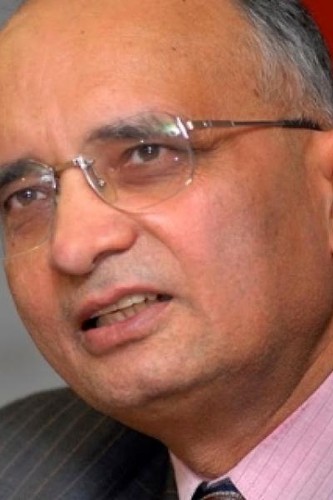
Ramesh Chandra Thakur
Ramesh Thakur is an Emeritus Professor in the Crawford School of Public Policy, The Australian National University, Senior Research Fellow, the Toda Peace Institute, and a Fellow of the Australian Institute of International Affairs. His last post was Director of the Centre for Nuclear Non-Proliferation and Disarmament at the ANU. He was formerly Senior Vice Rector of the United Nations University (and Assistant Secretary-General of the United Nations). Educated in India (BA Honours, University of Calcutta) and Canada (MA, PhD Queen’s University), he has held full-time academic appointments in Fiji, New Zealand, Canada, and Australia and been a consultant to the Australian, New Zealand and Norwegian governments on arms control, disarmament and international security issues. He was the Editor-in-Chief of Global Governance (2013–18). Source: the Crawford School of Public Policy. Contributions: - (with [Hyam Gold]( Antarctica as a Nuclear-Free Zone in [Nuclear-Free Zones (1987)]( - The Treaty of Rarotonga: The South Pacific Nuclear-Free Zone in [Nuclear-Free Zones (1987)](
The international system is facing a serious double challenge.
— from Reforming from the top
Most acclaimed

The politics and economics of India's foreign policy
In 1991 India was ailing internally, wracked by political turmoil, social ferment and economic stagnation. It had to cope with waning significance abroad, suspicion in the region and turbulence at home. Dr Thakur's concern is to explore how India might recover its poise in order to enhance its market presence and expand its influence in world affairs. Dr. Thakur argues that stability and prosperity at home and in the region will enhance India's global status and give credibility to its claims to world leadership. He shows how India can change to a radically more productive domestic policy through market-opening measures, and a dramatically more cooperative policy in its bilateral, regional and international relations. Friendships with Pakistan and China would enable India to lead the way to collective regional prosperity, which in turn would help to define the terms of its integration with the rest of Asia-Pacific. Peace and prosperity at home and in its home region would also help to contain and offset the damage in relations with Russia while improving those with the USA on the basis of mutual respect and equality.
The Iraq crisis and world order
"The Iraq war was a multiple assault on the foundations and rules of the existing UN-centered world order. It called into question the adequacy of the existing institutions for articulating global norms and enforcing compliance with the demands of the international community. It highlighted also the unwillingness of some key countries to wait until definitive proof before acting to meet the danger of the world's most destructive weapons falling into the hands of the world's most dangerous regimes. It was simultaneously a test of the UN's willingness and ability to deal with brutal dictatorships and a searching scrutiny of the nature and exercise of American power. The United States is the world's indispensable power, but the United Nations is the world's indispensable institution. The UN Security Council is the core of the international law enforcement system and the chief body for building, consolidating and using the authority of the international community. The United Natio ns has the primary responsibility to maintain international peace and security, and is structured to discharge this responsibility in a multipolar world where the major powers have permanent membership of the key collective security decision-making body, namely the UN Security Council. The emergence of the United States as the sole superpower after the end of the Cold War distorted the structural balance in the UN schema. The United Nations is the main embodiment of the principle of multilateralism and the principal vehicle for the pursuit of multilateral goals. The United States has global power, soft as well as hard; the United Nations is the fount of international authority. Progress towards a world of a rules-based, civilized international order requires that US force be put to the service of lawful international authority. This book examines these major normative and structural challenges from a number of different perspectives.--Publisher's description."--From source other t han the Library of Congress