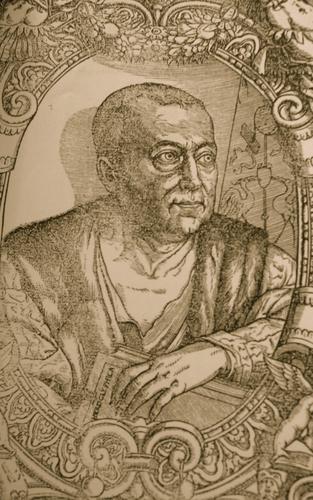
Pierio Valeriano
Personal Information
Description
There is no description yet, we will add it soon.
Books
Pierio Valeriano on the ill fortune of learned men
"Julia Haig Gaisser provides us with a translation of and context for the interesting and often misunderstood sixteenth century dialogue De litteratorum infelicitate (On the Ill Fortune of Learned Men) by Pierio Valeriano. The dialogue among several humanists takes place during Lent, 1529, less than two years after the Sack of Rome and just before the stirrings of the Counter Reformation. These humanists, including Valeriano, are gathered together discussing the lives and unhappy fortunes of humanists from 1470 to 1540. The stories are interesting not only for the direct historical information they provide but also because they present Italian humanism as an organic network of intersecting lives and because they portray complex response to both the Sack of Rome and to its psychological aftereffects in the curial and humanist community."--BOOK JACKET.
Hieroglyphica sive de sacris Aegyptiorum
Folio. 32cm x 21.5cm (12.5" x 8.5"). 18th century 1/4 vellum over marbled boards (with vellum corners). Flat spine with MS title in black ink. All edges speckled blue. Two volumes in one with continuous foliation but with a separate half-title to 'Tomus Secundus'. Text in Latin, with some passages in Greek. Printer's device on title page with motto "Palma Guar"; another printer's device on verso of last leaf (Hhh6v) with motto "Palma Ising". Full page woodcut portrait of Valeriano on verso of title, and over 300 woodcuts in text. Numerous decorative and historiated woodcut initials. Foliation: ff, 15, pp, 15-441 ff, ff. Signatures: α6 β4 a-z6 A-Z6 Aa-Zz6 Aaa-Fff6 Ggg4 Hhh6. COMPLETE. 25 final leaves are occupied by Index. Errata and colophon printed at the bottom of Hhh6r. Note to reader (Lectori) printed on title page above the printer's mark. Dedication to Cosimo Medici on α2r-α5r, followed, on α5v-β4r, by Table of Contents, list of authors cited, Index of citations from Scriptures. Preliminaries conclude with a Greek epigram on Valeriano's Hieroglyphica by Carolus Utenhovius.