
UNITED STATES AUTHOR · CHRISTIAN LIFE · CHRISTIANITY
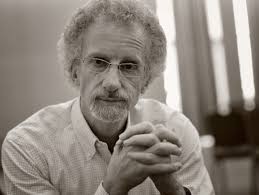
Philip Yancey
Also known as: Philip Yancey-Compiler, Philip. Yancey
Philip Yancey is an American Christian author. Fourteen million copies of his books have been sold worldwide, making him one of the best-selling evangelical Christian authors. Two of his books have won the ECPA's Christian Book of the Year Award: The Jesus I Never Knew in 1996, What's So Amazing About Grace? in 1998. He is published by Zondervan Publishing and Hachette.
IT IS ADVENT AGAIN.
— from Watch For The Light
Most acclaimed

Vanishing grace
"'Why does the church stir up such negative feelings?' Philip Yancey has been asking this all his life as a journalist. His perennial question is more relevant now than ever: in a twenty-year span starting in the mid-nineties, research shows that favorable opinions of Christianity have plummeted drastically--and opinions of evangelicals have taken even deeper dives ... Yet while the opinions about Christianity are dropping, interest in spirituality is rising. Why the disconnect?"--Amazon.com.
Watch For The Light
The history of opera has a relatively short duration within the context of the history of music in general. It appeared in 1597, when the first opera, Dafne, by Jacopo Peri, was created. Since then it has developed parallel to the various musical currents that have followed one another over time up to the present day, generally linked to the current concept of classical music. Opera (from the Latin opera, plural of opus, "work") is a musical genre that combines symphonic music, usually performed by an orchestra, and a written dramatic text—expressed in the form of a libretto—interpreted vocally by singers of different tessitura: tenor, baritone, and bass for the male register, and soprano, mezzo-soprano, and contralto for the female, in addition to the so-called white voices (those of children) or in falsetto (castrato, countertenor). Generally, the musical work contains overtures, interludes and musical accompaniments, while the sung part can be in choir or solo, duet, trio, or various combinations, in different structures such as recitative or aria.
Jesus
"In a book that is as daring and unconventional as it is scholarly, A.N. Wilson, the celebrated biographer of Tolstoy and C.S. Lewis, searches for the elusive historical reality in the life of Jesus of Nazareth." "What are the facts about the life of Jesus, as opposed to the myths, or unprovable tenets of faith surrounding the miracles, death, and resurrection? How and when did Christianity become a separate religion from the Judaism into which Jesus was born? To what extent was his power over contemporaries political rather than religious? Wilson's answers to these questions will fascinate readers of every shade of faith or skepticism." "His starting point is an explanation of how one may sift through the gospel accounts of the life of Jesus to find the sort of eyewitness details that have the ring of everyday reality. He uses archaeological evidence from the Dead Sea Scrolls and the most recent findings of New Testament scholarship to shed new light on the tumultuous religious and political situation in Israel that so influenced the life and teachings of Jesus. And, finally, he weaves all these strands into a gripping narrative leading to the crucifixion, a narrative that for all its learning contains strong elements of the literary detective story and the psychological novel." "Wilson's inquiry is not meant to validate any particular creed or version of Jesus Christ. Instead, he enables us to discover the man who became the central figure in western civilization, whose teachings survive in spite of the logical impossibilities of the religion, and whose words, reverberating still, contain a wisdom that has never ceased to trouble the world."--Jacket.