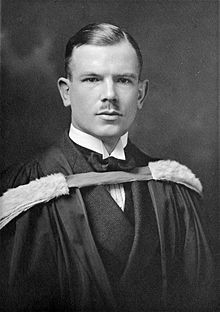

CANADA AUTHOR
Norman Bethune
Also known as: Henry Norman Bethune
Henry Norman Bethune (March 4, 1890 – November 12, 1939; Chinese: 白求恩; pinyin: Bái Qiúēn) was a Canadian physician, medical innovator, and noted anti-fascist. Bethune came to international prominence first for his service as a frontline surgeon supporting the democratically-elected Republican government during the Spanish Civil War. But it was his service with the Communist Eighth Route Army (Ba Lu Jun) during the Second Sino-Japanese War that would earn him enduring acclaim. Dr. Bethune effectively brought modern medicine to rural China and often treated sick villagers as much as wounded soldiers. His selfless commitment to the Chinese people made such an impression on Mao Zedong that generations of Chinese students were required to memorise the Chairman's eulogy to him. Ironically, while Bethune was the man responsible for developing a mobile blood-transfusion service for frontline operations in the Spanish Civil War, he himself died of blood poisoning. A prominent Communist and veteran of the First World War, he wrote that wars were motivated by profits, not principles. Statues in his honour can be found in cities throughout China. Source: Wikipedia
Most acclaimed

Norman Bethune
Honoured as a hero in China, Ontario-born Norman Bethune was a surgeon, medical innovator, and charismatic political activist who deployed his skills on the battlefields of Spain and China in the 1930s. His prodigious energy included inventing surgical instruments, mobile blood-transfusion units, teaching, and advocating for social justice at home and abroad. Adrienne Clarkson, a Chinese Canadian, has always been fascinated by the dynamic man who married his social conscience to his medical mission. Reviled as a Communist by some, revered as a humanitarian by others, Bethune was a complicated, inspirational figure who lived and loved on a large canvas.
The crime on the road Malaga-Almeria
1937
In the first days of February 1937, what was probably the bloodiest massacre of the Spanish Civil War took place: for several days, along the 200 kilometres between Málaga and Almería along the coast, Franco's army, the Italian army and the German air force attacked civilians fleeing the city of Málaga without interruption by land, sea and air after it fell into the hands of the rebel troops, an exodus of terror popularly known as "la desbandá" (the disbandment). This work includes the testimony of the Canadian brigadier and doctor Norman Bethune, a key figure in the evacuation of the refugees.