Discover
Jan 1, 1473 — Jan 1, 1543· 70 yrs

KINGDOM OF POLAND AUTHOR · ASTRONOMY · EARLY WORKS TO 1800

Nicolaus Copernicus

Also known as: Nikolaus Kopernikus, Nicolaus Coppernicus

14
BOOKS
0.0
AVG RATING (0)
1
READERS

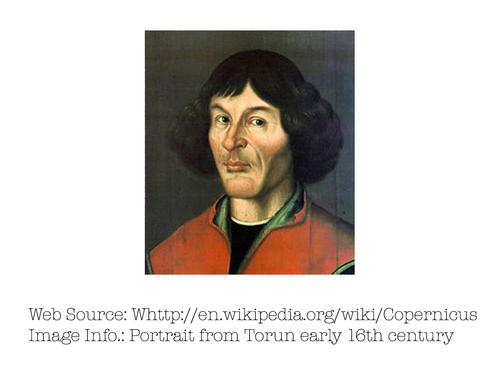
Nicolaus Copernicus (19 February 1473 – 24 May 1543) was a Renaissance polymath who formulated a model of the universe that placed the Sun rather than Earth at its center. The publication of Copernicus's model in his book De revolutionibus orbium coelestium (On the Revolutions of the Celestial Spheres), just before his death in 1543, was a major event in the history of science, triggering the Copernican Revolution and making a pioneering contribution to the Scientific Revolution. Though a similar heliocentric model had been developed eighteen centuries earlier by Aristarchus of Samos, an ancient Greek astronomer, Copernicus likely arrived at his model independently. Copernicus was born and died in Royal Prussia, a semiautonomous and multilingual region created within the Crown of the Kingdom of Poland from lands regained from the Teutonic Order after the Thirteen Years' War. A polyglot and polymath, he obtained a doctorate in canon law and was a mathematician, astronomer, physician, classics scholar, translator, governor, diplomat, and economist.

Toruń, Kingdom of Poland
Wikipedia

Ich zweifle nicht, dass manche Gelehrte über den schon allgemein verbreiteten Ruf von der Neuheit der Hypothesen dieses Werkes, welches die Erde als beweglich, die Sonne dagegen als in der Mitte des Universums unbeweglich hinstellt, sehr aufgebracht und der Meinung sein mögen, dass die freien und schon vor Zeiten richtig begründeten Wissenschaften nicht hätten gestört werden sollen.

— from Nicolaus Coppernicus aus Thorn über die Kreisbewegungen der Weltkörper, 1879

Most acclaimed

#1

De revolutionibus orbium coelestium

1543

0.0 (0)

Facsim. reproduction of the 1543 copy in the Warnock Library.

#2

On the Revolutions

1972

0.0 (0)
#3

Minor works ...

0.0 (0)

Nearly all the works Aristotle (384-322 BCE) prepared for publication are lost; the priceless ones extant are lecture-materials, notes, and memoranda (some are spurious). They can be categorized as practical; logical; physical; metaphysical; on art; other; fragments.

Books

Newest First