Discover

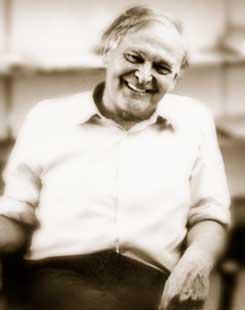
N. G. L. Hammond

Personal Information

Born November 15, 1907
Died March 24, 2001 (93 years old)
United Kingdom
Also known as: Nicholas Geoffrey Lemprière Hammond
23 books
4.5 (2)
47 readers

Description

There is no description yet, we will add it soon.

Books

Newest First

Sources for Alexander the Great

0.0 (0)
0

Plutarch and Arrian have contributed more than any other ancient authors to our picture of Alexander the Great, but since they wrote four or more centuries after his death the value of what they said depends upon the sources of information on which they themselves drew. In this book the attempt is made (surprisingly for the first time) to define and to evaluate those sources in a detailed study, analysing the historians' works section by section and comparing them with other accounts of the same episodes. Plutarch and Arrian rank among the finest writers of antiquity, and their charm is not ignored in this appreciative study. Professor Hammond maintains that a close analysis of the sources is essential for a balanced view of the history of Alexander the Great. After writing his Alexander the Great: King, Commander and Statesman (1980; 2nd edn 1989) he published Three Historians of Alexander the Great on Diodorus, Justin and Curtius (Cambridge University Press, 1983). The present book completes his study of the five Alexander-historians and lays a new basis for work in this area. This book will be of particular value to ancient historians but also has much to offer to anyone seriously interested in the life of Alexander the Great.

The Macedonian State

0.0 (0)
2

xx, 413 p. : 25 cm

Studies in Greek history

0.0 (0)
1

xvi, 574, 6 p., 1 leaf. 23 cm

Epirus

0.0 (0)
9

Ancient Epirus, half in Greece anf half in Albania, is one of the least known parts of Europe. It was explored, village by village and site by site, by the author in the 1930's. Then only a few sites had been excavated. Since the war more have been excavated, but the results have not been excavated,but the results have not been correlated - indeed the Albanian excavations are unknwn in the West. This book filsca gap in the prehistory of the southern Balkans; provides s comprehensive history of the tribal, political,and cultural life of Epirus in the classical and Hellenistic periods; andis the first study onsuch a scale of any Greek canton. Its range will interest the general reader as well as the specialist.

A history of Greece to 322 B.C.

5.0 (1)
6

This new edition of a well-known history of ancient Greece presents a modern interpretation of Greek ideas, culture, and history. Although the book's primary focus is on the political and military history of the Greek states, the prehistoric period and the intellectual, social, and economic backgrounds are also covered. N.G.L. Hammond's work thoroughly documents its ancent sources, and directs readers to further studies in the field. Updated and revised, the third edition adds new material on the significance of the spread of tumulus-burial in Albainia and the Mycenaean world, the dating of early coinage, the decree of Themistocles, and on aspects of the rule of Alexander the Great. Wide-ranging in scope, yet rich in detail, this work adds a modern perspective to the study of a fascinating ancient culture.

Philip of Macedon

0.0 (0)
1

"Philip was a genius of extraordinary versatility. Inheriting a kingdom near to collapse, he made Macedonia the greatest military power in the Western world and left to his son Alexander the strongest state in Eastern Europe. This book gives full attention to the Macedonian state and the Macedonian people who made Philip's success possible, and to the high level of culture and of artistic skills revealed by recent archaeological discoveries."--Bloomsbury Publishing Philip was a genius of extraordinary versatility. Inheriting a kingdom near to collapse, he made Macedonia the greatest military power in the Western world and left to his son Alexander the strongest state in Eastern Europe. This book gives full attention to the Macedonian state and the Macedonian people who made Philip's success possible, and to the high level of culture and of artistic skills revealed by recent archaeological discoveries.

The Genius of Alexander the Great

4.0 (1)
11

By the time of his death in 323 BC, Alexander III of Macedonia had built an empire that stretched from the eastern Mediterranean coast through Asia minor and into the Indus Valley. A former student of the philosopher Aristotle, Alexander succeeded Philip the second as king of Macedonia in 336 BC and spent the next 13 years subduing and consolidating the lands of the Persian Empire. Even before his sudden death at the age of 32, Alexander had achieved mythical status throughout his kingdom, and in the centuries that followed, his life became the subject of countless chronicles and biographies. N.G.L. Hammond, the foremost expert on ancient Macedonian history, here presents a new account of Alexander's fabled career. Through a careful analysis of ancient sources -- the writings of Diodorus, Justin, Curtius, Plutarch, and Arrian -- Hammond has effectively separated the work of reliable contemporaries from fictional reports of Alexander's accomplishments. The resulting narrative, enriched by a lifetime of research, pronounces the Macedonian conqueror a man truly deserving of the title Alexander the Great. - Jacket flap.
