
FICTION · GENERAL
Mitchell, James
Also known as: James Mitchell
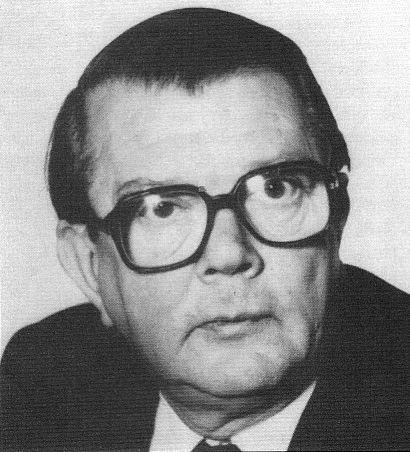
James Mitchell's eyes - framed by black rimmed glasses - have seen a lot in their 68 years. They've seen the terrible hardship of the 1930s' depression, the wonderful benefits of a good education (first at grammar school and then at Oxford), and the bizarre excesses of Hollywood - a place which he describes as "a city of fear". He's probably best known as the creator and scriptwriter of Callan, the late-Sixties TV series, and the hugely popular When the Boat Comes in, which was first broadcast in 1976. He accounts for the incredible success of the latter programme, about a family's life in Tyneside in the 1920s, with one word: "nostalgia". "People always look back over their shoulders on what they thought was a golden age," he says. "There were things that happened in When the Boat Comes in that were quite appalling: people being evicted, young women dying of tuberculosis, exploitation, lock-outs, strikes and everybody would watch them all, then at the end of the day say, 'Oh, those were the days'." Yet the script was about the triumph of the human spirit over adversity, a theme present in a lot of his work. His father was a fitter who became a union man and eventually the mayor of South Shields, James's home town, in 1940. Born in 1926, the year of the General Strike, James Mitchell was encouraged by his family to concentrate on his education — which he did to great effect by first going to grammar school and then to Oxford to study English. "I loved it," he says enthusiastically, reminiscing about his university days. Then he had a series of jobs, including barman, travel agent, actor and eventually teacher, before becoming an established writer. "All the struggle," he says, referring to his various occupations, "was part of the important business of staying alive and having enough money to drink and chase women." He wrote his first book, Here's a Villain, in 1957 at the age of 30. "I was what you call a late developer," he says. That was closely followed by a second novel, A Way Buck which he adapted for TVs prestigious Armchair Theatre and won the Crimewriters Association Critics Award with. He says that writing a script is like "writing a novel by other means". After his success with Armchair Theatre he was a freelance scriptwriter for a while, working on classic TV shows like The Avengers and Troubleshooter, before creating his own series in 1968 called Callan. The programme was so successful that an American producer invited him over to Hollywood. "It was positively dreadful," he says of his time as a scriptwriter, but then reconsiders his harsh pronouncement. "No that's unkind. It's true but it's unkind...It's ghastly. It's ghastly with money, which is why I went." His main reason for hating it is because of the paranoia that it generates in people, "it is a city of fear as much as anything else," he says. "Are they going to fire me? Am I not going to be making $150,000 a month?" He eventually tired of Hollywood and then came back to England to write When the Boat Comes in and since then he's been concentrating on mostly novels. He has a direct and uncompromising attitude to his craft and he prefers not to analyse where he gets his inspiration from. "The novel, as far as I'm concerned, comes from the unconscious. The inspiration may very well be sleep. It comes out of your mind unasked or it doesn't come out at all." (adapted from Books magazine november december 1994)
Most acclaimed

Leading lady
1990
In James Mitchell's latest novel, Leading Lady, the central character is struggling to make sense of her life in 1930s' Newcastle. It charts the troubled history of Jane Whitcombe, whose story began in A Woman to be Loved and continued in An Impossible Woman. She's rich, beautiful and loved by wealthy banker Charles Lovell, but she is concerned and distressed about her dead fiance's home town of Felston. She travels with Charles to Hollywood and then on to Mexico, where he secures a contract to build a destroyer for the Mexican government — a contract that might just save Felston from ruin. On their return to England, Jane and Charles marry, but she soon finds other causes to fight for and finds herself in Spain helping the casualties of the civil war. Charles is appalled by her behaviour and Jane doesn't know whether he will ever forgive her. Jane's struggle for a better and meaningful existence is something that James understands all too well. He, like his fictional character, strove for excellence in the face of unfortunate circumstances and won. "If you ever give in," he says, "you're dead," — later adding that his attitude is what his parents taught him. His father was a fitter who became a union man and eventually the mayor of South Shields, James's home town, in 1940.
Callan Uncovered
The first-ever compilation of the Callan short stories written by creator James Mitchell between 1967 and 1976, never published in book form before. Callan Uncovered also includes a Mitchell Outline Treatment for a Callan episode and a previously unseen full-length script - Goodbye Mary Lee - which was never filmed. Edited by Mike Ripley, with a special introduction by James Mitchell s son and literary executor, Peter. Contents Preface 7 Introduction by Peter Mitchell 9 A Funeral Has Been Arranged and Will Shortly Take Place (Treatment)15 Merry Christmas from the Section 19 File on a Deadly Deadshot 23 File on an Angry Artist 30 File on a Reckless Rider 37 File on a Weeping Widow 45 File on an Angry Actor 53 File on a Lucky Lady 60 File on a Dancing Decoy 68 File on a Deadly Diary 76 File on a Classy Club 85 File on a Fearsome Farm 95 File on a Careful Cowboy 103 File on a Doomed Defector 112 File on a Pining Poet 122 File on a Powerful Picador 131 File on a Difficult Don 140 File on a Darling Daughter 150 File on an Awesome Amateur 162 File on a Joyous Juliet 173 File on a Mourning Mother 185 File on an Angry American 197 File on a Deadly Don 209 File on a Tired Traitor 218 File on a Harassed Hunter 228 File on a Beautiful Boxer 237 Goodbye Mary Lee (Script) 247