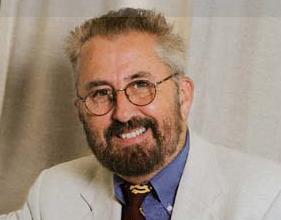
Michael C. Keith
Personal Information
Description
American media historian
Books
The Next Better Place
"Albany, New York, 1959. Michael Keith is eleven years old and is being transferred to the care of his estranged, alcoholic father. "Don't drink! Bars are no place for a child. He needs to have a bath and his clothes and underwear need to be washed. School is important. If there is a problem, just bring him back, okay?" Despite his mother's stern warning, Michael and his dad ditch Albany and set off hitchhiking out West. Trading his schoolbooks for a Rand McNally atlas, Michael spends the rest of his childhood crisscrossing the country - rarely attending class, surviving on shoplifted sardines and sugared bread, sleeping in rundown rooming houses, rousing his soused dad from seedy bars. The twosome is perpetually en route to someplace else.". "Remarkably, today Michael Keith is a professor at Boston College. His memoir, told without sentimentality in the funny, world-wise voice of the young boy he once was, describes the peculiar characters encountered while hitchhiking our nation's windswept highways. In the homeless missions of Pittsburgh and Fort Worth, where they hole up as Michael's father works odd jobs to make enough money for them to move on; in the carnivals of Kansas and casinos of Las Vegas, where Michael dreams of Hollywood stardom; and in every two-bit town along the way, we glimpse an America far outside convention. Yet despite their dysfunctional existence, there is real love between this father and son, and they share the glorious freedom of the peripatetic life. That such happiness exists in a lonely marginal universe doesn't overshadow the fact that a Greyhound bus is the closest Michael comes to experiencing home." "The Next Better Place explores the fine line between wanderlust and compulsion, between running away and arriving, and leaves us with the understanding that the journey is often more powerful than the destination."--BOOK JACKET.
Sounds in the dark
"Sounds in the Dark chronicles the history and development of nighttime radio in the United States from its inception in the 1920s through to its present all-night format. Michael Keith examines and analyzes the attraction and popularization of nighttime radio in relationship to social, cultural, and industrial influences.". "Keith also hypothesizes on the future of the genre, discussing such concerns as consolidation, bottom-line emphasis, new forms of electronic media, and potential declines in live/local all-night programming. Whatever the future holds, Sounds in the Dark substantiates nighttime radio's unique contribution to the development of broadcast media."--BOOK JACKET.
Voices in the purple haze
During the fateful summer of 1966, a handful of restless and frustrated deejays in New York and San Francisco began to conceive of a whole new brand of radio, one which would lead to the reinvention of contemporary music programming. Gone were the screaming deejays, the two minute doowop hits, and the goofy jingles. In were the counterculture sounds and sentiments that had seldom, if ever, made it to commercial radio. This new and unorthodox form of radio - this radical departure from the Top 40 establishment - reflected the social and cultural unrest of the period. Underground radio had been born of a desire to restore substance and meaning to a medium that had fallen victim to the bottom-line dictates of an industry devoted to profit. In this compelling and intriguing account of the counter-culture radio movement, over 30 pioneers of the underground airwaves share insights and observations, and tell it like it was.
Signals in the air
Signals in the Air: Native Broadcasting in America is the first book-length study of one of the most unique communications enterprises in U.S. history. It is the remarkable account of how the nation's most exploited minority group overcame adversity by embracing the airwaves. Through their own radio and television stations, American Indians have found a way to keep their cultures and languages from perishing. This book examines the impetus behind the development of Native-run stations and how these stations operate today. It assesses the influence and impact of Native broadcasts in the indigenous community and seeks to chronicle the formidable challenges confronting Indian broadcasters as they provide vital programming services to the often impoverished inhabitants of the nation's remote reservations.
Radio cultures
"Radio Cultures examines the manifold ways in which radio has influenced the nation's social and cultural environment since its inception nearly a century ago. Written by leading scholars in the field, chapters address a wide range of topics, including how this powerful medium has impacted and affected non-mainstream segments of the population throughout its history and how these repressed and neglected groups have employed radio to counter and overcome discrimination and bias. The use of the audio medium for political, economic, and religious purposes is comprehensively probed and analyzed in this insightful and innovative volume."--Back cover.
Talking radio
"Incorporating a lively oral history approach, this history of radio since World War II covers the impact of the arrival of television, the rise of transistor radios, the popularity of rock 'n' roll, FM stereo stations, underground radio of the 1960s, the relaxing of regulation in the Reagan era, talk radio, public radio, and how technology and the Internet will affect its future."--BOOK JACKET.