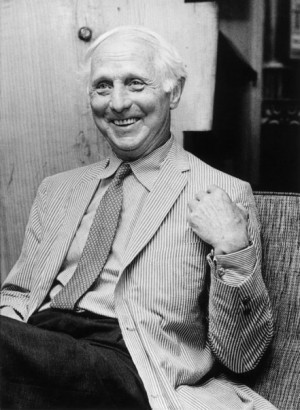
Max Ernst
Personal Information
Description
German painter, sculptor and graphic artist
Books
The hundred headless woman =
The Hundred Headless Woman is Ernst's first collage novel. It features a loosely narrative sequence of uncanny Surrealist collages, made by cutting up and reassembling nineteenth-century illustrations, accompanied by Ernst's equally strange captions. Ernst's French title, La Femme 100 têtes, is a double entendre; when read aloud it can be understood as either "the hundred-headed woman" or "the headless woman." Along with this enigmatic title character, the book marks the introduction of Ernst's favorite alter ego, Loplop, "the Bird Superior." Ernst was deeply engaged with illustrated books during the 1930s; in addition to collage novels, he created many etchings and lithographs to complement the poems and stories of Surrealist writers with whom he was closely associated.
Une semaine de bonté
Divided into seven parts, one for each day of the week, this book includes 182 bizarre and darkly humorous collage scenes of classic dreams and erotic fantasies. The title in English translates to: A week of kindness.
Max Ernst Dream and Revolution
"Max Ernst (1891-1976) is one of the most significant and influential artists of the twentieth century. Influenced by two world wars, he repeatedly questioned and adjusted his repertoire of expression throughout his entire career and reflected on the potentials of art with vast inventiveness. His complex pictorial worlds now seem more relevant than ever before: a younger audience will be able to discover links between Max Ernst's fantasy worlds and their own travels to the cyber worlds of modern computer games." "This publication considers Max Ernst's revolutionary life's work from a new perspective. It examines in detail his Dada years in Cologne, his residence in France from 1921 to 1941 and his importance amid the Parisian Surrealists, the decade in American exile, and the period after his return to Europe until his death. Moreover the contributions by Ludger Derenthal, Julia Drost, Benjamin Meyer-Krahmer, Iris Muller-Westermann, Jurgen Pech, Werner Spies, and Tanja Wessolowski focus on central aspects of Max Ernst's manifold oeuvre."--Jacket.
