Discover

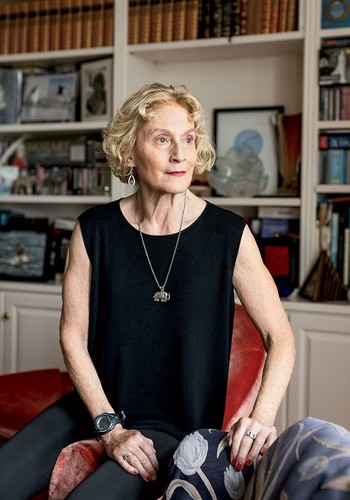
Martha Nussbaum

Personal Information

Born May 6, 1947 (78 years old)
New York City, United States
Also known as: Martha Craven Nussbaum, Martha C. Nussbaum
56 books
4.5 (6)
89 readers

Description

Martha Craven Nussbaum (born May 6, 1947) is an American philosopher and the current Ernst Freund Distinguished Service Professor of Law and Ethics at the University of Chicago, where she is jointly appointed in the Law School and the Philosophy department. She has a particular interest in ancient Greek and Roman philosophy, political philosophy, feminism, and ethics, including animal rights. She also holds associate appointments in classics, divinity, and political science, is a member of the Committee on Southern Asian Studies, and a board member of the Human Rights Program. She previously taught at Harvard and Brown. Source: Martha Nussbaum on Wikipedia (Wikipedia contributors, CC BY-SA 3.0).

Books

Newest First

Women and human development

0.0 (0)
0

Proposing a new kind of feminism that is genuinely international, Martha Nussbaum argues for an ethical underpinning to all thought about development planning and public policy, and dramatically moves beyond the abstractions of economists and philosophers to embed thought about justice in the concrete reality of the struggles of poor women. In this book, Nussbaum argues that international political and economic thought must be sensitive to gender difference as a problem of justice, and that feminist thought must begin to focus on the problems of women in the third world. Taking as her point of departure the predicament of poor women in India, she shows how philosophy should undergird basic constitutional principles that should be respected and implemented by all governments, and used as a comparative measure of quality of life across nations. Nussbaum concludes by calling for a new international focus to feminism, and shows through concrete detail how philosophical arguments about justice really do connect with the practical concerns of public policy.

Sex and social justice

0.0 (0)
9

Growing out of Nussbaum's years of work with an international development agency connected with the United Nations, this collection charts a feminism that is deeply concerned with the urgent needs of women who live in hunger and illiteracy, or under unequal legal systems. Offering an internationalism informed by development economics and empirical detail, many essays take their start from the experiences of women in developing countries. Nussbaum argues for a universal account of human capacity and need, while emphasizing the essential role of knowledge of local circumstance. Further chapters take on the pursuit of social justice in the sexual sphere, exploring the issue of equal rights for lesbians and gay men.

Shakespeare and the law

0.0 (0)
1

"William Shakespeare is inextricably linked with the law. Legal documents make up most of the records we have of his life; trials, lawsuits, and legal terms permeate his plays. Gathering an extraordinary team of literary and legal scholars, philosophers, and even sitting judges, Shakespeare and the Law demonstrates that Shakespeare's thinking about legal concepts and legal practice points to a deep and sometimes vexed engagement with the law's technical workings, its underlying premises, and its social effects. Shakespeare and the Law opens with three essays that provide useful frameworks for approaching the topic, offering perspectives on law and literature that emphasize both the continuities and the contrasts between the two fields. In its second section, the book considers Shakespeare's awareness of common-law thinking and practice through examinations of Measure for Measure and Othello. Building and expanding on this question, the third part inquires into Shakespeare's general attitudes toward legal systems. A judge and former solicitor general rule on Shylock's demand for enforcement of his odd contract; and two essays by literary scholars take contrasting views on whether Shakespeare could imagine a functioning legal system. The fourth section looks at how law enters into conversation with issues of politics and community, both in the plays and in our own world. The volume concludes with a freewheeling colloquy among Supreme Court Justice Stephen G. Breyer, Judge Richard A. Posner, Martha C. Nussbaum, and Richard Strier that covers everything from the ghost in Hamlet to the nature of judicial discretion"--Jacket.

The offensive Internet

0.0 (0)
2

The Internet has been romanticized as a zone of freedom. The alluring combination of sophisticated technology with low barriers to entry and instantaneous outreach to millions of users has mesmerized libertarians and communitarians alike. Lawmakers have joined the celebration, passing the Communications Decency Act, which enables Internet Service Providers to allow unregulated discourse without danger of liability, all in the name of enhancing freedom of speech. But an unregulated Internet is a breeding ground for offensive conduct. At last we have a book that begins to focus on abuses made possible by anonymity, freedom from liability, and lack of oversight. The distinguished scholars assembled in this volume, drawn from law and philosophy, connect the absence of legal oversight with harassment and discrimination. Questioning the simplistic notion that abusive speech and mobocracy are the inevitable outcomes of new technology, they argue that current misuse is the outgrowth of social, technological, and legal choices. Seeing this clearly will help us to be better informed about our options. In a field still dominated by a frontier perspective, this book has the potential to be a real game changer. Armed with example after example of harassment in Internet chat rooms and forums, the authors detail some of the vile and hateful speech that the current combination of law and technology has bred. The facts are then treated to analysis and policy prescriptions. Read this book and you will never again see the Internet through rose-colored glasses.

Equalizing access

0.0 (0)
1

Papers presented at a conference on 'Affirmative action in higher education in India, United States, and South Africa', held at New Delhi in March 2008.

Creating Capabilities: The Human Development Approach

5.0 (1)
10

This is a primer on the "Capabilities Approach," Nussbaum's innovative model for assessing human progress. She argues that much humanitarian policy today violates basic human values; instead, she offers a unique means of redirecting government and development policy toward helping each of us lead a full and creative life.

Aging thoughtfully

0.0 (0)
2

A philosopher and a lawyer-economist examine the challenges of the last third of life. They write about friendship, sex, retirement communities, inheritance, poverty, and the depiction of aging women in films. These essays, or conversations, will help readers of all ages think about how to age well, or at least thoughtfully, and how to interact with older family members and friends.