Discover

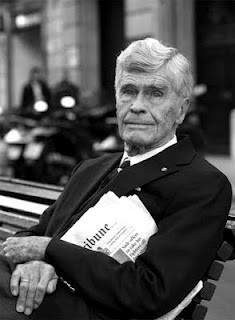
Mario Bunge

Personal Information

Born September 21, 1919
Died February 24, 2020 (100 years old)
Florida Oeste, Argentina
Also known as: Mario Bunge, M. Bunge
60 books
5.0 (7)
42 readers

Description

Mario Augusto Bunge (September 21, 1919 - February 24, 2020) is an Argentine philosopher, philosopher of science and physicist who is mainly active in Canada. Source: [Mario Bunge]( on Wikipedia.

Books

Newest First

Political philosophy

0.0 (0)
0

The traditional problems of philosophy take on new meaning and different color in the light of each generation's unique character. It is not only the history of philosophy that must be reexamined; the same is true for our understanding of any philosophical problem or topic. Dimensions of Philosophy is dedicated to the next generation of philosophers and their students. It will present some of our most distinguished philosophers interpreting the traditional issues of philosophy for the 1990s.

Philosophical dictionary

5.0 (1)
4

"This enlarged edition of Mario Bunge's Dictionary of Philosophy is a superb reference work for both students and professional philosophers. In one volume Bunge covers all the major branches of contemporary philosophy, logic, semantics, metaphysics, and epistemology, as well as practical and applied philosophies." "Most entries are brief and nontechnical in nature, highlighting useful philosophical terms rather than trendy ones. Placing his emphasis on living philosophy, Bunge deliberately excludes many of the archaic terms and philosophical curios of other dictionaries. He incorporates a number of minipapers or longer definitions of some terms, and critically analyzes such influential doctrines as existentialism, deconstructionism, phenomenology, idealism, pragmatism, materialism, utilitarianism, deontological ethics, and many others. Bunge offers constructive alternatives to all philosophical approaches he criticizes."--Jacket.

Philosophy in Crisis

0.0 (0)
0

"Is philosophy dead? Some philosophers have declared it so, and judging by some of the mental acrobatics now fashionable in postmodernist circles a reasonable person might have to agree. Such an obituary is premature, contends noted philosopher Mario Bunge, for people will continue to philosophize as long as they ask fundamental questions about the world and our place in it. What appears to be true is that academic philosophy is in crisis. In recent times there have been few new philosophical ideas that could help ordinary people to understand their world, the nature and content of knowledge, or human action. Worse, some philosophers have actively contributed to this decadence by turning away from deep problems, comprehensive systems, and even reason itself." "Though recognizing the moribund state of current academic philosophy, in which insulated academics speak only to one another, Bunge feels that this is a crisis from which the discipline can and will recover. To overcome the impasse, Bunge argues, it is necessary to reconstruct philosophy by building a philosophical system that addresses real-world problems; is exact and compatible with contemporary science; and, above all, shuns purely academic problems." "Philosophy in Crisis sketches an outline of what such a system would look like while avoiding technical jargon unfamiliar to the lay reader. Here at last is a volume readily accessible to educated readers who are intrigued by such perennial concerns as: What is matter? What is mind? What is the nature of society? Are there limits to our knowledge? What are the criteria for distinguishing genuine science from pseudoscience? How should human rights be balanced with moral obligations? These questions and others like them will always be of interest to thinking human beings, says Bunge, and philosophy should be the main intellectual tool for exploring and clarifying such all-important issues."--BOOK JACKET.

Finding philosophy in social science

5.0 (1)
2

Written by an eminent and original thinker in the philosophy of science, this book takes a fresh, unorthodox look at the key philosophical concepts and assumptions of the social sciences. Mario Bunge contends that social scientists (anthropologists, sociologists, political scientists, economists, and historians) ought not to leave philosophy to philosophers, who have little expertise in or knowledge of the social sciences. Bunge urges social scientists to engage in serious philosophizing and philosophers to participate in social research. The two fields are interrelated, he says, and important advances in each can supply tools for solving problems in the other. . Bunge analyzes concepts that the fields of philosophy and social science share, such as fact, cause, and value. He discusses assumptions and misassumptions involved in such current approaches as idealism, materialism, and subjectivism, and finds that none of the best-known philosophies helps to advance or even understand social science. In a highly critical appraisal of rational choice theories, Bunge insists that these models provide no solid substantive theory of society, nor do they help guide rational action. He offers ten criteria by which to evaluate philosophies of social science and proposes novel solutions to social science's methodological and philosophical problems. He argues forcefully that a particular union of rationalism, realism, and systemism is the logical and viable philosophical stance for social science practitioners.

Exploring the world

0.0 (0)
1

Tells the story of the first explorers to travel around the world and describes how and why these two epic journeys came to be made.
