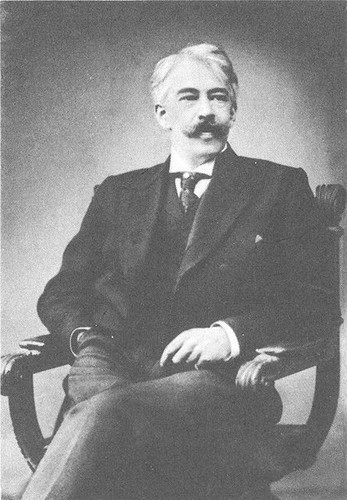
Konstantin Stanislavsky
Personal Information
Description
Konstantín Stanislavski (en ruso: Константин Станиславский) seudónimo de Konstantín Serguéievich Alekséyev, actor, director escénico y pedagogo teatral, nació en Moscú el 5 de enero de 1863 y murió en la misma ciudad en 1938. Fue el creador del método interpretativo Stanislavski. Fuente: Wikipedia
Books
An Actor Prepares
An Actor Prepares is the diary of a fictional student named Kostya during his first year of training in Stanislavski's system. Kostya and his fellow students have little to no experience in acting. As they go through the class, Tortsov, their teacher and theatre director addresses the many assumptions they have formed that do not coincide with the 'system'. Stanislavski relates his message with examples. He argues that his system is not a particular method, but a systematic analysis of the 'natural' order of theatrical truth.[citation needed] The system that he describes is a means both of mastering the craft of acting and of stimulating the actor's individual creativeness and imagination. It has influenced the majority of performances we see on the stage or screen. The book is autobiographical and deals with many different areas of acting skills, including action, imagination, concentration of attention, relaxation of muscles, units and objectives, faith and a sense of truth, emotion memory, communion, adaptation, inner motive forces, the unbroken line, the inner creative state, the super-objective and the subconscious mind. Tortsov, the Director, explains all these art forms in great detail, and thereby transforms An Actor Prepares into a type of textbook. The book begins when Kostya and his fellow students are waiting for their first lesson with the Director. They are excited and nervous at the prospect of meeting, and are surprised when he tells them that their first exercise is to put on a few scenes from a play. Kostya and two of his friends perform scenes from Othello, with Kostya taking the leading role. Afterwards the Director tells them their mistakes. At the end of the book, the students recall their first exercise: Sitting in a chair in a way that interests the audience, and searching for a brooch convincingly.
Rabota aktera nad rolʹi︠u︡
Stanislavski's "System" offers both a means of mastering the craft of acting and of stimulating the actor's individual creativeness and imagination. Generations of actors have been inspired by his ideas -- the "magic if," "emotional memory," the "unbroken line"--And by that hallmark of Stanislavski's work, an unwavering commitment to theatrical truth.
Stanislavski's legacy
"For the first edition of Stanislavski's Legacy, Elizabeth Reynolds Hapgood, Stanislavski's friend and translator, gathered together writings from Stanislavski's later years, including many that were left behind following his death. These vignettes provide an ideal introduction to the essence of Stanislavski's work and also offer sparkling offhand glimpses into theatre history."--BOOK JACKET. "Among the additions to this expanded edition are a series of brilliant letters about the interpretation of Othello and "Memories of the Past ... Dreams of the Future," a complete new section in which Stanislavski speaks in various ways of his vision of the theatre and actors of the future."--BOOK JACKET.
Rabota aktera nad soboĭ
This work is the first volume of Stanislavski's trilogy on the art of acting; it explains the art of acting in semi-fiction form. Fusing psychological realism and expressionism, his exploratory exercises teach actors to evoke past emotions that draw out their vulnerability. Stanislavski here introduces such concepts as the "magic if," "emotion memory," the "unbroken line" and many more now famous rehearsal aids. This classic manual is written from the viewpoint of fictional actors taking lessons from a director (based on Stanislavski). Through the student's mistakes, questions, revelations, and struggles, Stanislavski teaches the actor about the stage, truth, and life itself.