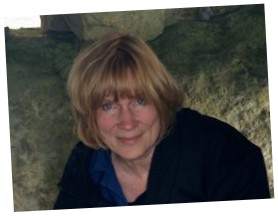
Katherine M. Ramsland
Personal Information
Description
Katherine Ramsland (born 1953 in Michigan) is a non-fiction author and associate professor of forensic psychology. She lived in Michigan until 1971 when she moved to Oregon. Ramland has written dozens of books and more than 1,000 articles, mostly in the genres of crime, forensic science, and the supernatural. - wikipedia Katherine Ramsland is a professor of forensic psychology at DeSales University in Pennsylvania, where she also teaches criminal justice. She holds a master's in forensic psychology from the John Jay College of Criminal Justice, a master's in clinical psychology from Duquesne University, a master's in criminal justice from DeSales University, and a Ph.D. in philosophy from Rutgers. She has been a therapist and a consultant. Dr. Ramsland has published over 1,000 articles and 54 books. Source: www.psychologytoday.com
Books
The forensic psychology of criminal minds
The bestselling author of The Forensic Science of C.S.I. examines the real-life cases behind the hit television series Criminal MindsWeek after week, the hit TV show Criminal Minds gives viewers a look inside the psyches of the fictional serial killers tracked by the BAU (Behavioral Analysis Unit). This elite team of FBI agents travels the country assisting law enforcement officials by examining the crime scene, "profiling" the perpetrator, and aiding in arrest and interrogation. In this book Katherine Ramsland reveals how reality differs from fiction and how forensic psychologists actually use their knowledge of human behavior and motivations as consultants in criminal investigations-as well as detailing the real cases that influenced some of Criminal Minds's most memorable episodes.
The Real World of a Forensic Scientist
With the skyrocketing popularity of TV crime shows like CSI and CSI-Miami, interest in forensic science has reached unprecedented levels. However compelling these programs are as dramas, they spread many misconceptions about the real world of the forensic scientist. Students who wish to pursue a career in this field are often unaware of the many diverse career choices available or have superficial notions of the rigors involved. In this in-depth insider’s guide to this crucial area of criminal investigation, renowned forensic scientist Henry C. Lee, along with veteran forensic experts Elaine M. Pagliaro and Katherine Ramsland, provides a realistic picture of the education, skills, challenges, and rewards involved in the many specialties that encompass forensic science. All are used to unravel seemingly baffling crimes.
The devil's dozen
A forensics expert follows the historic evolution of CSI through a century of serial killers.Katherine Ramsland has brilliantly captured the insights and drama of some fascinating cases (Dr. Henry Lee) in her previous bestselling books. Now she examines the case histories of twelve of the most notorious serial killers of the last one hundred years, and answers the questions: What clues did they leave behind? How were they eventually caught? How was each twist and turn of their crimes matched by the equally compelling weapons of science and logic?From exploring the nineteenth centurys earliest investigative tools to remarkable twenty-first century CSI advances, The Devils Dozen provides a fascinating window into the world of those who killand those who dedicate their lives to bringing them to justice.
Beating the devil's game
"In Beating the Devil's Game, Katherine Ramsland traces the development from thirteenth-century Chinese studies of decomposition rates through the flowering of science during the Renaissance and its veritable explosion during the era of Newtonian physics in the nineteenth century, up to the marvels of the present day and beyond. Along the way, she introduces us to fascinating forensic pioneers such as Spain's Mathieu Orfila, the father of toxicology; Eugene Francois Vidocq, the criminal-turned-detective who founded the Parisian Surete; and current trailblazers like William Bass, whose fully integrated program in entomology, anthropology, and pathology at the Forensic Anthropology Center has galvanized the field. These are visionaries who have persisted in raising investigative standards - and whose efforts keep us just steps ahead of increasingly sophisticated criminals."--BOOK JACKET.
The Human Predator
"In The Human Predator, Katherine Ramsland makes an eye-opening case for the existence of serial killers throughout time. From bloodthirsty despots to today's all-American girls- and boys next door. Ramsland reveals the evolving social attitudes that have affected serial murderers' motives, methods, and criminal careers in the context of the specific historical periods in which they lived and killed."--Jacket.
Forensic Science of CSI
The CBS television show, "C.S.I.: Crime Scene Investigation," has captured audiences - and ratings - with its unflinchingly realistic details of forensic science, tools, and technology. This fascinating new book - written by an acclaimed biographer with a master's degree in forensic psychology - goes behind the crime-solving techniques dramatized on the TV show to examine the reality of these cutting-edge procedures.From DNA typing and ballistics, to bitemark and blood pattern analysis, here are detailed accounts of the actual techniques used in today's crime investigations. Prominent experts in the field offer rare glimpses into cases ranging from missing persons to murder.For fans of the television show, as well as true crime buffs and science readers - this is the real thing.
Dean Koontz
Although he studied the classics and often utilizes a literary approach, Koontz initially worked in genre fiction, meeting with early success under an astonishing variety of pseudonyms in science fiction, fantasy, gothic romance, capers, how-to books, and international thrillers. When he moved on to writing mainstream suspense, he began to develop what has come to be recognized as his unique cross-genre style. Through it all, Koontz worked out the childhood torment of having an abusive, alcoholic father who was ultimately diagnosed as mentally ill. An only child whose mother was afflicted with much illness, Koontz had to develop his own psychological survival strategies. As he matured, this unrelenting childhood struggle to protect himself gave him a special sensitivity to the politics of the individual. He used his writing, no matter what the subject, to entertain but also to explore both the dark and light sides of the human heart, to champion the rights of the individuals over those of institutions. In an age of widespread cynicism, each of Koontz's novels insists that those who embrace friendship, love, faith, and an unwavering commitment to freedom will inevitably win out over those who are motivated by power, envy, and greed. And through it all, Dean Koontz was troubled by the secret his mother had tried to tell him before she died. What was the key to his father's rages: the mysterious tempests that haunted the family and inspired the monsters in Koontz's novels? Was Ray Koontz even his father?
The Roquelaure reader
In The Roquelaure Reader, Katherine Ramsland, Anne Rice's acclaimed biographer as well as close friend, describes not only the Roquelaure novels but two other erotic novels Anne Rice wrote as Anne Rampling. She places this body of erotica within the context of Anne Rice's life, thought, and work, profiles the key characters, and details the special features of each novel. She discusses the novels' relationship to the erotic literary tradition and to feminist and sexual libertarian values. She provides wonderful trivia quizzes for Roquelaure readers, and includes two chapters cut from the novel Exit to Eden.
The vampire companion
The official guide to Anne Rice's The vampire chronciles.
Prism of the night
A full-length biography of Anne Rice ; a history of the circumstances that led to the writing of her works ; and in-depth analyzes of her major novels including Interview with the vampire, The vampire Lestat, The queen of the damned, Exit to Eden, The mummy, The witching hour, and the Sleeping Beauty trilogy.
The C.S.I. effect
How do investigators get from crime to conviction? For the astonishing answer, Ramsland covers the latest cutting-edge techniques in crime scene investigation. Inspired by episodes from the fact-based C.S.I. television franchise, she illustrates the use of computers and toxicology in forensics, explores interrogation strategies, and revisits history's most notorious crimes. And in considering the shows' locales - Las Vegas, New York, and Miami - Ramsland divulges ways in which crimes are dependent on location, climate, and population and discloses ways of solving them in the twenty-first century.
The Anne Rice reader
A collection of essays, articles, and interpretations on all aspects of Rice's novels.