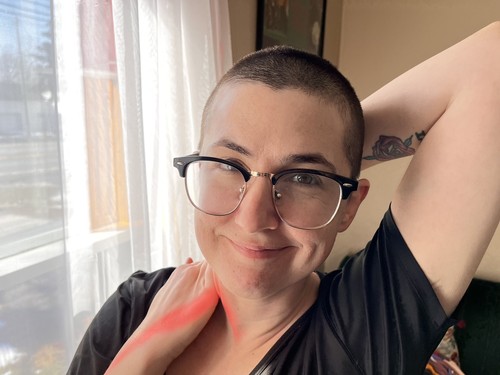
Jude Ellison S. Doyle
Personal Information
Description
Jude Ellison S. Doyle is an American author, columnist and comic book writer. They are non-binary and use he/him and they/them pronouns. Jude Doyle also founded the feminist blog Tiger Beatdown in 2008, led several social media awareness campaigns, including #MooreandMe and #MenCallMeThings, won the Women's Media Center’s first Social Media Award in 2011, and was a founding staffer at Rookie Magazine.
Books
Trainwreck
"From Mary Wollstonecraft--who, for decades after her death, was more famous for her illegitimate child and suicide attempts than for A Vindication of the Rights of Woman--to Charlotte Brontë, Billie Holiday, Sylvia Plath, and even Hillary Clinton, [this book] dissects a centuries-old phenomenon and asks what it means now, in a time when we have unprecedented access to celebrities and civilians alike, and when women are pushing harder than ever against the boundaries of what it means to 'behave'"--Amazon.com.
Believe Me
"In this twisty psychological thriller from the New York Times bestselling author of The Girl Before, an actress plays both sides of a murder investigation. One out-of-work British actress pays the rent on her New York City apartment the only way she can: as a decoy for a firm of divorce lawyers, hired to entrap straying husbands. When the cops begin investigating one of her targets for murdering his wife--and potentially others--they ask her to lure the suspect into a confession. But with the actress pretending to be someone she isn't, differentiating the decoy from the prey becomes impossible--and deadly"--
Dead Blondes and Bad Mothers
"The Female Monster is alive and well in the pop-cultural imagination. What does she tell us about ourselves and how we live today? Funny, smart and encyclopedic, nimbly addressing everyone from the biblical Lilith, to the movie Carrie, to Hae Min Lee (whose death was the focus of the first season of "Serial") to the cult film "The Craft", this book explores the female dark side, as represented in female monsters throughout pop culture. These monsters express taboo truths about female life and femininity. They embody patriarchal fear of women. They speak to urges women are encouraged to hide, or deny. They also speak to the viciousness with which a sexist society inflicts traditionally feminine roles upon us. This is a sympathetic -- or, at least, curious -- look at the women we fear and what they show us about how women navigate a dangerous and frightening world"--