Discover

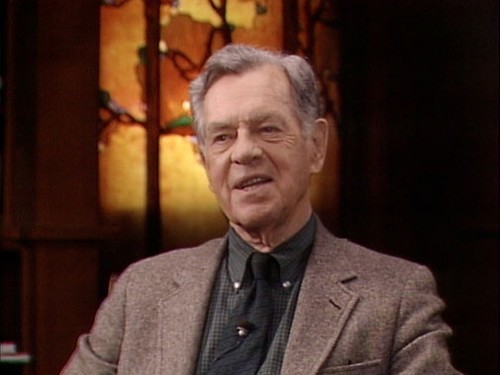
Joseph Campbell

Personal Information

Born January 1, 1879
Died January 1, 1944 (65 years old)
Belfast, Ireland
Also known as: Campbell, Joseph, Joseph Campbell
49 books
3.8 (40)
668 readers
Categories

Description

"Follow your bliss." An American mythologist, writer and lecturer, best known for his work in comparative mythology and comparative religion.

Books

Newest First

Myths of light : Eastern metaphors of the eternal / by Joseph Campbell ; edited and with a foreword by David Kudler

0.0 (0)
6

This previously unpublished title shows Campbell's remarkable mind engaged with a favorite topic, the myths and metaphors of Asian religions. The book collects seven lectures and articles ranging from the ancient Hindu Vedas to Zen koans, Tantric yoga, and the Tibetan Book of the Dead. Campbell conveys complex insights through warm, accessible storytelling, revealing the intricacies and secrets of his subjects with his typical enthusiasm.--From publisher description.

The mythic dimension

0.0 (0)
10

vii, 261 p. : 24 cm

Baksheesh & Brahman

0.0 (0)
2

"Joseph Campbell was one of the foremost interpreters of myth in our time. Yet when he traveled to Asia for the first time he was nearly fifty and at the crossroads of his life and career. This journal of those transformative six months in India - along with its companion volume, Sake & Satori, detailing his time in Japan and East Asia - are as close as Campbell ever came to writing an autobiography.". "After ten years' intense study of Indian art and philosophy, Joseph Campbell embarked on this long-postponed journey. Searching for the transcendent (brahman) - the exotic mystery of the India in his books - he found instead stark realities: growing nationalism, cultural and religious rivalry, poverty, the impact of foreign aid, and a prevalent culture of what he called "baksheesh," or alms. This carefully kept journal chronicles the disillusionment and revelation that would change the course of his life and studies. It is at once a diary of his adventures, a forum in which he develops his revolutionary ideas and clarifies his future pursuits, and a record of his insightful discussions of art, philosophy, and transcendent realities with Indians from every level of society.". "Balancing Campbell's penetrating discussions of mythology and history are his often-amusing observations of an alien culture and his fellow Western travelers. The text is enhanced by more than sixty personal photographs, specially commissioned maps, and illustrations redrawn from Campbell's own hand. Baksheesh & Brahman illustrates Campbell's working method and grants an illuminating look at the thoughts and experiences of an incredible mind, as well as a revealing portrait of the roiling Indian subcontinent of fifty years ago."--BOOK JACKET.

Mythic worlds, modern words

0.0 (0)
5

Classically, it was with an enigma that Joseph Campbell entered the labyrinth of James Joyce. In 1927 Campbell went over to Paris to study medieval philology and Old French and Provencal, and almost immediately encountered Ulysses. When he got to Chapter Three, "Proteus," he was puzzled by the opening: "Ineluctable modality of the visible: at least that if no more, thought through my eyes. Signatures of all things I am here to read ..." He took his enigma to Sylvia Beach, At Shakespeare and Co., at 12 rue de l'Odeon. "I went around there in high academic indignation. And she gave me the clues to how to read it. And there you have it, how it changed my career." Campbell moved through the labyrinth of Joyce's creation for sixty years - writing, lecturing, reading Joyce's works to his students and to audiences nationwide, using as tools of analysis depth psychology, comparative religion, anthropology, and art history. His lectures and. Readings introduced two generations to the works of James Joyce. What Campbell discovered became the foundation for his work in comparative mythology and religion. Mythic Worlds, Modern Words provides a representation of Campbell's published writing, lectures on Joyce, and exchanges with his audiences, from his obituary notice on Joyce in 1941 to lectures delivered within a few years of Campbell's death. This material has been arranged as running commentary on A. Portrait, Ulysses, and Finnegans Wake. This book is an introduction to the major work of Joyce and a representative portrait of Joseph Campbell as a critic of Joyce. However, it is in itself a major contribution to Joyce criticism, the fruit of a lifetime's meditation on the works of James Joyce. At least two major insights into Joyce emerge from this book. One: a description of Ulysses as a journey through the psyche of Everyman, discovering through encounters with the. Triple Goddess the nature of the complete man. The other: a total explanation, based on Dante, of the works of Joyce.

The hero's journey

0.0 (0)
3

Explores the literary theme of the hero's journey in twenty essays covering works by authors as varied as Virgil and Maxine Hong Kingston.

Transformations of myth through time

5.0 (1)
14

A collection of thirteen lectures, all given near the end of Joseph Campbell's life, that examine the great sweep of mythological development around the world and across the ages.

The Power of Myth

4.1 (13)
162

The Power of Myth launched an extraordinary resurgence of interest in Joseph Campbell and his work. A preeminent scholar, writer, and teacher, he has had a profound influence on millions of people. To him, mythology was the "song of the universe, the music of the spheres." With Bill Moyers, one of America's most prominent journalists, as his thoughtful and engaging interviewer, The Power of Myth touches on subjects from modern marriage to virgin births, from Jesus to John Lennon, offering a brilliant combination of intelligence and wit.