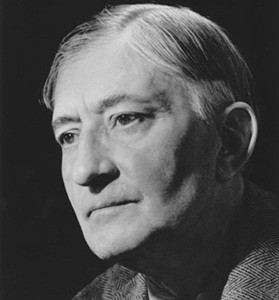
Joseph Albers
Personal Information
Description
German artist and designer; prof. at the Bauhaus. Albers trained as an art teacher at Königliche Kunstgewerbschule in nearby Essen, Germany. In 1919 he went to Munich, Germany, to study at the Königliche Bayerische Akademie der Bildenden Kunst, where he was a pupil of Max Doerner and Frank Stuck. In 1920 he attended the preliminary course (Vorkurs) at the Bauhaus in Weimar, Germany, and was appointed a master in 1923 or 1925. In 1925 Albers moved with the Bauhaus to Dessau, Germany, where he was named master. From 1928 to 1930 he was also in charge of the furniture workshop. In 1932 he moved with the Bauhaus to Berlin. From 1933, after the closure of the Bauhaus in Berlin, until 1949, Albers taught at Black Mountain College in North Carolina. From 1948 to 1950 or from 1950 to 1958, Albers was professor and chairman of the Department of Design at Yale University, New Haven, Connecticut. He remained there as a visiting professor until 1960. After his retirement from Yale University, Albers continued to live in New Haven and to paint, monitor his own exhibitions and publications, write, lecture and work on large commissioned sculptures for architectural settings. (Source: Union List of Artist Names - Getty Research Institute)
Books
Interaction of Colour
Pubblicato per la prima volta nel 1963, Interazione del colore fu pensato da Josef Albers come un manuale di supporto didattico per artisti, docenti e studenti. Nelle sue pagine, attraverso esperimenti ed esempi pratici, viene illustrata la teoria del colore sviluppata dall’autore durante gli anni di insegnamento al Bauhaus. Lo scopo delle lezioni di Josef Albers è sviluppare l’occhio per il colore, quella sensibilità per la luce e le tonalità che il solo studio teorico dell’ottica e dei sistemi cromatici non può in alcun modo affinare. Il risultato è un percorso semplice ma articolato che vuole essere uno stimolo alla formazione di un «pensare pratico» in cui l’esperimento e la scoperta accompagnano la creatività. Cinquant’anni dopo la sua prima edizione, Interazione del colore è ormai un caposaldo nello studio del colore. Questa nuova edizione presenta una selezione aggiornata e ampliata delle tavole a colori che illustrano i princìpi espressi da Albers nel corso di lezioni e dimostrazioni. Josef Albers (Bottrop, 1888 – New Haven, 1976), pittore e designer tedesco, si forma nell’ambiente del Bauhaus, dove entra come allievo nel 1920 e rimane come docente fino alla chiusura, nel 1933. Si trasferisce quindi negli Stati Uniti, dove per sedici anni insegna al Black Mountain College del North Carolina. Nel 1950 viene chiamato a dirigere il dipartimento di Grafica e Design all’Università di Yale. Qui, dopo il suo ritiro nel 1958, viene insignito del titolo di professore emerito. Nel 1968 Albers è eletto membro del National Institute of Arts and Letters. È il primo artista vivente a cui sia stata dedicata una retrospettiva, nel 1971, al Metropolitan Museum of Art di New York.
Josef Albers
"Josef Albers (1888-1976) believed firmly in art's spiritual dimension. Among his several aphorisms on the topic, none reflects the humble, ascetic character of his spiritual disposition better than the following: 'Easy to know that diamonds are precious. Good to know that rubies have depth. But more to see that pebbles are miraculous.' Conceived by the renowned Albers expert Nicholas Fox Weber, who directed the Albers Foundation for 20 years and knew the artist well, Spirituality and Rigor presents a selection of work by Albers that illustrates his ascetic spirituality and his deeply felt Catholicism. The book stems in part from Fox Weber's The Sacred Modernist: Josef Albers as a Catholic Artist, and is augmented with additional work by Fabio De Chirico. It includes Albers' early drawings of country churches and cathedrals; 'Rosa Mystica,' his stained glass window for St Michael's Church, and other glass works containing religious imagery; his abstractions of crosses and geometric abstractions with spiritually themed titles, from his Black Mountain years; his prints of Mexican gods; photographic interpretations of the theme of angels; and a selection from the Homage to the Square series."--Amazon.com.
Josef Albers in Mexico
On his first trip to Mexico, in 1935, Josef Albers (1888-1976) encountered the magnificent architecture of ancient Mesoamerica. He later remarked in a letter to Vasily Kandinsky, a former colleague at the Bauhaus, "Mexico is truly the promised land of abstract art." With his wife, artist Anni Albers (1899- 1994), Josef Albers visited Mexico and other Latin American countries nearly a dozen times from 1935-67. They saw numerous archeological sites and monuments, especially in Mexico and Peru. On each visit, he took hundreds of black-and-white photographs of the pyramids, shrines, and sanctuaries at these sites, often grouping multiple images printed at various scales onto 8 by 10 inch sheets. Albers's experiences in Latin America offer an essential context for understanding his paintings and prints, particularly from his Homage to the Square and Variant/Adobe series, examples of which are featured in this show. Exhibition: Solomon R. Guggenheim Museum, New York, United States (03.11.2017 - 18.02.2018).
One and one is four
Josef Albers is widely recognized as a crucial figure in 20th-century art, both as an independent practitioner and as a teacher at the Bauhaus, Black Mountain College and Yale University. Albers made paintings, drawings and prints and designed furniture and typography. Arguably the least familiar aspect of his extraordinary career was his inventive engagement with photography, only widely known after his death, including his production of approximately 70 photocollages that feature photographs he made at the Bauhaus between 1928 and 1932. These works anticipate concerns that he would pursue throughout his career--the effects of adjacency, the exploration of color through white, black and gray, and the delicate balance between handcraft and industrial and mechanical form. Albers's photographs were first shown at MoMA in a modest exhibition in 1987, when the Museum acquired two photocollages. In 2015 the Museum acquired ten additional photocollages, making its collection the most substantial anywhere outside the Albers Foundation. This publication reproduces each of the photocollages Albers made at the Bauhaus, presenting the scope of this achievement for the first time. An introductory essay by Sarah Hermanson Meister situates them within the contexts of modernist photography, the Bauhaus ethos and of Albers's own practice--David Zwirner Books (viewed on November 11, 2016)