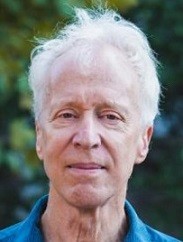
John Richard Bowen
Personal Information
Description
John Richard Bowen, Ph.D., is Professor Emeritus of Sociocultural Anthropology and Dunbar-Van Cleve Professor in Arts & Sciences at Washington University, St. Louis, Missouri. In 1973, he earned a Bachelor of Arts degree from Stanford University, Stanford, California. He then went to the University of Chicago, Chicago, Illinois, where in 1977 he received his Master of Arts degree and in 1984 his Ph.D. His Ph.D. theses was titled The History and Structure of Gayo Society: Variation and Change in the Highlands of Aceh. Professor Bowen’s research explores broad social transformations now taking place in Muslim communities worldwide. He conducts ethnographic study in Indonesia, France, Britain, and the Netherlands, and works with students and colleagues with field sites across Europe, Asia, the Middle East, and Africa. In particular, he analyzes how Muslims (judges and scholars, public figures, and citizens) work across plural sources of norms and values, including diverse interpretations of the Islamic tradition, law codes and decisions, and local social norms. He draws on this research to critique public discourse about Muslims and Islam. He has also served as a visiting professor at the University of Amsterdam, Amsterdam, Netherlands; the London School of Economics, London, England; and the Institut d'Études Politiques and the École des Hautes Études en Sciences Sociales, Paris, France. He has published numerous articles and chapters, in addition to authoring or co-authoring numerous books, including Women and Property Rights in Indonesian Islamic Legal Contexts, Religions in Practice: An Approach to the Anthropology of Religion, and Islam, Law, and Equality in Indonesia: An Anthropology of Public Reasoning. Source: [Washington University](
Books
Can Islam be French?
Bowen asks not the usual question--how well are Muslims integrating in France?--but, rather, how do French Muslims think about Islam? In particular, Bowen examines how French Muslims are fashioning new Islamic institutions and developing new ways of reasoning and teaching. He looks at some of the quite distinct ways in which mosques have connected with broader social and political forces, how Islamic educational entrepreneurs have fashioned niches for new forms of schooling, and how major Islamic public actors have set out a specifically French approach to religious norms. --from publisher description.
Islam, Law, and Equality in Indonesia
Muslims currently struggle to reconcile radically different sets of social norms and laws (including those derived from Islam, as well as contemporary ideas about gender equality and law) in Indonesia, the world's largest Muslim-majority country. John Bowen explores their struggle through archival and ethnographic research and interviews with national religious and legal figures. His book relates to debates in any society where people struggle to live together with extreme differences in values and lifestyles, and is welcomed by scholars and students in all branches of the social sciences.
A new anthropology of Islam
"In this powerful but accessible new study John Bowen draws on a full range of work in social anthropology to present Islam in ways that emphasise its constitutive practices, from praying and learning to judging and political organising. Starting at the heart of Islam - revelation and learning in Arabic lands - Bowen shows how Muslims have adapted Islamic texts and traditions to ideas and conditions in the societies in which they live. Returning to key case studies in Indonesia, Africa, Pakistan and Western Europe to explore each major domain of Islamic religious and social life, Bowen also considers the theoretical advances in social anthropology that have come out of the study of Islam. A New Anthropology of Islam is essential reading for all those interested in the study of Islam and for those following new developments in the discipline of anthropology"--
Sumatran Politics and Poetics
In this book, an anthropologist analyzes political and cultural change among the Gayo, a Muslim people numbering about 200,000 who live in the highlands of northern Sumatra. John R.Bowen, who has lived among the Gayo shows how their successive absorption into both colonial and post-colonial states has led them to revise their ritual speaking, sung poetry, and historical narrative. Bowen discusses the phases that have characterized Gayo political and cultural history since 1900: the centralization of political structures and political narratives under Dutch colonial rule, the attempt to implement radically new nationalist and Islamic images of social order in the early years of independence, and the increasingly hierarchcial forms of control and discourse in the post-1965 New Order. He then examines the effect of these changes on Gayo poetics, finding that there have been consistent shifts in the forms of narrative, rhyme, and dialogue. Each shift has brought greater continuity in poetic form and has increasingly represented power as centralized. This work contributes to the comparative study of Indonesian societies. As a study in poetics, it deals with the social context for changes in the form and context of several distinct expressive genres. And as a case study in historical anthropology, it examines the changing, open-ended relationship of political processes and cultural forms.
European states and their Muslim citizens
"This book responds to the often loud debates about the place of Muslims in Western Europe by proposing an analysis based in institutions, including schools, courts, hospitals, the military, electoral politics, the labor market, and civic education courses. The contributors consider the way people draw on practical schemas regarding others in their midst who are often categorized as Muslims. Chapters based on fieldwork and policy analysis across several countries examine how people interact in their everyday work lives, where they construct moral boundaries, and how they formulate policies concerning tolerable diversity, immigration, discrimination, and political representation. Rather than assuming that each country has its own national ideology that explains such interactions, contributors trace diverse pathways along which institutions complicate or disrupt allegedly consistent national ideologies. These studies shed light on how Muslims encounter particular faces and facets of the state as they go about their lives, seeking help and legitimacy as new citizens of a fast-changing Europe"--