
HISTORY
John Huxtable Elliott
Also known as: John Huxtable Elliott, John H. Elliott
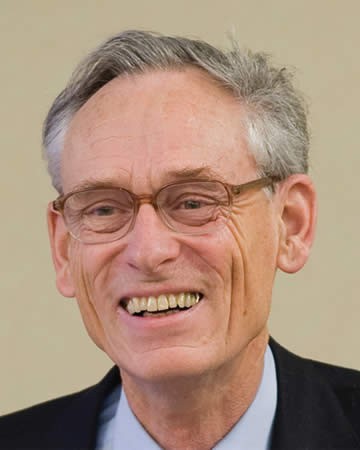
John Huxtable Elliott, Sir (1930–) Notable as one of the first English historians to work in the field of Spanish history, Elliott also played an important role as a non-Marxist member of the board of Past and Present, as well as being an early advocate of the practice of comparative history. Born 23 June 1930 in Reading, Berkshire, England John Elliot, having received his education at Eton after the close of the Second World War and finishing his military service, received a scholarship in modern languages (French and German) to go to Trinity College, Cambridge in 1949, however before arriving he had already decided he would rather study history for the three years there. In his first year as an undergraduate, having gained an interested in the Spanish past, he went with a group round the Iberian peninsula for six weeks. >"I was very impressed by the country, the Prado Museum, and particularly struck by Velázquez’s portrait of the Count-Duke of Olivares, the famous Spanish statesman of the 17th century at the moment of Spain’s decline, and decided that I’d like to do something connected with his period". His professors Herbert Butterfield, Steven Runciman and Walter Ullmann encouraged him do something on the history of 17th century Spain. This was during the repressive period of the Catalan-Franco regime in the early 1950s and he had serious problems with missing 17th century Olivares documents in the Spanish archives forcing him to change direction and go to Barcelona to work on the 1640 Catalan rebellion against the government in Madrid - with the likes of Jaume Vicens Vives. At about the time he became a Trinity Fellow he earned a Master of Arts and Doctor of Philosophy in History in 1955. He also started on Past and Present in the early 1950s, a lively journal tarred with the Marxist brush that meant the Institute for Historical Research refused to take it for many years. until he joined the board of the Institute for Historical Research with Lawrence Stone and Trevor Aston in 1958. He served on the editorial board for 40 years when he retired at the age of 70. In England during the 1960s, moving from volunteer lecturer and finding a calligraphy expert able to teach him about 16th and 17th century Spanish handwriting that helped him with his production of the Imperial Spain volume, he then became a lecturer at Cambridge until 1967 doing around 16 hours of individual teaching and three lectures a week, when he was appointed to the chair of history at Kings College London, spending five years there. Moving across the Atlantic in 1973 he joined the faculty of the Research Institute for Advanced Study in Princeton, where he was able to return to writing a political biography of the Count-Duke of Olivares and also following an interested in art, collaborated with art historian Jonathan Brown on A Palace for a King - Philip IV’s pleasure palace built for him in the 1630s. He stayed at Princeton until 1990 when he was offered the Regius Chair in Modern History in Oxford, England which he enjoyed over the next seven years. In 1993 he was awarded the prize Elio Antonio de Nebrija, endowed by the University of Salamanca and intended to honor the Spanish scholars who have excelled in the study of Spanish language and culture. In 1996 he received the Prince of Asturias Award for Humanities at the latest recognition of his figure. In 1999 he was awarded the Balzan Prize for History, awarded to specialists in the modern age. Significant publications - The Revolt of the Catalans (1963) - Imperial Spain, 1469–1716 (London, 1963) - Divided Europe, 1559-1598 (1968 - The Old and the New World, 1492-1650 (1970) - A palace for the King (1980, with Jonathan Brown) - Richelieu and Olivares (1984) - The Count-Duke of Olivares (1986) - Spain and its World, 1500–1700: Selected Essays (New Haven, Conn., 1989) - 1640, the Spanish monarchy in crisis (1992) - Empires of the Atlantic World: Britain and Spain in America, 1492–1830 (New Haven, Conn., 2006) Sources 1. Gordon Marsden, 'An interview with J. H. Elliott', History Today, 41, 4 (April 1991), 48–52 2. Blackwell Dictionary of Historians 3. Encyclopedia of Historians and Historical Writing 4. John Elliott interview at Oriel College, Oxford, (7 March 2008)
Nearly three hundred years after Columbus's first voyage of discovery, the Abbe Raynal, the eager inquirer after other men's truths, offered a prize for the essay which would best answer the following questions.
— from The Old world and the New, 1836
