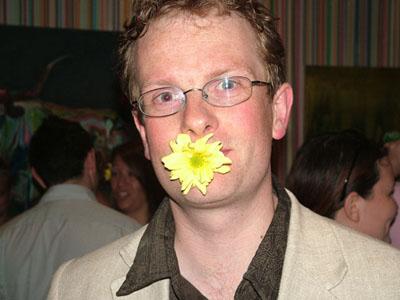
John Higgs
Description
John Higgs is a British author who explores overlooked narratives in history and culture, often challenging conventional perspectives. His work frequently delves into countercultural figures and movements that exist outside mainstream viewpoints. Among his most recognized books is The KLF: Chaos, Magic and the Band Who Burned a Million Pounds, which examines the intersection of pop music and radical art, and Stranger Than We Can Imagine: Making Sense of the Twentieth Century, which offers an alternative perspective on the complexities of the 20th century. His latest book, William Blake vs The World, investigates Blake’s visionary ideas while linking them to contemporary discussions in neurobiology, quantum physics, and comparative religion. Beyond writing, Higgs is an active public speaker, having appeared at events hosted by institutions such as Tate Britain and the British Library. Before becoming a full-time writer, he worked in television animation, created a BBC Radio 4 quiz show, and was involved in video game production.
Books
Darklore Volume IV
Darklore is an anthology of exceptional observations, hidden history and esoteric science. Bringing together some of the top researchers and writers on topics from outside of mainstream science and history, Darklore will challenge your preconceptions by revealing the strange dimensions veiled by consensus reality. Volume 4 of Darklore features contributions from Robert Bauval, Nick Redfern, Robert Schoch, Nigel Watson, Michael Tymn, Neil Arnold and Theo Paijmans, and many others. Darklore offers only the best writing and research from the most respected inviduals in their fields.
Darklore Volume I
Darklore is a journal of exceptional observations, hidden history, the paranormal and esoteric science. Featuring contributions from Daniel Pinchbeck, Loren Coleman, Nick Redfern, Robert Schoch, Lynn Picknett & Clive Prince and many others.
The KLF
"A noi non resta che lo spettacolo, ed è proprio all'interno di questo spettacolo che è da ricercare una qualsivoglia risposta al perché i KFL hanno bruciato un milione di sterline. È u approccio che per questa storia sembra particolarmente appropriato, perché nel caso dei KFL i criteri enciclopedici e accademici non ci rivelerebbero nulla di quanto cerchiamo. Drummond e Cauty vagarono alla cieca nell'oscurità delle loro storie servendosi di qualunque cosa gli paresse utile, e pertant sarà quello l'atteggiamento che seguiremo anche noi. Il nostro è un tentativo di cogliere lo spirito di quegli eventi, e l'unico modo in cui possiamo farlo è rievocandoli a nostra volta. Questa è, insomma, una storia di cui gli stessi personaggi non sapevano di fare parte." (dal prologo)
Stranger Than We Can Imagine
The twentieth century should make sense. It's the period of history that we know the most about, an epic geo-political narrative that runs through World War One, the great depression, World War Two, the American century and the fall of the Berlin Wall. But somehow that story doesn't quite lead into the world we find ourselves in now, this bewildering twenty-first century, adrift in a network of constant surveillance, unsustainable competition, tsunamis of trivia and extraordinary opportunity. Time, then, for a new perspective. With John Higgs as our guide, we step off the main path and wander through some of the more curious backwaters of the twentieth century, exploring familiar and unfamiliar territory alike, finding fresh insight on our journey to the present day. We travel in the company of some of the most radical artists, scientists, geniuses and crazies of their age. They show us that great innovations such as relativity, cubism, quantum mechanics, postmodernism and chaos maths are not the incomprehensible, abstract horrors that we assume them to be, but signposts that bring us to the world we live in now. John Higgs brings us an alternative history of the strangest of centuries. He shows us how the elegant, clockwork universe of the Victorians became increasingly woozy and uncertain; and how we discovered that our world is not just stranger than we imagine but, in the words of Sir Arthur Eddington, 'stranger than we can imagine'.