Jessica Mitford
Description
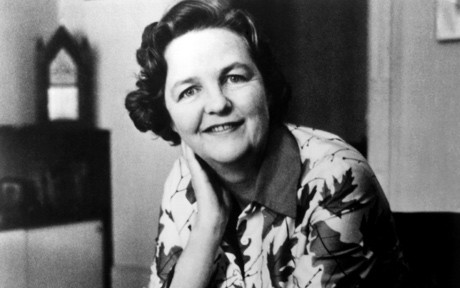
Jessica Mitford is the next-to-the-last youngest of Lord and Lady Redesdale's six legendary daughters - ranging from the eldest, the late novelist Nancy Mitford, to the youngest, the present-day Duchess of Devonshire. She came to America in 1939, and lived in Oakland, California from the 1940s onward.
Books
Decca
"Decca" Mitford lived a larger-than-life life: born into the British aristocracy--one of the famous (and sometimes infamous) Mitford sisters--she ran away to Spain during the Spanish Civil War with her cousin Esmond Romilly, Winston Churchill's nephew, then came to America, became a tireless political activist and a member of the Communist Party, and embarked on a brilliant career as a memoirist and muckraking journalist (her funeral-industry expose, The American Way of Death, became an instant classic). She was a celebrated wit, a charmer, and throughout her life a prolific and passionate writer of letters--now gathered here.Decca's correspondence crackles with irreverent humor and mischief, and with acute insight into human behavior (and misbehavior) that attests to her generous experience of the worlds of politics, the arts, journalism, publishing, and high and low society. Here is correspondence with everyone from Katharine Graham and George Jackson, Betty Friedan, Miss Manners, Julie Andrews, Maya Angelou, Harry Truman, and Hillary Rodham Clinton to Decca's sisters the Duchess of Devonshire and the novelist Nancy Mitford, her parents, her husbands, her children, and her grandchildren.In a profile of J.K. Rowling, The Daily Telegraph (UK), said, "Her favorite drink is gin and tonic, her least favorite food, trip. Her heroine is Jessica Mitford."From the Hardcover edition.
The American way of death revisited
Here is the classic anatomy of America's funeral practices, revised, expanded, and brought up-to-date for a new generation. This revised edition contains completely new chapters on, among other things, prepayment ("Pay Now - Die Poorer") and the new multinational corporations ("A Global Village of the Dead"), as well as a jaundiced look at the failure of the Federal Trade Commission to enforce the laws that the original edition of this book helped bring about. And, of course, there's a total updating of the facts and figures that tell the tale.
The American way of birth
Three decades ago, Jessica Mitford became famous when she introduced us to the idiosyncracies of American funeral rites in The American Way of Death. Now in a book as fresh, provocative, and fearless as anything else she has written, she shows us how and in what circumstances Americans give birth. At the start, she knew no more of the subject, and not less, than any mother does. Recalling her experiences in the 1930s and 1940s of giving birth - in London, in Washington. D.C., and in Oakland, California - she observes, "A curious amnesia takes over in which all memory of the discomforts you have endured is wiped out, and your determination never, ever to do that again fast fades." But then, years later in 1989 - when her own children were adults, and birth a subject of no special interest to her - she meet a young woman, a midwife in Northern California who was being harassed by government agents and the medical establishment. Her. Sympathies, along with her reportorial instincts, were immediately stirred. There was a story there that needed to be explored and revealed. Far more than she anticipated then, she was at the beginning of an investigation that would lead her over the next three years to the writing of this extraordinary book. This is not a book about the miracle of life. It is about the role of money and politics in a lucrative industry; a saga of champagne birthing suites for the rich. And desperate measures for the poor. It is a colorful history - from the torture and burning of midwives in medieval times, through the absurd pretensions of the modest Victorian age, to this century's vast succession of anaesthetic, technological, and "natural" birthing fashions. And it is a comprehensive indictment of the politics of birth and national health. Jessica Mitford explores conventional and alternative methods, and the costs of having a child. She gives. Flesh-and-blood meaning to the cold statistics. Daring to ask hard questions and skeptical of soft answers, her book is necessary reading for anyone contemplating childbirth, and for everyone fascinated by the follies of human activity. It may even bring about some salutary changes in the American way of birth.
Faces of Philip
"Theodore Philip Toynbee (25 June 1916 ? 15 June 1981) was a British writer and communist. He wrote experimental novels, and distinctive verse novels, one of which was an epic called Pantaloon, a work in several volumes, only some of which are published. He also wrote memoirs of the 1930s, and reviews and literary criticism, the latter mainly via his employment with The Observer newspaper. He was born in Oxford; his father was the historian Arnold J. Toynbee, and his maternal grandfather was Gilbert Murray. He was educated at Rugby School, where he became rebellious, reacting against the public school system. Inspired by the example of Esmond Romilly, later a friend, he ran away, returned shortly and was expelled. He later wrote a memoir of Romilly, and Jasper Ridley (1913?1944), entitled Friends Apart. Through Romilly, Toynbee met Jessica Mitford, who became a close friend after Esmond died in WWII."--Wikipedia.
Poison penmanship
A collection of 17 article from various newspapers and periodicals, written over 20 years, demonstrating the author's strategies of using humour to protest against what she perceived as wrongs committed by the funeral industry, restaurants, universities and correspondence schools, censors, and others.
The American prison business
Examination of the American prison system based on research made on both sides of prison walls, from letters and reports sent by inmates and from interviews with institution officers.
The trial of Dr. Spock, the Rev. William Sloane Coffin Jr, Michael Goodman and Marcus Raskin
Chronicle of events in Boston, 1968 surrounding their prosecution on charges of conspiracy to counsel, aid and abet violations of the Selective Service Act.
Daughters and rebels
Jessica Mitford has written a gay and touching account of her growing up from childhood through early marriage. She was the sixth child of a pair of splendid English eccentrics, Lord and Lady Redesdale, and sister to Nancy, now famous for her novels, Unity, who became notorious through her attachment to Hitler, Diana, who married Sir Oswald Mosley and joined him in that strange anachronism, British fascism, and Deborah, the present Duchess of Devonshire. From the first, her definitely "U" background was a source of infinite boredom to Jessica and her lively account of it explains not only her own rebellion, but much about her sisters'. It seemed quite natural to little Jessica, for example, that she should learn how to shoplift. Later it was just as natural for her to fall in love with a young man she had never met. His name was Esmond Romilly, he was a nephew of Winston Churchill, and he was fighting for the Loyalists in Spain. Jessica pulled strings and things happened. She met him when he came home on leave. When he went back he was not alone. Not even the threat of the English version of the Mann Act or the arrival of her sister on a warship could tear Jessica away, and finally she and Esmond were married. After Spain they returned to London where they had an odd assortment of friends, a great deal of fun, and almost no money - a fairly permanent condition. The last third of the book is devoted to their adventures in America and it is a rollicking account of two "blueblooded babes in Hobohemia," a designation which infuriated the "babes" in question. We meet Esmond as a door-to-door stockting salesman (he took lessons), and as a bartender in Miami, as a guest badly in need of a shave and a dinner jacket but very well known to the butler. Finally the long shadow of the war clouded the Florida sunshine and the Romillys started north, Esmond headed for Canada to enlist in His Majesty's forces. He left Jessica in Washington to have her baby and it is there that the book ends. It was there too that World War II put an end to her childhood, for Esmond was killed in action fighting for a world he had so thoroughly enjoyed. Jessica Mitford's autobiography is warm, funny, and real. It proves that Nancy is not the only Mitford with the gift of wit and words.
Lifeitselfmanship, or, How to become a precisely because man
Sub title: An Investigation Into Current L (or Left-Wing) Usage. The book is a privately printed book by the author, published and copyright by Decca Treuhaft and illustrated by Pele. Published in Oakland, California. price ,50 cents.
The American way of death
"...Here is a whole complex of commercial operations that result in funerals whose expense, display and mumbo jumbo are unrelated to any Christian or Jewish tradition and virtually unheard of in any other country today. And there is precise information on what is being done to lower the cost and raise the dignity of burial in the United States."
Literary Voices #1
In the first volume of this continuing series of interviews with the great writers of our time, Alex Haley talks about the genesis of Roots and how it changed his life, Christopher Isherwood discusses writing as autobiography and the persecution of homosexuals in modem society, Jessica Mitford expounds on The American Way of Death, Richard Armour delineates the nature of humor and humorous writing, and Robert Anton Wilson talks about Illuminatus! and writing as hedonic-controlled schizophrenia. Jeffrey M. Elliot (1948 - 2010) was professor of political science specializing in American politics and government, international relations, and civil rights and civil liberties. He is also known for a series of “Conversations with” a variety of writers.
