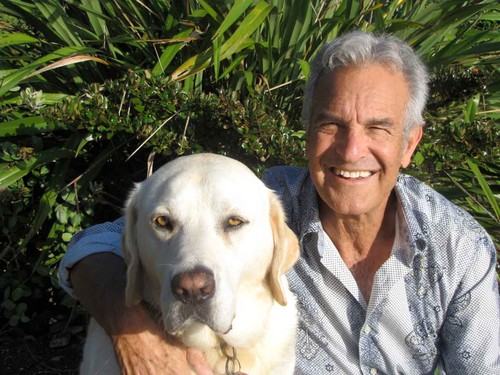
Jeffrey Moussaieff Masson
Personal Information
Description
Jeffrey Moussaieff Masson (born as Jeffrey Lloyd Masson) is an American author. Masson is best known for his conclusions about Sigmund Freud and psychoanalysis. In his The Assault on Truth (1984), Masson argues that Freud may have abandoned his seduction theory because he feared that granting the truth of his female patients' claims (that they had been sexually abused) would hinder the acceptance of his psychoanalytic methods. Masson is a vegan and has written about animal rights. Most of his books since 1997 are about animals. - Wikipedia
Books
Altruistic armadillos, zenlike zebras
The best-selling author of Dogs Never Lie About Love and When Elephants Weep pays tribute to one hundred of his favorite animals, offering fascinating profiles and information about the daily lives of dolphins, hummingbirds, dugongs, hippos, kakapos, and other familiar and little-known creatures.
The Pig Who Sang to the Moon
Jeffrey Moussaieff Masson’s groundbreaking bestseller, When Elephants Weep, was the first book since Darwin’s time to explore emotions in the animal kingdom, particularly from animals in the wild. Now, he focuses exclusively on the contained world of the farm animal, revealing startling, irrefutable evidence that barnyard creatures have feelings too, even consciousness. Weaving history, literature, anecdotes, scientific studies, and Masson’s own vivid experiences observing pigs, cows, sheep, goats, and chickens over the course of five years, this important book at last gives voice, meaning, and dignity to these gentle beasts that are bred to be milked, shorn, butchered, and eaten. Can we ever know what makes an animal happy? Many animal behaviorists say no. But Jeffrey Masson has a different view: An animal is happy if it can live according to its own nature. Farm animals suffer greatly in this regard. Chickens, for instance, like to perch in trees at night, to avoid predators and to nestle with friends. The obvious conclusion: They cannot be happy when confined twenty to a cage. From field and barn, to pen and coop, Masson bears witness to the emotions and intelligence of these remarkable farm animals, each unique with distinct qualities. Curious, intelligent, self-reliant–many will find it hard to believe that these attributes describe a pig. In fact, there is much that humans share with pigs. They dream, know their names, and can see colors. Mother cows mourn the loss of their calves when their babies are taken away to slaughter. Given a choice between food that is nutritious or lacking in minerals, sheep will select the former, balancing their diet and correcting the deficiency. Goats display quite a sense of humor, dignity, and fearlessness (Indian goats have been known to kill leopards). Chickens are naturally sociable–they will gather around a human companion and stand there serenely preening themselves or sit quietly on the ground beside someone they trust. For far too long farm animals have been denigrated and treated merely as creatures of instinct rather than as sentient beings. Shattering the abhorrent myth of the “dumb animal without feelings,” Jeffrey Masson has written a revolutionary book that is sure to stir human emotions far and wide.
The wild child
When Eva Haines first comes to remote (and supposedly deserted) Liberty Island, she has the uncanny feeling that someone's watching her -- and she's right. A small wild-looking child with a huge black dog has been following her around. Eva, who's spending a few weeks on the island to deal with an elderly relative's estate, is puzzled. Who is this little girl? Where did she come from? Eva finds out soon enough. Fanny is the daughter of the reclusive Silas Lord. But once she learns this, Eva only has more questions. Why are Silas and his daughter hiding out on Liberty Island? What secret is Silas keeping about this child he obviously adores? And why is Eva falling in love with such a mysterious man?
Sanctuary
Kurzbeschreibung Insel der Sehnsucht (Sanctuary) - Nora Roberts Die erfolgreiche Fotografin Jo Hathaway hat ihr Leben fest im Griff - jedenfalls bis zu dem Tag, als sie in ihrer Post anonyme Fotos findet: Schnappschüsse und Nahaufnahmen von ihr selbst. Sie ist zutiefst beunruhigt - wer konnte ihr unbeobachtet so nahe kommen und diese Bilder machen? Als dann auch noch die Fotos einer wunderschönen, nackten, toten Frau geschickt werden, bricht Jo zusammen - diese Frau war ihre Mutter. Jo war noch ein kleines Mädchen, als ihre Mutter eines Nachts spurlos verschwand. Der schmerzliche Verlust entzweite und zerstörte die Familie Hathaway. Daraufhin floh Jo, wild entschlossen, ihre Familie und ihr Elternhaus nie mehr wieder zu sehen. Widerstrebend beschließt sie nun, wegen dieser Fotos nach Hause zu fahren, um dort die Antwort auf ihre Fragen zu finden. Ihr Elternhaus auf der wildromantischen Insel Desire ist mittlerweile ein kleines Hotel, das ihr Bruder führt. Die Begegnung mit den Geschwistern und dem Vater führt erneut zu geschwisterlichen Rivalitäten, Eifersüchteleien, Schmerz und Bitterkeit. Aber auch auf Desire ist Jo nicht sicher; wieder tauchen Fotos auf. Jos Freund aus Kindertagen, der Architekt Nathan Delany, steht ihr zur Seite und aus Zuneigung wird schnell Liebe. Nathan aber scheint nicht nur über die Geheimnisse von Jos Seele Bescheid zu wissen ... In der Konfrontation mit dem Mörder muss Jo sich schließlich ihrer eigenen, tragischen Vergangenheit stellen...
The nine emotional lives of cats
Drawing from literature, history, animal behavioral research, and the wonderful true stories of cat experts and cat lovers around the world, Jeffrey Moussaieff Masson vividly explores the delights and mysteries of the feline heart. But at the core of this remarkable book are Masson’s candid, often amusing observations of his own five cats. Their mischievousness, aloofness, and affection provide a way to examine emotions from contentment to jealousy, from anger to love. The Nine Emotional Lives of Cats will captive readers with its surprises, offering a new perspective on the deep connection shared by humans and their feline friends.
Dogs have the strangest friends
A collection of true stories demonstrating that animals have feelings, including "An Elephant Saves a Baby Rhino," "The Mother Cat Who Went Into the Fire to Save Her Kittens," and "The Sadness of a Peregrine Falcon."
The emperor's embrace
Introduces extraordinary fathers such as the emperor penguin, the wolf, the beaver, the sea horse, and the marmoset. Also examines nature's worst fathers: lions, langurs, bears and humans.
When elephants weep
From dancing squirrels to bashful gorillas to spiteful killer whales, Masson and coauthor Susan McCarthy bring forth fascinating anecdotes and illuminating insights that offer powerful proof of the existence of animal emotion. Chapters on love, joy, anger, fear, shame, compassion, and loneliness are framed by a provocative re-evaluation of how we treat animals, from hunting and eating them to scientific experimentation. Forming a complete and compelling picture of the inner lives of animals, When Elephants Weep assures that we will never look at animals in the same way again.
Dogs Make Us Human A Global Family Album
Presents an illustrated tribute to the universal bond between dogs and humans that explores the universal ways people and their canine friends connect in all cultures.
The Assault on Truth: Freud's Suppression of the Seduction Theory
In 1896, Sigmund Freud presented his revolutionary “seduction theory,” arguing that acts of sexual abuse and violence inflicted on children are the direct cause of adult mental illness. Nine years later, Freud completely reversed his position, insisting that these sexual memories were actually fantasies that never happened. Why did Freud retract the seduction theory? And why has the psychoanalytic community gone to such lengths to conceal that retraction? In this landmark book, drawing on his unique access to formerly sealed and hidden papers, Jeffrey Moussaieff Masson dares to uncover the truth about this critical turning point in Freud’s career and its enduring impact on the theory and practice of psychoanalysis. The Assault on Truth reveals a reality that neither Freud nor his followers could bear to face. Bracing in its honesty, gripping its revelations, this is the book that prompted Masson’s break with the psychoanalytic community–and launched his subsequent brilliant career as an independent thinker and writer.
Lost Prince
Kept in a dungeon for his entire childhood, Kaspar Hauser turned up in Nuremberg in 1828 when he was sixteen, barely able to talk or walk, a "wild child." Within a few years, his gentleness, simplicity, and profundity captured the interest of all Europe. Hauser was murdered just a few years later, in 1833. Who was Kaspar Hauser? Was he German royalty as many have believed? Why was he kept in a dungeon all those years, and who murdered him? Jeffrey Masson, whose work on the reality of child abuse in Freud's time created an explosion in the world of psychoanalysis, has discovered the earliest document on the Kaspar Hauser story - Georg Friedrich Daumer's notes of Kaspar Hauser's first two years in Daumer's house, long thought to be lost. On the basis of these notes and other documents, some previously unpublished, Masson provides the first complete English translation of one of the great works of German literature, Anselm von Feuerbach's story of Kaspar Hauser. Along with this translation, Masson includes a lengthy essay in which he explores many of the fascinating issues raised by the case. In this essay, Masson not only sheds light on Kaspar Hauser's identity and murder, but also provides new insights concerning language development, man's innate nature, and the long-term effects of trauma and abuse.
