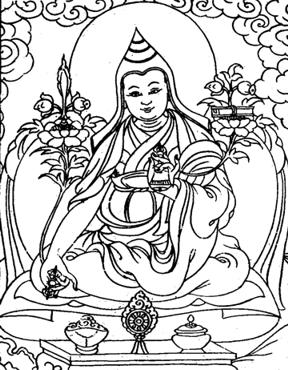
Jamgon Ju Mipham Gyatso
Description
Jamgön Ju Mipham, or Mipham Jamyang Namgyal Gyamtso (1846–1912) (also known as "Mipham the Great") was a master of the Nyingma lineage of Tibetan Buddhism and one of the leading figures in the Ri-me (non-sectarian) movement in Tibet.
Books
Speech of delight
"In his Ornament of the Middle Way the great Indian master, Santaraksita, reveals how the path of reasoning can lead the mind to increasingly profound insight and experience, and how the process of refining our view of reality through intelligent and open-minded enquiry can bring about complete liberation within the discovery of the natural state." "The Speech of Delight, Ju Mipham's commentary, highlights and explains the pithy reasoning of this classic treatise, and unfolds the expansive view of the Great Vehicle in a clear, engaging and compassionate way. Treasured dearly as "The Eyes of Ju Mipham Rinpoche," this commentary is a key element in the curriculum of many of the monastic colleges in Tibet and South Asia. Simultaneously direct and profound, it displays the hallmarks of Mipham's accomplished authorship."--BOOK JACKET.
Dpal gʼyul las rnam par rgyal baʼi rgyud don rab tu gsal baʼi ṅag gis bkod pa kun gzigs dbyaṅs ʼchar chen po śel gyi me loṅ
Treatise on the principles of Tibetan astrology and medical prognosis according to the Svarodaya Tantra.
White lotus
"The Commentary translated in these pages is unusual and rare. But if the commentary is a rarity, its subject matter - the seven-line invocation of Padmasambhava - is one of the best-known prayers in the Tibetan Buddhist world." "The overall significance of the Seven-Line Prayer is perhaps best appreciated in relation to a practice called guru-yoga, or "union with the nature of the guru." The purpose of guru-yoga is to purify and deepen the student's relationship with his or her teacher. It is introduced as one of the preliminary practices, and it remains crucial - in fact, its importance increases - as one progresses through the more advanced levels of the tantric path. The cultivation of devotion to the guru and the blending of one's mind with his or her enlightened mind is, in the words of Dilgo Khyentse Rinpoche, "the most vital and necessary of all practices and is in itself the surest and fastest way to reach the goal of enlightenment.""--book jacket.
ʼPhags pa bkra śis brgyad paʼi tshigs su bcad pa bźugs so
Mahayana Buddhist devotional poem.
ʼJu Mi-pham bkaʼ ʼbum
Collected writings of Nyingma Tibetan Buddhist adept and scholar ʼJam-mgon ʼJu Mi-pham-rgya-mtsho on a variety of topics on grammar, logic, rhetoric, poetry, iconography, medicine and astrology; as well as commentaries on Tibetan Buddhist philosophical treatises (on Madhyamaka, Abhidharma, etc.) and tantras (Kalachakra, Guhyagarbha, etc.).
Gñug sems skor gsum
A cycle of Rdzogs-chen teachings upon the nature of mind and an elucidation of the most difficult points of Buddhist philosophy taught in Nyingmapa sect.
Gzhan gyis brtsad paʼi lan mdor bsdus pa Rigs lam rab gsal de nyid snang byed
Mahayana Buddhist philosophy; rply to objections raised by Pā-ri Blo-bzaṅ-rab-gsal, b. 1867.
Ṅes śes sgron me rtsa ʼgrel
Root text with commentary of Kun-bzaṅ-dpal-ldan's Ṅes śes rin po cheʼi sgron meʼi tshig gi don gsal baʼi ʼgrel chuṅ blo gros snaṅ baʼi sgo ʼbyed on Rñiṅ-mapa doctrines.
Distinguishing Phenomena from Their Intrinsic Nature
"Outlining the difference between appearance and reality, this work shows that the path to awakening involves leaving behind the inaccurate and limiting beliefs we have about ourselves and the world around us and opening ourselves to the limitless potential of our true nature. By divesting the mind of confusion, the treatise explains, we see things as they actually are. This insight allows for the natural unfolding of compassion and wisdom. According to tradition, Maitreya, the Buddha's regent, taught the root text of Distinguishing Phenomena from Their Intrinsic Nature to Asanga, who recorded the verses. The text is part of a larger collection of philosophical works that have become classics of the Indian Buddhist tradition. This volume includes commentaries by Khenpo Shenga and Ju Mipham, whose discussions illuminate the subtleties of the root text and provide valuable insight into the nature of reality and the process of awakening. Khenpo Shenga and Ju Mipham were both among the most influential figures to come out of the Tibetan tradition in recent centuries. Their writings contributed tremendously to the flourishing of Buddhist philosophy and practice in Tibet"-- "A translation of Maitreya's Distinguishing Phenomena from Their True Nature amplified by commentaries from two Nyingma masters of the nineteenth/twentieth century"--
Don rnam par ṅes pa śes rab ral gri bźugs
Verse treatise on the truths of Buddhism; the concept of ultimate import (nītārtha) and its relation to the theory of the two truths."
Dpal sgrub pa chen po bkaʼ brgyad kyi spyi don rnam par bśad pa dṅos grub sñiṅ po
A cyle of ritual practice focussing upon the eight pronouncements (Bkaʼ brgyad) revelations of Guru Padmasambhava according to Rñiṅ-ma-pa system.
Las sna tshogs paʼi sṅags kyi beʼu bum dgos ʼdod kun ʼbyuṅ gter gyi bum pa bzaṅ po
Tantric magic; one of the three esoteric 'beʾu bum' of the author, the other two being Sgyu maʾi beʾu bum and Lde mig beʾu bum.
Sems kyi dpyod pa rnam par sbyoṅ ba so sor brtag paʼi dpyad sgom ʼkhor lo ma źes bya ba bźugs so
Buddhist devotional verses dealing with the purification of the mind (blo sbyoṅ)
ʼJu Mi-pham gyi sman yig gces btus
Selected works of author's on Tibetan ayurvedic medical texts on diagnosis and treatment for various diseases.
Rgyal po lugs kyi bstan bcos kyi bshad ʼgrel ʼjig rten gsal baʼi rgyan zhes bya ba bzhugs so
Commentary by Khenpo Tsultrim Lodroe, a 21st century Tibetan Buddhist teacher and scholar, on Ju Mipham's treatise on classical kingship, itself based on Indic-based arthaśāstra.
Tshad ma rnam ʼgrel gyi gźuṅ gsal por bśad pa legs bśad snaṅ baʼi gter źes bya ba bźugs so
Supercommentary on Pramāṇavārttika of Dharmakīrti; includes root text.
Rgyal po lugs kyi bstan bcos sa gźi skyoṅ baʼi rgyan
Verse work on statecraft and Buddhist polity based on various sources of ancient Indian Buddhist texts.
Gdon bgegs ʼbyuṅ po mi ma yin thams cad kyi cho ʼphrul sna tshogs pa źi bar byed pa daṅ sṅon gyi lan chags bu lan śa ʼgon sbyaṅ bar byed paʼi gsur bsdo rkyen ṅan kun grol bźugs so
Ritual of burning edibles (gsur) in propitiation of malevolent spirits.