
UNITED KINGDOM AUTHOR · CAMPAIGNS · HISTORY
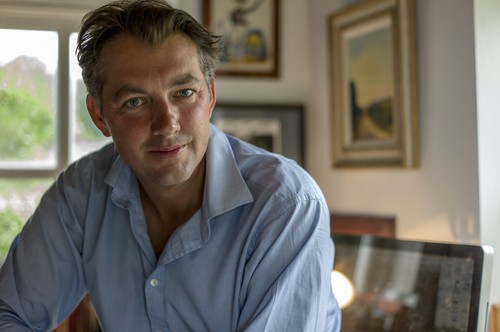
James Holland
Also known as: JAMES HOLLAND, James HOLLAND
James Holland is a historian, writer, and broadcaster. The author of the best-selling historical novels, he has also written nine works of historical fiction. He regularly appears on television and radio, and has written and presented the BAFTA-shortlisted documentaries. Co-founder and Programme Director of the Chalke Valley History Festival, he has his own collection at the Imperial War Museum, and is Fellow of the Royal Historical Society. He is an internationally acclaimed and award-winning historian, writer, and broadcaster. The author of a number of best-selling histories includingFortress Malta: An Island Under Siege, Battle of Britain, Dam Busters, and most recently, The War in the West, he has also written nine works of historical fiction, including the Jack Tanner novels. He has presented – and written – a large number of television programs and series, including the BBC’s The Battle for Malta, and has scripted and is producing a film of his novel, A Pair of Silver Wings, largely set in Malta during the war. He also Chair of the Chalke Valley History Festival, a Fellow of the Royal Historical Society and a Research Fellow at Swansea University. James Holland was born in Salisbury, Wiltshire, and studied history at Durham University. Married with a son, he lives near Salisbury. He can be found on Twitter as @James1940. He is also an avid cricketer, and plays for both Chalke Valley CC and the Authors CC.
When I was very young, I thought we were royalty.
— from Darkest hour
Most acclaimed

Twenty-one
NEW YORK TIMES & USA TODAY BESTSELLING AUTHOR Clarissa Wild brings you TWENTY-ONE (21), a new Dark Romance, which is a stand alone without cliffhanger. 21 years On her 21st birthday she’s taken. Collected by a rich family as an unpaid debt. Her body sold. Her mind his. 21 weeks For 21 weeks she carried a burden no girl should ever have to carry. Now she loses her freedom to a man born to destroy her. 21 days His name: Angel DeLuca. His mission: To break her in 21 days before she sees through his lies. But she won’t give up without a fight. 21 minutes It takes only 21 minutes for their lives to be forever entwined. 21 seconds 21 seconds to spill. Time is running out. Secrets ruin them … but not all truths are worth the price. This is a STANDALONE Dark Romance novel. WARNING: contains explicit situations, graphic violence, and other disturbing content some readers may find offensive.
Together We Stand
Vigorous account of the war in the North African desert, in which, perhaps improbably, the Allies emerged victorious. For the first two years of the conflict, Commonwealth and Free French forces fought against Rommel’s Afrika Korps alone. In almost every way, they were the lesser force. As British historian Holland (Fortress Malta, not reviewed) writes, the differences came mostly in military organization. German soldiers were trained, for instance, to act independently, and the lowliest private was expected to be able to take command as the situation required; British soldiers, by contrast, were required to wait for orders on high before taking action. Rommel’s forces were highly mobile and highly coordinated, while the British divisions tended to be unwieldy. And German arms, such as the 88mm cannon and the Mark IV tank, were superior to their British counterparts (“one looks solid, strong and formidable,” Holland writes, “the other lightweight and ineffective”). The American arrival in the African theater roughly coincided with a massive British reorganization of forces with an eye to solving institutional problems; the fall of Tobruk and the German threat to Cairo did much to overcome inertia, as old generals were sacked and new ones such as Bernard Montgomery came on board. At the same time, Sherman tanks and 105mm howitzers began to pour in, finally giving the Allied forces the wherewithal to meet Rommel on equivalent terms and, late in 1942, leading to victory at the Battle of El Alamein, when “Churchill had his victory at last” and the tide began to turn against the Axis. Holland’s narrative is leisurely and anecdotal, drawing on the memories of dozens of players, including the photographer Cecil Beaton and the journalist and author Alan Moorehead—who, contemporary correspondents might note, was openly critical of the biggest single British disadvantage: “Quick-decision men . . . it’s what we lacked most.” A British rejoinder and worthy complement to Rick Atkinson’s An Army at Dawn (2002).
The Rise of Germany, 1939-1941
" In The Rise of Germany, the first of a major new three-part history of World War II in the West, he weaves together the experiences of dozens of individuals, from civilians and infantrymen, to line officers, military strategists, diplomats, and heads of state, as well as war strategy, tactics, and the economic, political, and social aspects of the war to create a captivating book that redefines and enhances our understanding of one of the most significant conflicts in history,"--Amazon.com.