Discover

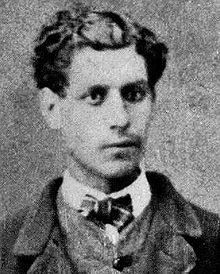
Isidore Lucien Ducasse

Personal Information

Born January 1, 1846
Died January 1, 1870 (24 years old)
Montevideo, France
Also known as: Comte de Lautréamont, Lautreamont comte de
8 books
4.5 (2)
38 readers

Description

Comte de Lautréamont (French: [lotʁeamɔ̃]) was the pseudonym of Isidore-Lucien Ducasse (4 April 1846 – 24 November 1870), an Uruguayan-born French poet. His only works, Les Chants de Maldoror and Poésies, had a major influence on modern literature, particularly on the Surrealists and the Situationists. He died at the age of 24. [Wikipedia]

Books

Newest First

The Songs of Maldoror

0.0 (0)
1

Le Comte de Lautreamont was the nom de plume of Isidore Ducasse (1846-70), a Uruguayan-born French writer and poet whose only surviving major work of fiction, Les Chants de Maldoror, was discovered by the Surrealists, who hailed the work as a dark progenitor of their movement. It was in Les Chants de Maldoror that Andre Breton discovered the phrase that would come to represent the Surrealist doctrine of objective chance: 'as beautiful as the random encounter between an umbrella and a sewing-machine upon a dissecting-table.' Artists inspired by Lautreamont include Man Ray, Rene Magritte, Max Ernst, Andre Masson, Joan Miro, Yves Tanguy, and, in particular, Salvador Dali, who in 1933 produced an entire series of illustrations for Les Chants de Maldoror. Twenty of those illustrations are included.

De zangen van Maldoror

0.0 (0)
0

Maldoror is de held van dit lange gedicht in prozavorm, verdeeld in 6 zangen. Hij heeft alle ellende van de wereld gezien, maar hij is vooral gevoelig voor de slechtheid van de mens. Ook komt hij in opstand tegen God. Haat en wreedheid is wat hij bejubelt.

Maldoror

4.5 (2)
13

" Are the dynamics of contention changing? This is the question confronted by the contributors of this volume, some of the most influential scholars in the field of social movements. The answers, arriving at a time of extraordinary worldwide turmoil, not only provide a wide-ranging and varied understanding of how social movements arise and persist, but also engender unanswered questions, pointing to new theoretical strands and fields of research.^ The Future of Social Movement Research asks: How are the dynamics of contention shaped by globalization? By societies that are becoming increasingly more individualized and diverse? By the spread of new communication technologies such as social media, cell phones, and the Internet? Why do some movements survive while others dissipate? Do local and global networks differ in nature? The authors' essays explore such questions with reference to changes in three domains of contention: the demand of protest (changes in grievances and identities), the supply of protest (changes in organizations and networks), and how these changes affect the dynamics of mobilization. In doing so, they theorize and make empirically insightful how globalization, individualization, and virtualization create new grievances, new venues for action, new action forms, and new structures of contention.^ The resulting work--brought together through engaging discussions and debates between the contributors--is interdisciplinary and unusually broad in scope, constituting the most comprehensive overview of the dynamics of social movements available today. Contributors: Marije Boekkooi, VU-U, Amsterdam; Pang Ching Bobby Chen, U of California, Merced; Donatella della Porta, European U Institute; Mario Diani, U of Trento, Italy; Jan Willem Duyvendak, U of Amsterdam; Myra Marx Ferree, U of Wisconsin-Madison; Beth Gharrity Gardner; Ashley Gromis; Swen Hutter, U of Munich; Ruud Koopmans, WZB, Berlin; Hanspeter Kriesi, U of Zurich; Nonna Mayer, National Centre for European Studies; Doug McAdam, Stanford U; John D. McCarthy, Pennsylvania State U; Debra Minkoff, Barnard College, Columbia U; Alice Motes; Pamela E.^ Oliver, U of Wisconsin-Madison; Francesca Polletta, U of California, Irvine; Jacomijne Prins, VU-U, Amsterdam; Patrick Rafail, Tulane U; Christopher Rootes, U of Kent, Canterbury; Dieter Rucht, Free U of Berlin; David A. Snow, U of California, Irvine; Sarah A. Soule, Stanford U; Suzanne Staggenborg, U of Pittsburgh; Sidney Tarrow, Cornell U; Verta Taylor, U of California, Santa Barbara; Marjoka van Doorn; Martijn van Zomeren, U of Groningen; Stefaan Walgrave, U of Antwerp; Saskia Welschen. "--
