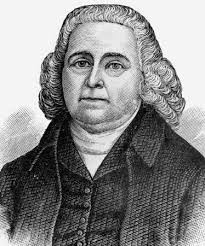
Isaac Backus
Personal Information
Description
Isaac Backus, born in the village of Yantic, now part of the town of Norwich, Connecticut, was a leading Baptist preacher during the era of the American Revolution who campaigned against state-established churches in New England. He was converted in 1741. For five years, he was a member of a Separatist Congregationalist church. In 1746, he became a preacher. He was ordained in 1748.Backus became a Baptist in 1751 when he became pastor of the Middleborough Baptist Church in Middleborough, Massachusetts. Considered a leading orator of the "pulpit of the American Revolution", Backus published a sermon in 1773 that articulated his desire for religious liberty and a separation of church and state. Backus served as a delegate from Middleborough to the Massachusetts ratifying convention, which ratified the United States Constitution in 1788. He voted in favor of ratification. Source: Wikipedia
Books
The diary of Isaac Backus
"American historians have long realized that the Baptist minister Isaac Backus (1724-1806) played a signal role in the separation of church and state in New England, but his diary, here published for the first time, makes clear as well his importance as a leader and spokesman of the small dissenting sect that would become after 1800 the largest Protestant denomination in the nation. The diary, covering the sixty-year span from the First to the Second Great Awakening, describes the campaigns he and his colleagues waged for religious liberty and for the propagation of their religious principles." (p. xv) Isaac was a direct descendant in the fifth generation of English immigrant William Backus Sr., who settled in Saybrook, Connecticut in 1637. Issac died before New England abandoned religious taxation (Connecticut in 1818, Massachusetts in 1833), but before his death he was certain New England would eventually switch to Thomas Jefferson's position of separation of church and state.