Discover

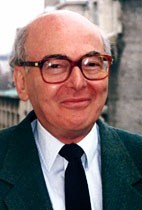
Herbert R. Lottman

Personal Information

Born August 16, 1927
Died August 27, 2014 (87 years old)
16 books
0.0 (0)
25 readers

Description

Herbert Lottman was an American journalist and author who specialized in writing biographies on French subjects. An influential biographer, he published 17 biographies, 15 of which were related to French culture - Wikipedia

Books

Newest First

The Michelin men

0.0 (0)
0

"This is the story of how two brothers - Edouard and Andre Michelin - turned a sleepy, family tyre firm in the heart of rural France into one of the most innovative and successful industrial empires in the world. Edouard, a landscape painter at the Ecole des Beaux Arts, displayed an engineering genius for tyre-making and product innovation, whilst Andre, trained as an engineer, displayed a creative genius for advertising and marketing. Together they kick-started the world motor industry and created a tourist industry around the motor car and their now legendary "Michelin Guides". The Michelin history, as described here by Herbert Lottman, reveals insights into the development of this business."--Jacket.

Man Ray's Montparnasse

0.0 (0)
3

"For the first thirty years of the twentieth century, the streets surrounding the intersection of the boulevard du Montparnasse and the boulevard Raspail marked the center of avant-garde Europe. Man Ray's Montparnasse introduces the reader to this small section of Paris on the Left Bank during a time of artistic ferment and experimentation, of private affairs that became public ones, and of political and social change.". "Man Ray, the renowned photographer, was there to document it all. His world was filled with artists, writers, and poets, and his camera was his key, allowing him access to cafes, salons, artists' studios, and writers' homes. Within a year of his arrival, he was invited to be Gertrude Stein's official portraitist and to record the image of Marcel Proust on his deathbed. He photographed Pablo Picasso and Peggy Guggenheim, made films alongside the Dadaists, and played chess with Marcel Duchamp. Illustrated with Man Ray's own photographs, this book chronicles a legendary time and place."--BOOK JACKET.

The French Rothschilds

0.0 (0)
1

The Rothschilds, the bankers to kings, were among the world's paramount financial powers in the nineteenth century, and their wealth remains the stuff of legend. The French Rothschilds is an award-winning biographer's penetrating portrait of the most regal and influential branch of this international family, one that came to prominence under Napoleon in France and has ever since been locked in a turbulent relationship with its adopted state. Throughout much of the nineteenth century, the Rothschilds were the single most important source of funds in Europe for governments in war and peace (preferably peace), for the extraction of raw materials from the earth, and for the factories that turned them into wealth. They were instrumental in bringing capitalism to maturity. There have been a number of books on the Rothschilds, but never one that focused so closely on the French branch of the family. Yet the French Rothschilds, with their eventful careers in both the nineteenth and twentieth centuries and the anti-Semitism they faced; their contribution to the settlement of Palestine; the assaults they endured from first the Petain regime and later the Mitterrand Socialists; and their famous racehorses and prestigious wines, are in many respects the most fascinating branch of this astonishing family.

The purge

0.0 (0)
1

In an America wracked by crime and overcrowded prisons, the government has sanctioned an annual 12-hour period in which any and all criminal activity, including murder, becomes legal. On this night plagued by violence and an epidemic of crime, one family wrestles with the decision of who they will become when a stranger comes.

The Fall of Paris

0.0 (0)
3

Describes the decay and eventual collapse of French society between 1935 and the German occupation in 1940.

Albert Camus

0.0 (0)
0

In this enormously engaging, vibrant, and richly researched biography of Albert Camus, the French writer and journalist Olivier Todd has drawn on personal correspondence, notebooks, and public records never before tapped, as well as interviews with Camus's family, friends, fellow workers, writers, mentors, and lovers. Todd shows us a Camus who struggled all his life with irreconcilable conflicts -- between his loyalty to family and his passionate nature, between the call to political action and the integrity to his art, between his support of the native Algerians and his identification with the forgotten people, the poor whites. A very private man, Camus could be charming and prickly, sincere and theatrical, genuinely humble, yet full of great ambition. Todd paints a vivid picture of the time and place that shaped Camus -- his impoverished childhood in the Algerian city of Belcourt, the sea and the sun and the hot sands that he so loved (he would always feel an exile elsewhere), and the educational system that nurtured him. We see the forces that lured him into communism, and his attraction to the theater and to journalism as outlets for his creativity. The Paris that Camus was inevitably drawn to is one that Todd knows intimately, and he brings alive the war years, the underground activities that Camus was caught up in during the Occupation and the bitter postwar period, as well as the intrigues of the French literati who embraced Camus after his first novel, L'Etranger, was published. Todd is also keenly attuned to the French intellectual climate, and as he takes Camus's measure as a successful novelist, journalist, playwright and director, literary editor, philosopher, he also reveals the temperament in the writer that increasingly isolated him and crippled his reputation in the years before his death and for a long time after. He shows us the solitary man behind the mask -- debilitated by continuing bouts of tuberculosis, constantly drawn to irresistible women, and deeply troubled by his political conflicts with the reigning French intellectuals, particularly by the vitriol of his former friend Sartre over the Algerian conflict. Filled with sharp observations and sparkling with telling details, here is a wonderfully human portrait of the Nobel Prize-winning writer, who died at the age of 46 and who remains one of the most influential literary figures of our time. - Jacket flap.