
FRANCE AUTHOR · CHURCH HISTORY · HISTORY
Henri Daniel-Rops
Also known as: Henry Daniel-Rops, H. Daniel-Rops
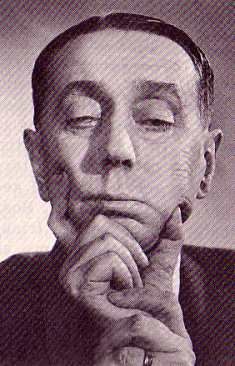
Daniel-Rops (Henri Petiot's literary pseudonym) was born in Épinal in 1901 and died in Chambéry in 1965. He was professor of history and director of Ecclesiae magazine (Paris), and became world-famous mainly for works of historiography: (1943), Jesus in his time (1945), and the ten volumes of the History of the Church of Christ (1948 - 1965). He has also authored several essays, works of children's literature and historical novels, among which are Death, where is your victory? (1934) and The Sword of Fire (1938). He was a voter for the French Academy in 1955.
Most acclaimed

Daily Life in the Time of Jesus
1962
The celebrated French Academician, Henri Daniel-Rops, produces a towering, erudite study of the humble men and women who were Christ's very first followers. Historically rich, it captures everything from the occupations, families, and homes to the flowers and birds native to the land.
The Church in the Seventeenth Century
1963
Dust jacket notes: "This work deals with a century dominated by two forces: by the growth of national consciousness in Europe on the one hand (embodied in monarchical absolutism), and on the other by the resurgence of the spirit and ideals of Catholicism, threatened by the Protestant revolution. The author passes in review the great Catholic figures of the century, beginning with St. Vincent de Paul who, in humility and boundless charity, opened the gates of the century to a flood of saintly men and women, and to a new ideal, in the company of men like Berulle, Olier, St. John Eudes, St. Francois Regis, and women like Louise de Marillac, with whom he founded the sisters of Charity, Anne of Austria, Queen of France, and a host of others. This was an era of political and spiritual rebirth, but also an era of strife, selfishness, ambition and fanaticism. The ruthlessness of the conflict for religious supremacy is seen side by side with deep sincerity and the sorrow of noble figures, Catholic and Protestant alike, who strove towards unity. There is the spectacle of the nations of Europe rising up to form two camps, Protestant and Catholic, and the swift deterioration of the controversy into a bloody struggle for power, in which the mighty figure of the French king, Louis XIV, a much maligned monarch, whose conflict between his conscience and his self-glory was as tempestuous as his European wars, and led to the most extraordinary paradoxes; a king born into an age of absolutism, thrusting France to the top in European power politics, at a cost in men and material which nearly ruined her. Shining through all the strife is the great Catholic ideal of the century and the holiness of individuals, despite the growth of Jansenism and Quietism, and the beginnings of an irreligion that stemmed from heresy and internal discord."
The heroes of God
Henri Daniel-Rops covers the lives of Eleven saints who, as the cover of his 1959 version of this book indicates "were truly The Heroes of God who carried the cross to the far corners of the earth. St. Paul, of course, was the first. The others were among the many heroes who followed in his steps; St. Martin, who began as a Roman soldier; Blessed Ramon Lull, who wanted to be a troubadour; Bartolome de las Casas, son of the Conquistadors; St. Francis Xavier, Jesuit soldier of Christ; St. Isaac Joques, scalped by the Indians he loved; Fra Junipero Serra, the creator of California; Mother Javouhey, the nun who may truly be called "a great man"; Charles de Foucauld, the white hermit of the Sahara [and who has since the writing of this book been proclaimed a saint]; Father Damien, who embraced the living death of leprosy [and who also has been proclaimed a saint since the writing of this book] and Father Nussbaum, martyred in forbidden Tibet. These ten men and one women were adventurers of God, spokesmen of Christ, typical of the many missioners who, over two thousand years, have given their lives and deaths to be The Heroes of God."