Discover

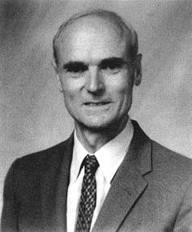
H. S. M. Coxeter

Personal Information

Born February 9, 1907
Died March 31, 2003 (96 years old)
Kensington, United Kingdom
Also known as: Harold Scott Macdonald Coxeter, Harold Scott MacDonald Coxeter
17 books
5.0 (1)
63 readers

Description

Harold Scott MacDonald "Donald" Coxeter, CC, FRS, FRSC was a British and later also Canadian geometer. He is regarded as one of the greatest geometers of the 20th century. --Wikipedia

Books

Newest First

Non-Euclidean geometry

0.0 (0)
16

The MAA is delighted to be the publisher of the sixth edition of this book, updated with a new section 15.9 on the author's useful concept of inversive distance. Throughout most of this book, non-Euclidean geometries in spaces of two or three dimensions are treated as specializations of real projective geometry in terms of a simple set of axioms concerning points, lines, planes, incidence, order and continuity, with no mention of the measurement of distances or angles. This synthetic development is followed by the introduction of homogeneous coordinates, beginning with Von Staudt's idea of regarding points as entities that can be added or multiplied. Transformations that preserve incidence are called colineations. They lead in a natural way to elliptic isometries or "congruent transformations". Following a recommendation by Bertrand Russell, continuity is described in terms of order. Elliptic and hyperbolic geometries are derived from real projective geometry by specializing an elliptic or hyperbolic polarity which transforms points into lines (in two dimensions) or planes (in three dimensions) and vice versa. This treatment can be enjoyed by anyone who is familiar with algebra up to the elements of group theory. - Publisher.
Mathematical recreations and problems of past and present times

0.0 (0)
8

N.B.: Tenth edition and prior are by W. W. Rouse Ball. Newer editions are revised and extended by H. S. M. Coxeter.

Regular polytopes

5.0 (1)
4

Foremost book available on polytopes, incorporating ancient Greek and most modern work done on them. Beginning with polygons and polyhedrons, the book moves on to multi-dimensional polytopes in a way that anyone with a basic knowledge of geometry and trigonometry can easily understand. Definitions of symbols. Eight tables plus many diagrams and examples.1963 ed.

The real projective plane

0.0 (0)
3

This introduction to projective geometry can be understood by anyone familiar with high-school geometry and algebra. The restriction to real geometry of two dimensions allows every theorem to be illustrated by a diagram. The subject is, in a sense, even simpler than Euclid, whose constructions involved a ruler and compass: here we have constructions using rulers alone. A strict axiomatic treatment is followed only to the point of letting the student see how it is done, but then relaxed to avoid becoming tedious. After two introductory chapters, the concept of continuity is introduced by means of an unusual but intuitively acceptable axiom. Subsequent chapters then treat one- and two-dimensional projectivities, conics, affine geometry, and Euclidean geometry. Chapter 10 continues the discussion of continuity at a more sophisticated level, and the remaining chapters introduce coordinates and their uses. An appendix by George Beck describes Mathematica scripts that can generate illustrations for several chapters; they are provided on a diskette included with the book. (Both PC and Macintosh versions are available) Mathematica is a registered trademark.
