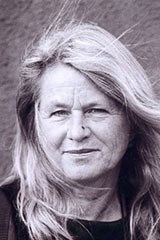
Gretel Ehrlich
Personal Information
Description
Gretel Ehrlich is an American travel writer, poet, and essayist.
Books
The Arctic
A literary anthology explores the natural wonders of the frozen landscapes of the Arctic in a compilation of first-person narratives, cultural histories, science and nature writing, and fiction.
In the Empire of Ice
In this gripping circumnavigation of the Arctic Circle, Gretel Ehrlich paints a vivid portrait of the indigenous cultures that inhabit the starkly beautiful boreal landscape surrounding the Arctic Ocean, an ice-bound wilderness that includes northern Siberia, northwestern Greenland, Canada's vast Nunavut, and northern Alaska. Ehrlich's expedition, supported by the National Geographic Society, documents what remains of these cultures, specifically the similarities and differences among them, including hunting traditions, shamanic and ceremonial practices, languages and legends--the ways in which they have survived, or have been assimilated, and how they are adapting to the impact of climate change on their ice-age cultures.Ehrlich is fascinated by what she calls the ecology of culture--the ways in which the human presence of indigenous Arctic people is intricately interwoven with land, rock, river, sea, and ice. Depicting human-caused climate change as only the latest and most destructive of the ills and abuses first peoples have been suffering for 250 years, Ehrlich's haunting and lovely prose portrays ancient tribes and traditions on the edge of extinction and captures the austere beauty of their various lifeways in the frozen dreamscape of the world they have always known.
A blizzard year
For one year, thirteen-year-old Timmy records in her journal the changes she sees in the natural world and her family's activities on their Wyoming ranch as they fight to save it from financial ruin.
Questions of heaven
Gretel Ehrlich's path leads her to Sichuan and Yunnan Provinces in western China to climb Emei Shan, one of China's four sacred Buddhist mountains. For Ehrlich, a practicing Buddhist, the climb is both a spiritual pilgrimage and a troubling encounter with a culture reeling from recent political history. Ehrlich visits Buddhist lamas who, until recently, were in hiding from the purges of the Cultural Revolution, and she travels to a panda refuge in the mountains northwest of Chengdu - in both cases trying to unravel the ultimate fate of these once-revered symbols. "All roads to paradise first pass through purgatory." In perhaps the most hair-raising car-trip narrative in recent travel literature, Ehrlich writes of her journey from the southwestern city of Kunming over the Burma Road and on to Lijiang - an isolated mountain town which does in the end fulfill Ehrlich's hopes for cultural and spiritual revival, and where she learns from an unlikely group of Naxi sacred musicians that "music is medicine" and that profound healing requires profound faith.
Blizzard Year
For one year, thirteen-year-old Timmy records in her journal the changes she sees in the natural world and her family's activities on their Wyoming ranch as they fight to save it from financial ruin.
Cowboy island
The story of Santa Rosa Island, its cowboys, and the four generations of Vail & Vickers men and women who were at home on 54,000 ocean-bond acres.
The solace of open spaces
Twelve essays set in the remote ranching communities of northern Wyoming.
Facing the wave
A passionate student of Japanese poetry, theater, and art for much of her life, Gretel Ehrlich felt compelled to return to the earthquake-and-tsunami-devastated Tohoku coast to bear witness, listen to survivors, and experience their terror and exhilaration in villages and towns where all shelter and hope seemed lost. In an eloquent narrative that blends strong reportage, poetic observation, and deeply felt reflection, she takes us into the upside-down world of northeastern Japan, where nothing is certain and where the boundaries between living and dying have been erased by water. The stories of rice farmers, monks, and wanderers; of fishermen who drove their boats up the steep wall of the wave; and of an eighty-four-year-old geisha who survived the tsunami to hand down a song that only she still remembered are both harrowing and inspirational. Facing death, facing life, and coming to terms with impermanence are equally compelling in a landscape of surreal desolation, as the ghostly specter of Fukushima Daiichi, the nuclear power complex, spews radiation into the ocean and air. Facing the Wave is a testament to the buoyancy, spirit, humor, and strong-mindedness of those who must find their way in a suddenly shattered world.
John Muir
John Muir hiked through the wilderness and saw its beauty. He wanted to save it for people to enjoy forever. He worked hard to make this happen. This is his story.
The Future of Ice
This book was written out of Gretel Ehrlich's love for winter--for remote and cold places, for the ways winter frees our imagination and invigorates our feet, mind, and soul--and also out of the fear that our "democracy of gratification" has irreparably altered the climate. Over the course of a year, Ehrlich experiences firsthand the myriad expressions of cold, giving us marvelous histories of wind, water, snow, and ice, of ocean currents and weather cycles. From Tierra del Fuego in the south to Spitsbergen, east of Greenland, at the very top of the world, she explores how our very consciousness is animated and enlivened by the archaic rhythms and erupting oscillations of weather. We share Ehrlich's experience of the thrills of cold, but also her questions: What will happen to us if we are "deseasoned"? If winter ends, will we survive?From the Trade Paperback edition.